
Le Corbusier has this in common with the Luftwaffe:
both labored with all their heart
to remake the face of Europe.
What the Cyclopes in their rage forget,
pencils will coolly finish off.

Joseph Brodsky, loosely translated from Russian by an LLM
To Dmitry Mineev, who forced me to think about important things
In the 1660s, a small republic on the North Sea - barely two million people, roughly the territory of modern Switzerland - was producing more paintings per capita than any civilization in history. Paintings hung in butcher shops, in blacksmith forges, in the homes of ordinary farmers1. No Medici. No papal commissions. No aristocratic court dictating subjects. And yet the Dutch Republic generated Rembrandt, Vermeer, Hals, Ruisdael - a density of visual talent per square mile that has never been equaled.
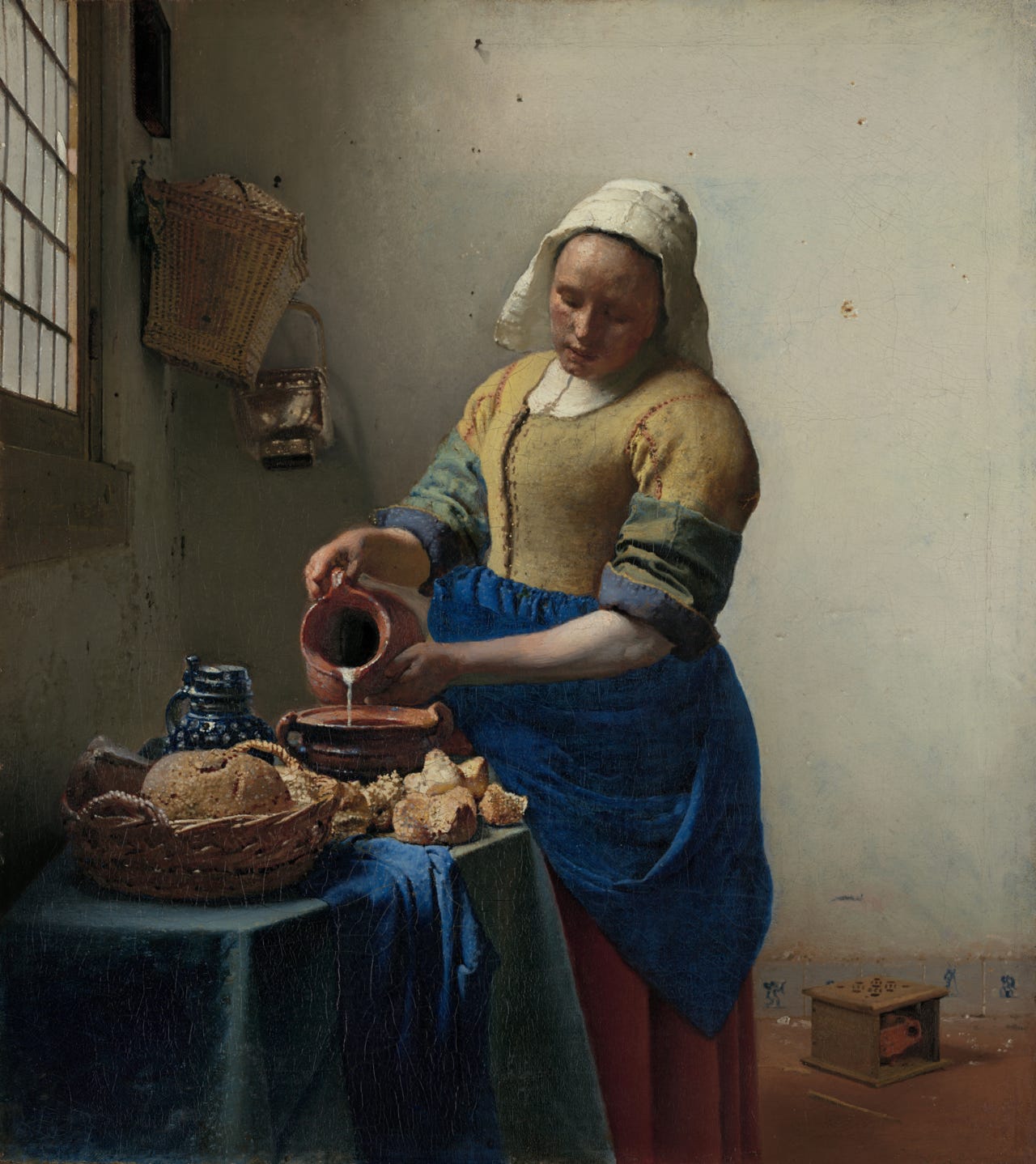
The usual answer is that the Dutch invented the art market. Painters sold to buyers instead of working for patrons, and freedom replaced constraint. But this only moves the question: markets existed elsewhere. What made Dutch painting extraordinary had nothing to do with the mechanism of sale and everything to do with the quality of shared attention. A Leiden cloth merchant could assess a Vermeer interior with the same precision he brought to gauging the weight and weave of fabric - because the painting depicted a world he inhabited, rewarded a kind of looking he practiced daily, and addressed a problem he recognized as his own: how to represent the identity of a commercial republic that had no king, no hereditary aristocracy, and no traditional iconography2.
I think that something specific was at work in the Republic, and that its presence explains the greatness of Dutch painting just as its disappearance explains the strangeness of modernism. The question of who drives aesthetic change - the rich or the artists? - has recently preoccupied several sharp minds. Will Manidis, in a striking essay called “Against Taste,” argued that for most of Western history the patron was nut just a wealthy commissioner, but a co-creator: in the room, on the scaffolding, locked in an intimate struggle with the maker, both oriented toward something transcendent - God, the city, the dynasty. Manidis showed that “taste,” as we now understand it, is what remained after the patron was expelled from the creative process - the residue of a generative relationship, reduced to passive consumption. Samuel Hughes, approached the question from a different angle. He engaged with Scott Alexander’s theory that cheap industrial ornament drove modernism by forcing elites to shift from signaling wealth to signaling taste. Hughes found Alexander’s account compelling for architecture, where ornament did become cheap, but unable to explain why modernism happened simultaneously in painting, music, literature, and dance, where the cost of “ornament” barely changed at all.
I build on these lines to think through what I want to understand: the genealogy of the shared problem that once bound patron and artist together - how it emerged, under what conditions it flourished, through what precise sequence it dissolved, and whether anything like it might be reconstituting itself in forms we have not yet learned to recognize.
Here is a claim that will sound reductive but that I think is literally true: for most of Western history, what we now call “art” functioned as a coordination technology. It solved problems that could not be solved by other means.
Imagine you are a Florentine merchant in 1430. You have made your fortune in wool. You want your family’s position to last, but Florence is a republic that officially despises inherited privilege. Courts are slow, factional, corrupt. Written contracts are unreliable. Verbal promises evaporate. So you commission a fresco for your family chapel in Santa Croce. The fresco makes your piety visible, permanent, and irrevocable. It sits in the church, broadcasting your commitment to every person who enters, for as long as the wall stands. And here is the part that matters: the fresco is also a declaration before God. The spire above the chapel points at heaven. The image of the saint is not decoration; it is intercession. You are solving two coordination problems at once - establishing your family’s reputation among men and declaring your devotion to a power that exceeds all of them. The expenditure is the message. The image is the receipt.
Why couldn’t simpler means solve these problems? Because credibility requires costliness. A cheap signal is no signal. A letter declaring your piety costs nothing and persuades no one. A chapel fresco costs a fortune and cannot be faked. The art had to be expensive, labor-intensive, and publicly visible, or it failed at its job. Ornament served the same function at smaller scale: intricate carving on a guild hall declared that the guild had resources and skill to spare. Strip the ornament, and you strip the signal.
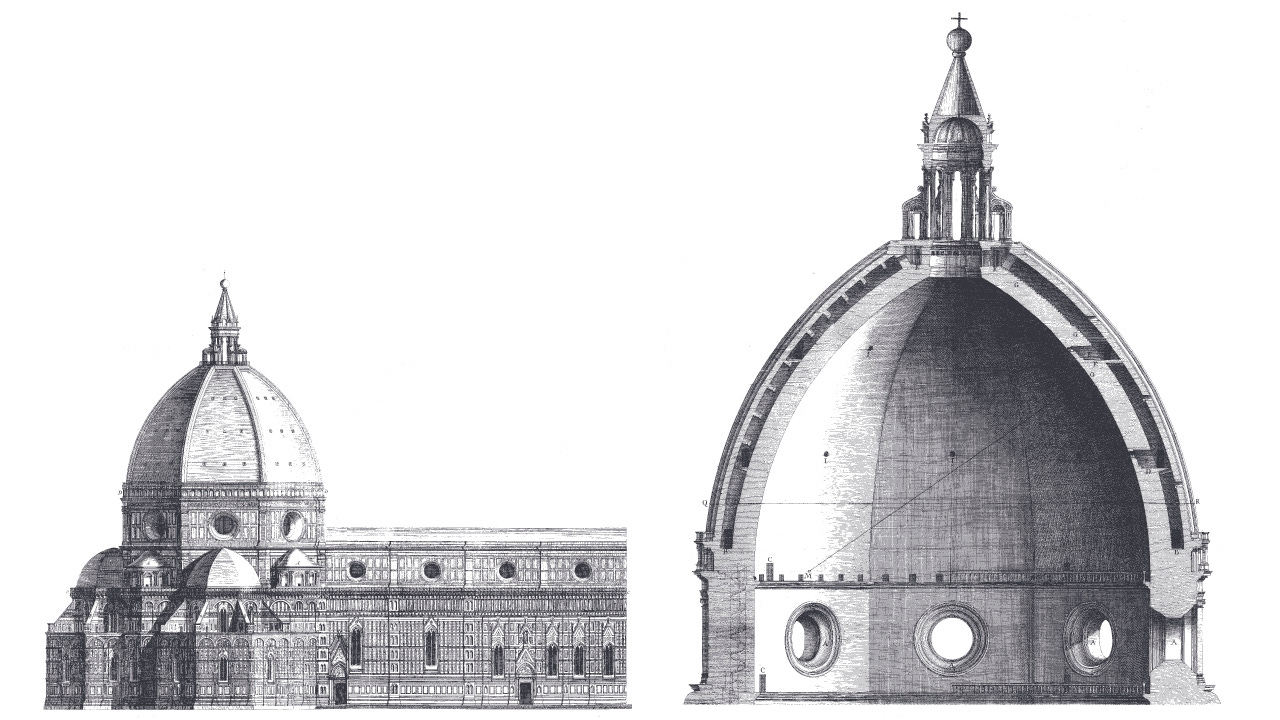
This logic operated at every scale. When Florence faced existential threat from Visconti Milan in the early fifteenth century, thirty-four over-life-size statues of prophets and saints appeared in the heart of the city within the span of three decades3. It was a collective mobilization through visual culture: a city signaling to itself and its enemies that it had the coordination, wealth, and confidence to produce such things while fighting an existential war. Brunelleschi’s dome was the supreme instance. The problem was how to span the 143-foot octagonal crossing of Santa Maria del Fiore without the wooden centering that every previous dome had required4. No architect in Europe had solved it - the Pantheon’s coffered concrete was Roman engineering lost for a thousand years. Brunelleschi invented a self-supporting herringbone brickwork technique, building the dome in concentric rings that held themselves up as they rose. The achievement was engineering, but the message was political and sacred: Florence could solve problems that defeated every other city on the continent while bringing it closer to eternity. As Ada Palmer writes, Florence committed to building a dome larger than had ever been built in 1296, “without a plan for how actually to do it: they just knew it would take a century to build the foundation and walls and figured that, by the time it was Dome O'Clock, some clever Florentine would figure out this hitherto impossible engineering miracle.”5
Baroque Rome operated at a grander scale still. When Urban VIII and his Barberini nephews poured resources into churches, fountains, and operatic spectacles, they were stabilizing a dynastic claim under constant challenge6. A dynasty whose future was uncertain would hoard capital. A dynasty that built for eternity was betting on itself - and making the bet self-fulfilling, because allies aligned with those patrons who demonstrated visible, irreversible commitment. The spire was not for the bishop. It was for heaven. The altar fresco was not for the merchant. It was for God. This transcendent orientation - what Manidis rightly identified as central - is what justified the enormous expenditure, the decades-long timescales, the agonizing negotiations between patron and artist. Without it, the whole system collapses into mere display.
The pattern extends deep into antiquity. In Homeric Greece, bards were demioergoi - “specialists who worked for the people” - close to the aristocratic class but decidedly not part of it. They claimed creative authority not from patrons but from the gods. Phemius declares in the Odyssey: “I am self-taught; the god has implanted in my heart songs of all kinds.” The bard chose which heroes to memorialize, and that choice shaped cultural values.7 In Rome, even under Maecenas, Horace and Virgil retained substantial creative freedom. The division of labor was already in place thousands of years before the Renaissance: the patron controlled the occasion, the scale, the purpose. The maker controlled the form.
Manidis is right that the patron-maker relationship required a transcendent orientation - God, the polis, the dynasty, the republic - something pointing beyond both parties. But orientation alone does not guarantee great art. I want to identify the specific conditions that made the friction productive.
The first condition is what Michael Baxandall called the “period eye.”8 Baxandall argued that stylistic change emerges not from individual choices but from the cognitive and visual habits of an entire society. In fifteenth-century Florence, merchants trained in the mathematics of proportion could read the spatial logic of a painting the way they read the geometry of a bolt of cloth - not because they studied art, but because the same habits of precise visual assessment governed both activities. Preachers whose sermons dramatized biblical scenes taught congregations to expect narrative clarity in painted altarpieces. The visual culture of religious processions trained eyes to read symbolic hierarchies. The shared evaluative language was embedded in daily practice: commercial, religious, civic. When a patron and a painter argued about a commission, they argued within a shared perceptual world - and this is what made the friction productive.
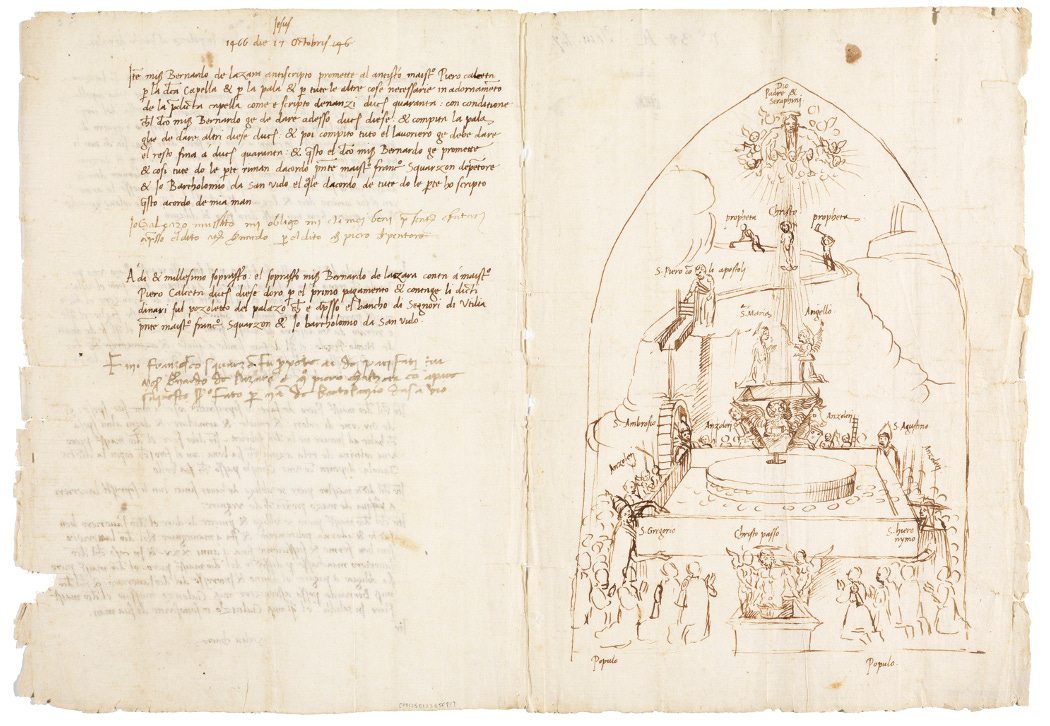
The second condition is visible in the contracts themselves. When we look at what Renaissance commissions actually specified, the picture is striking. Contracts detailed the subject matter (which saints, which biblical scenes), the materials (how many ounces of lapis lazuli, the grade of azurite for backgrounds, the quantity of gilding), the dimensions, the delivery date, and the price.9 What they almost never specified was style - the composition, the handling of light, the spatial logic, the treatment of figures. Style was the artist’s domain. This division was not generosity but efficiency: the patron lacked the expertise to specify style, and the painter had internalized the period eye so thoroughly that he could be trusted to produce something the patron would recognize as excellent, even though the patron could not have described in advance what excellence would look like.
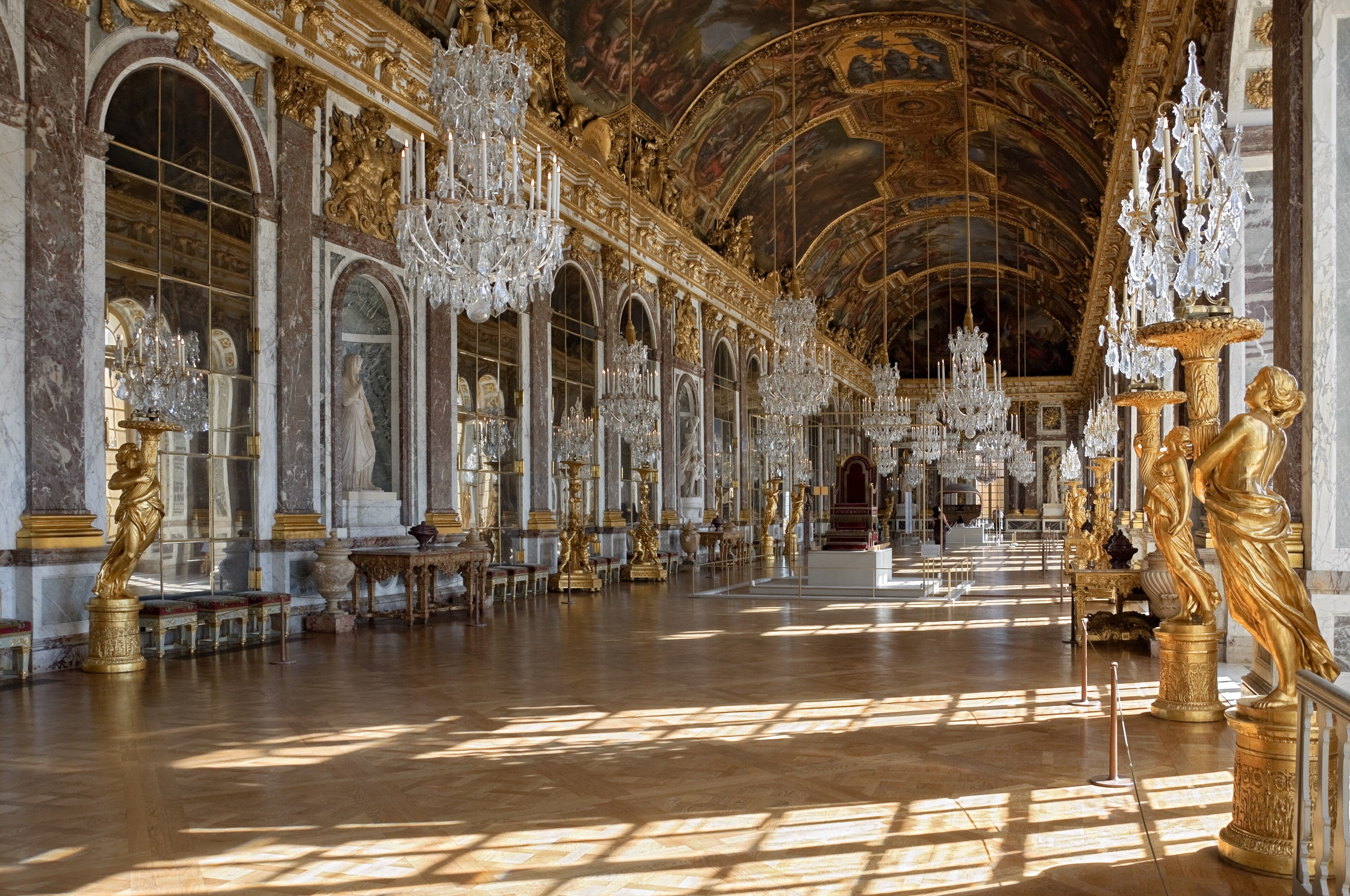
The third condition is competitive pressure among patrons. In Florence, where multiple wealthy families competed for prestige within a republic that formally prohibited hereditary privilege, patronage competition amplified innovation. Populist pressure forced oligarchs to spend visibly on public works, and competition between families - Medici against Strozzi, Albizzi against Rucellai - meant each needed the best available artists. Under absolute monarchy, where a single patron held all evaluative authority, this pressure vanished. Consider Louis XIV’s Versailles: the painters and architects were superb - Le Brun, Le Vau, Hardouin-Mansart. The technical execution of the Hall of Mirrors is extraordinary. But the range of formal experiment narrowed to a corridor defined by one man’s preference. What a single patron does not commission cannot exist. The Rococo is brilliant within its frame. The frame itself, however, admits no challenge and becomes dull. We will come back to this.
When these conditions aligned - a shared perceptual world, a division of labor respecting both parties, competitive pressure, and a shared problem oriented toward something larger than either patron or artist - the friction became what I’ll call generative friction: the condition in which constraint, ambition, and skill collide in the service of something neither party fully controls.
The Sistine Chapel ceiling emerged from exactly this collision. Julius II proposed twelve apostles in the spandrels. Through the friction between a Pope whose ambitions for the papacy were existential and a sculptor who considered himself a sculptor first (Michelangelo signed his letters that way), the program expanded to three hundred figures spanning the entire arc of Genesis. The problem was immense: how to represent the sweep of sacred history on a curved surface sixty-eight feet above the floor, in the chapel where popes are elected. The curvature distorted any standard composition. The distance made detail illegible without monumental scale. The theological program demanded narrative clarity across nine thousand square feet. These constraints forced formal innovations - the architectural trompe l’œil framework, the titanic ignudi, the progressively bolder compositions toward the altar end - that neither pope nor painter could have imagined at the outset.
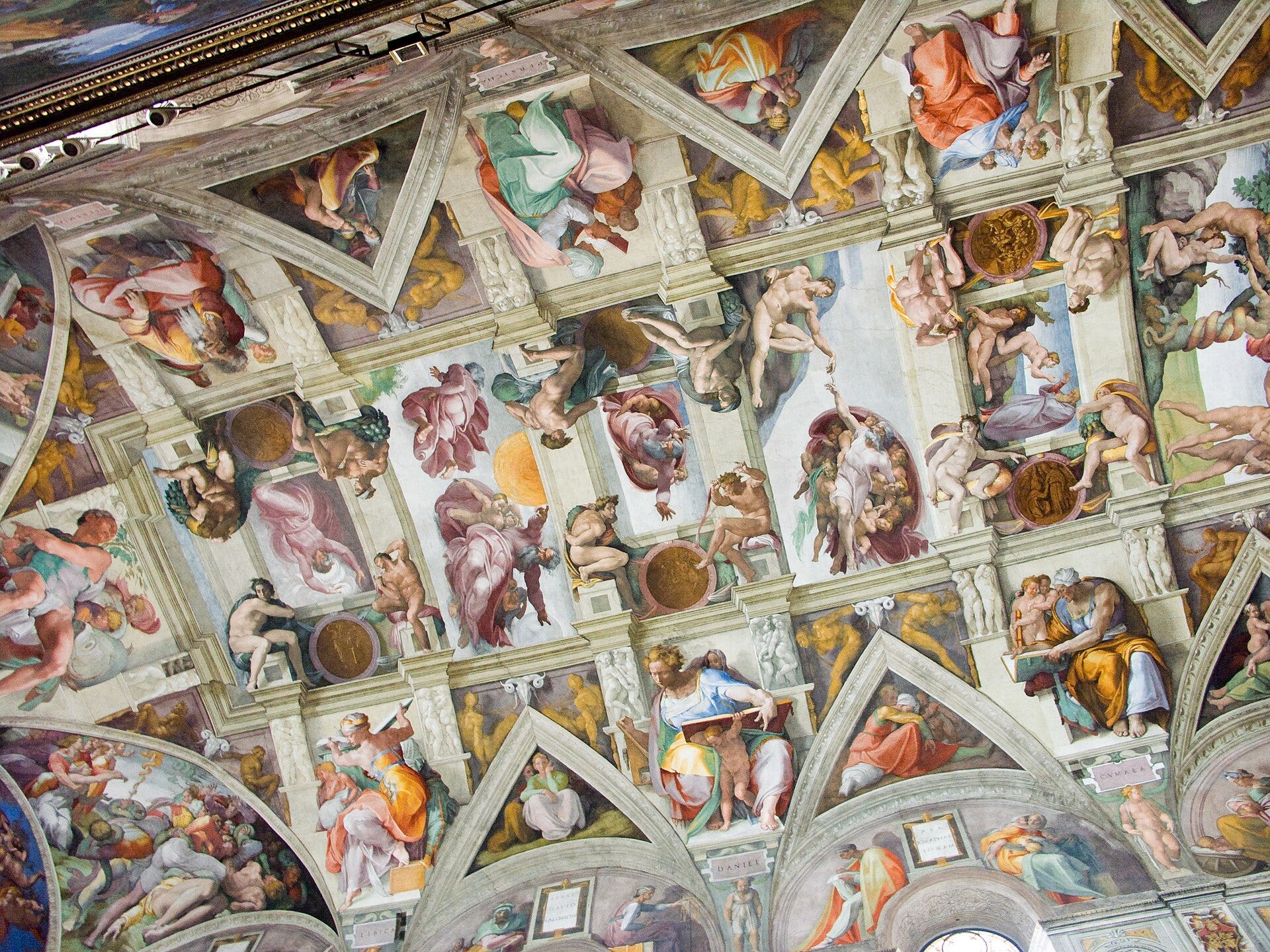
If generative friction requires these specific conditions, then the question of aesthetic change becomes a question about what happened to those conditions. Between roughly 1750 and 1900, all of them dissolved - not for one reason but for five, simultaneously, each reinforcing the others. This convergence is what explains the puzzle that Hughes identified: why did modernism hit every art form at once?
The first dissolution was conceptual. Until the mid-eighteenth century, a painter and a cabinetmaker belonged to the same guild family: skilled makers producing useful things.10 The split between “art” and “craft” - so natural to us that we forget it was invented - emerged when industrialization made mass-produced goods cheap and handmade work precious. The Romantic movement then relocated the source of value from the object to the subject: a painting was excellent not because it solved a problem well but because it expressed the authentic vision of an individual genius. Why did this happen? Capitalism's dynamism had shattered the stable hierarchies that made guild production functional. Individual difference became economically valuable for the first time. An artist who could claim unique vision was worth more than one who executed shared conventions expertly. The ideology of genius grew from the soil of market incentives - and once it took root, it made the old collaboration between patron and maker conceptually impossible. You cannot co-create with a genius. You can only commission one, then stand back.
The second dissolution was psychological. This is a causal chain that deserves more attention than it gets. In seventeenth-century Calvinist theology, grace was known by its outward signs - not because good conduct could earn salvation (Calvin was emphatic that it could not), but because the disciplined life was taken as evidence that one was among the elect. You could assess grace the way a merchant assessed credit: by external signs.11 As Protestant theology evolved through Wesley and the Methodists, the evidence of grace migrated inward. The proof was no longer conduct but feeling: the felt experience of conversion, the authentic emotional response to the divine. Over several generations, this secularized. The idea that authentic inner experience was the highest form of human flourishing became a general cultural attitude, detached from any specific theology. Applied to the arts, it meant that a work’s value lay in the feeling it produced in the viewer - and in the viewer’s capacity to have that feeling. “Taste” migrated from a shared social practice (the ability to read a common visual language, rooted in Baxandall’s period eye) to a private faculty. The audience was transformed from participants in a shared evaluative enterprise into consumers of individual experience.
The third dissolution was spatial. In Paris - the epicenter of nineteenth-century art - Haussmann’s demolitions between 1853 and 1870 displaced roughly 350,000 people. I want to be careful here: pre-Haussmann Paris was no idyll. It is well documented that the city was already characterized by westward commercial drift, class bifurcation, and displacement of the poor. But what the old quartier system did sustain, imperfectly and unevenly, was spatial proximity between social classes - the face-to-face commerce and informal credit networks on which small-scale patron-artist relationships depended. Haussmann’s grand boulevards were economic restructuring dressed as urban improvement: they served capital’s need for mobility, speculation, and military control of revolutionary neighborhoods. The aesthetic consequences followed from the spatial decision. Manet’s flat surfaces and confrontational gazes are not stylistic rebellion for its own sake. They are representations of a city whose social geography could no longer be read - because proximity had been replaced by spectacle, and the patron and the painter no longer shared a quartier, a café, or a church.
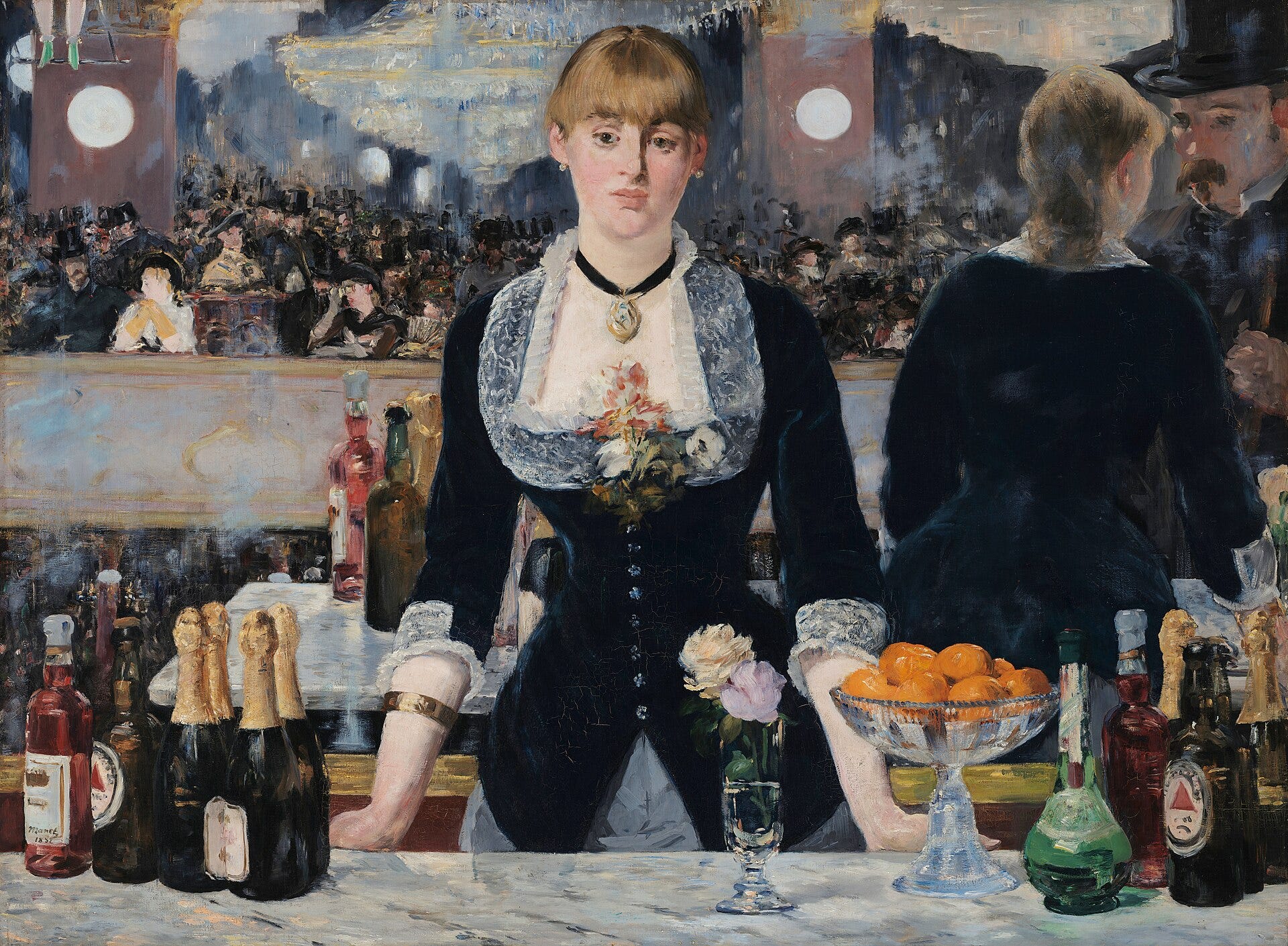
The fourth dissolution was institutional. The Salon - the annual juried exhibition that had served as the central coordinating mechanism of European painting since the seventeenth century - collapsed under its own success. The Salon was itself a product of the transition from patronage to the market: it created a public arena for evaluation that substituted for the old guild system. By 1863, it received over 5,000 submissions from more than 3,000 painters.12 When the revolutionary government opened the Salon to non-Academicians in 1791, submissions doubled overnight. The problem was structural: the Salon tried to be simultaneously a gatekeeper of quality and a democratic forum. These functions contradicted each other. The jury that had once maintained shared standards became a political battleground, and the most innovative artists - the ones solving the hardest formal problems - left the building. They fragmented into private galleries, each organized around a dealer and a small circle where a coherent (if narrow) shared problem could still be maintained. But these circles were tiny and self-selecting. The shared public arena for aesthetic judgment - imperfect and contested, but genuinely shared - did not survive.
The fifth dissolution was the acceleration of status competition. This is the one that Scott Alexander identified for architecture and that Hughes found insufficient as a general theory. Status display through art was ancient: Florentine families competed for the most visible chapel and the most prestigious painter for centuries. But industrial production changed the dynamics radically. When ornament was expensive, it signaled wealth directly - because only wealth could produce it. When machines made ornament cheap, the signal collapsed. A factory could stamp plaster rosettes for pennies. Elites shifted from signaling wealth to signaling taste - adopting codes that required cultural education and participation in elite milieus to decode. Alexander’s insight is accurate for architecture. But it cannot explain modernism in music, painting, literature, or dance, where the “cost of ornament” changed little. These five dissolutions, converging between 1750 and 1900, each alone would have strained the old relationship. Together, they shattered it.
Architecture makes the mechanism most visible precisely because buildings cannot hide behind theoretical justification. A building must stand. People must walk through it. It must solve problems - or everyone can see that it doesn’t.
Robin Evans identified the core issue. What connects imagination to drawing to built form is projection - a chain of translations that Evans called “zones of instability.”13 The Gothic mason’s ground plan, the Renaissance architect’s perspective drawing, the Baroque engineer’s section: each is a projection that only communicates if the person reading it knows the rules. When those rules are shared - when the patron, the mason, the congregation all inhabit the same projective conventions - the chain of translation is generative. Each step opens new formal possibilities precisely because the conventions are stable enough to carry them. A Gothic cathedral’s façade invites entry into another world; its interior fulfills the invitation through a multiplicity of light, perspective, and structural logic working in concert. The physical space is the shared rule-set, made tangible.
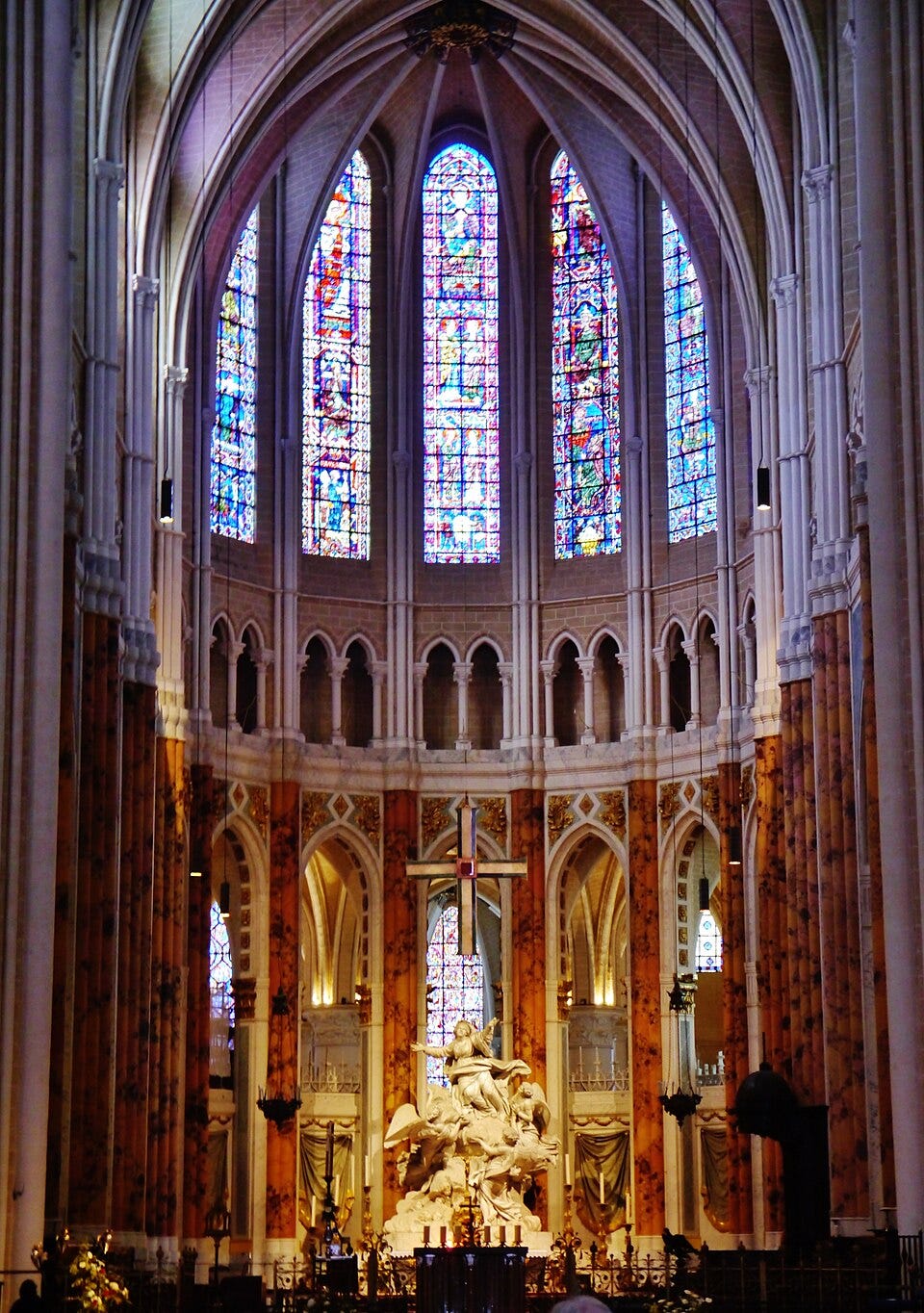
Gothic cathedrals were coordination technologies of extraordinary sophistication: generations of builders, none of whom met each other, could each contribute to a single structure because the constructive logic - the projective conventions - were shared and the purpose (making the sacred physically present) was stable across centuries. Approach a Gothic doorway from a hundred meters: you see the overall form. From ten meters: the sculptural program. From one meter: the individual figures. From ten centimeters: the texture of the stone. The eye never runs out of information. This is why ornament matters - it provides the smallest-scale layer of the hierarchy, the entry point into the projective chain. Without it, the progression is undefined at its base, and everything above it becomes “free-floating and ungrounded.”14
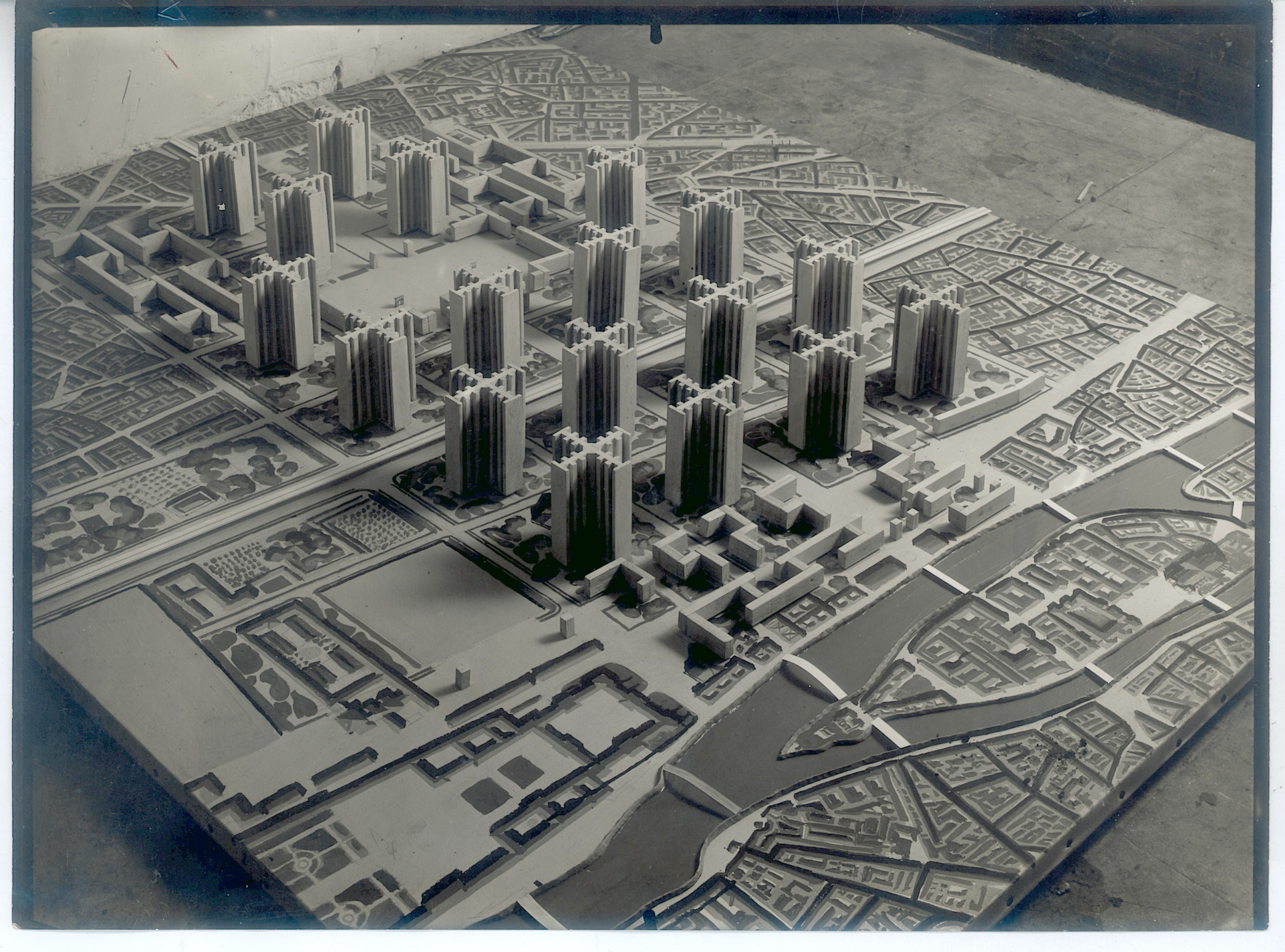
When the industrial city produced new coordination problems - housing millions, managing sanitation, enabling circulation - Le Corbusier’s response was an honest attempt to solve them at a scale that previous building traditions could not address. But the subtlety that matters is that these new problems were not merely technical. They carried their own symbolic weight - the industrial city was a statement about progress, rationality, the primacy of function, the teleological belief in technology. The tragedy is that the solutions appeared to be purely technical. Engineering, zoning, and municipal infrastructure seemed to be able to solve sanitation and circulation without requiring shared symbolic language. Architecture thus lost its monopoly on the city’s coordination problems. The projective chain that Evans described - the shared conventions that allowed imagination to become built form - snapped. Not because the conventions were wrong, but because the problems no longer seemed to need them.
There is a concept, introduced by a dear friend of mine, Dmitry Mineev, writing about the phenomenology of aesthetic experience, that captures what the shared problem actually produced - what it felt like from the inside, and what was lost when it dissolved. He calls it “bronze”: a perceptual quality that belongs not to the object itself but to the encounter between a work and a viewer who shares its rules.
Bronze, in this framework, is the experience of encountering a world that is fully realized - internally consistent, governed by clear laws, saturated with detail at every level. His metaphor for it is the simulation: a rule-governed arena, like the physics engine in a video game, within which unlimited situations can be generated from a closed language of constraints. The specific work ends, but the way of seeing the world it unlocks does not. You finish reading Tolstoy and the simulation persists - you see people on the street through its grammar. You leave a Gothic cathedral and the proportional logic stays in your body. Bronze transfers to us, and we value it precisely because it feels inexhaustible - not because the object is infinite, but because the rule-set that produced it can generate infinite situations.
It is called bronze because bronze is an alloy. The metaphor matters. What matters here is not purity but fusion: distinct elements brought into such close correspondence that none protrudes as a separate showpiece. A bronze work is one in which plot, character, setting, rhythm, atmosphere, visual form, symbolic charge, even technical means, have been alloyed into a single working whole. Form echoes content; the means of expression cease to look like detachable devices and become part of the world’s inner logic. We feel bronze most intensely when no single layer monopolizes attention, when spectacle does not break away from structure, when style is not a flourish laid over substance, and when the whole feels greater than the sum of its parts. That is also why bronze is fragile: the moment one component begins to stick out too sharply, the alloy starts to separate, and the world loses its metallic continuity.
Architecture, on this account, is the clearest embodiment of simulation logic, because the physical space is the rule-set made inhabitable. Consider Palladio’s Villa Rotonda. Four identical porticos, a central dome, perfect bilateral symmetry on both axes - but the site slopes differently on each side, the views from each portico are different, the light enters the central hall differently at each hour. The rule-set is strict (classical orders, proportional ratios, axial symmetry); the experiences it generates are unlimited. This is bronze: not the individual view from the south portico at four in the afternoon, but the generative grammar that produces all possible views. A visitor who shares the projective conventions - who can read the proportional system, who understands the dialogue between symmetry and site - enters the simulation. A visitor who lacks them sees a nice house.
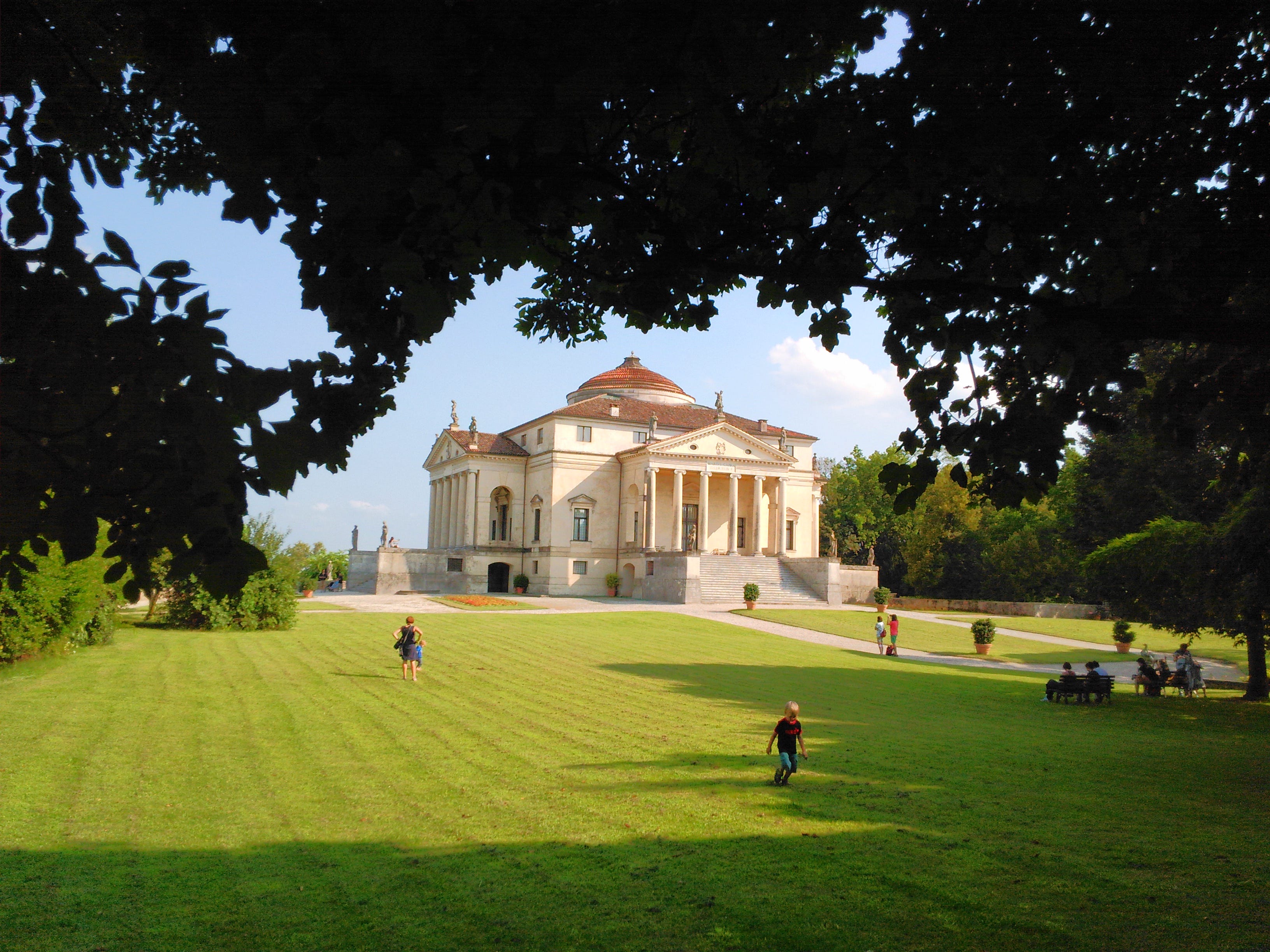
This framework explains something that the patron-artist model alone does not: what was lost when the shared problem dissolved. The loss is not just institutional (patrons left the room) or economic (markets replaced commissions) or philosophical (autonomy replaced purpose). The loss is perceptual. When the period eye fragmented - when makers and audiences no longer shared the same simulation - the capacity for bronze was destroyed. Modernism's insistence that each artist must produce an irreproducible individual vision is, in Dmitry’s terms, the most anti-bronze statement imaginable, because bronze requires precisely the opposite: that infinite variations are possible within shared rules. The dictum “After Schoenberg, it is impossible to compose as before” does not describe a musical discovery. It describes the collapse of a shared simulation. The tonal system was not actually refuted. Rather, it was abandoned - and with it, the generative grammar that had allowed composers from Monteverdi to Mahler to produce unlimited music within a shared rule-set.
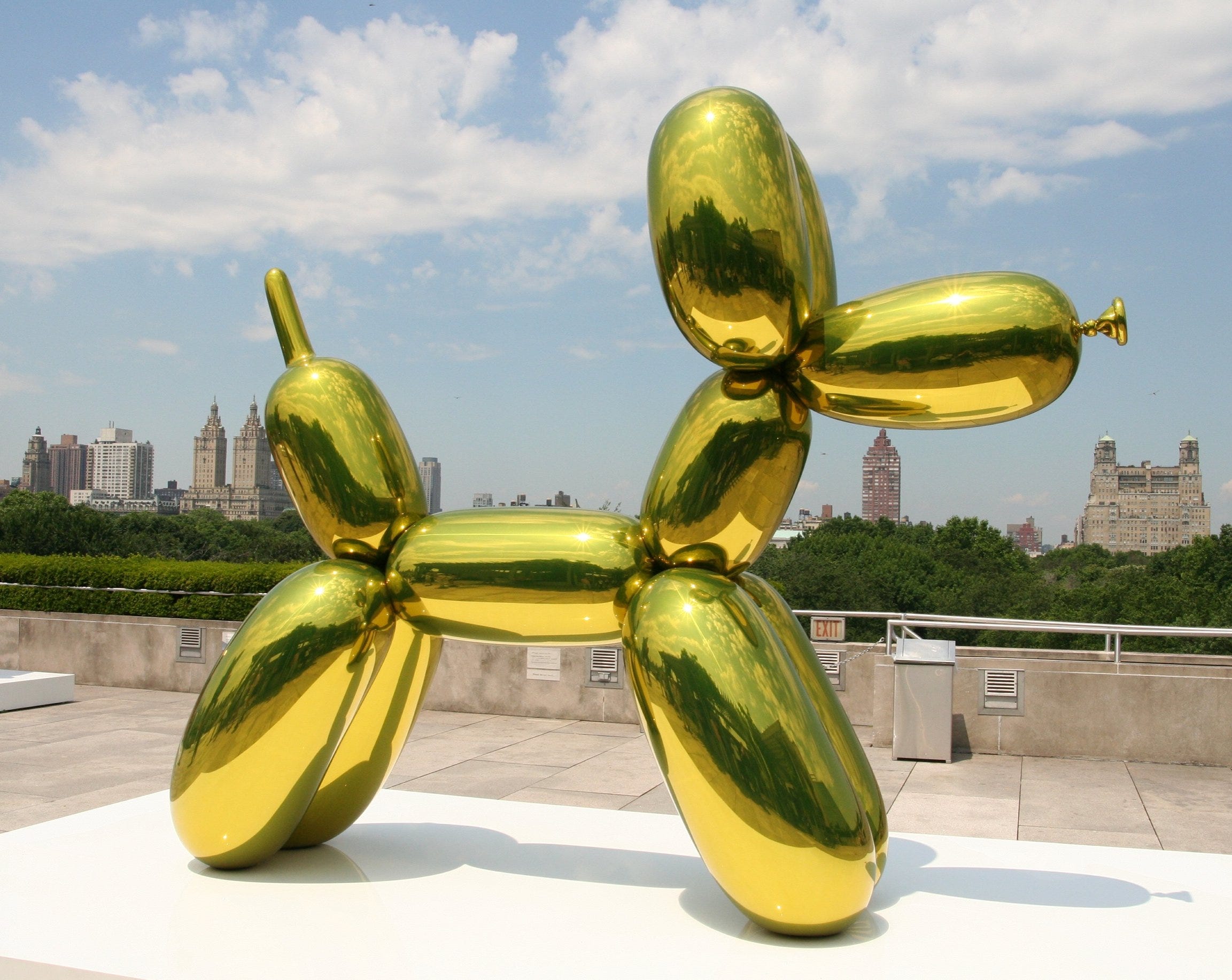
The contemporary art gallery is the anti-simulation par excellence. Each work proposes its own rules and abandons them at the doorway. No accumulation is possible. You cannot enter the world of a Jeff Koons balloon dog the way you enter the world of a Gothic cathedral, because the balloon dog’s rules do not extend beyond its own surface. The gallery visitor does not lack taste. She lacks a shared simulation to inhabit - and no amount of wall text can substitute for one.
If modernism was the diagnosis, postmodernism was the acceptance.
By the 1960s, the modernist project had run its internal logic to exhaustion. Clement Greenberg had argued that each art form should pursue its essential medium - painting should be about flatness, sculpture about three-dimensionality, music about organized sound. This was coherent as a program, but it produced a ratchet: each generation had to be more essential than the last, until there was nowhere left to go. Barnett Newman’s vertical stripe. John Cage’s four minutes and thirty-three seconds of silence. Ad Reinhardt’s black-on-black canvases. Each was a legitimate endpoint of the modernist logic - and each was, by the same logic, a dead end. The simulation had been stripped down to its axioms, and axioms alone generate nothing.
Postmodernism arrived as an acknowledgment that the dissolution was permanent - that the shared problem was not coming back, and that the modernist attempt to replace it with formal self-reference had exhausted itself. Robert Venturi proposed the “decorated shed”: architecture should stop pretending that form followed function and instead communicate through applied symbols, signs, quotation marks.15 In painting, figuration returned - but in quotation marks. In music, composers like Arvo Pärt reached back past modernism to medieval tonality - but the reach was self-conscious, a retrieval rather than a continuation. Postmodernism recovered the vocabulary of the old simulations but not their grammar. You could quote a Corinthian column, but you could not build within the Corinthian order, because the order required a shared projective convention that no longer existed.
Fredric Jameson saw through this clearly. Postmodernism, he argued, was the cultural logic of late capitalism: the total commodification of culture, in which even critical distance becomes a marketable stance.16 The postmodern architect quotes classical forms ironically; the irony is purchased by a developer and sold to tenants who do not recognize it as irony. The postmodern novelist pastiches Victorian prose; the pastiche is shelved in the literary fiction section between the sincere and the experimental. Everything circulates; nothing accumulates. Art had become indistinguishable from its theory. Tom Wolfe saw the same thing from the outside: by the mid-twentieth century, modern art had become “completely literary: the paintings and other works exist only to illustrate the text.”17
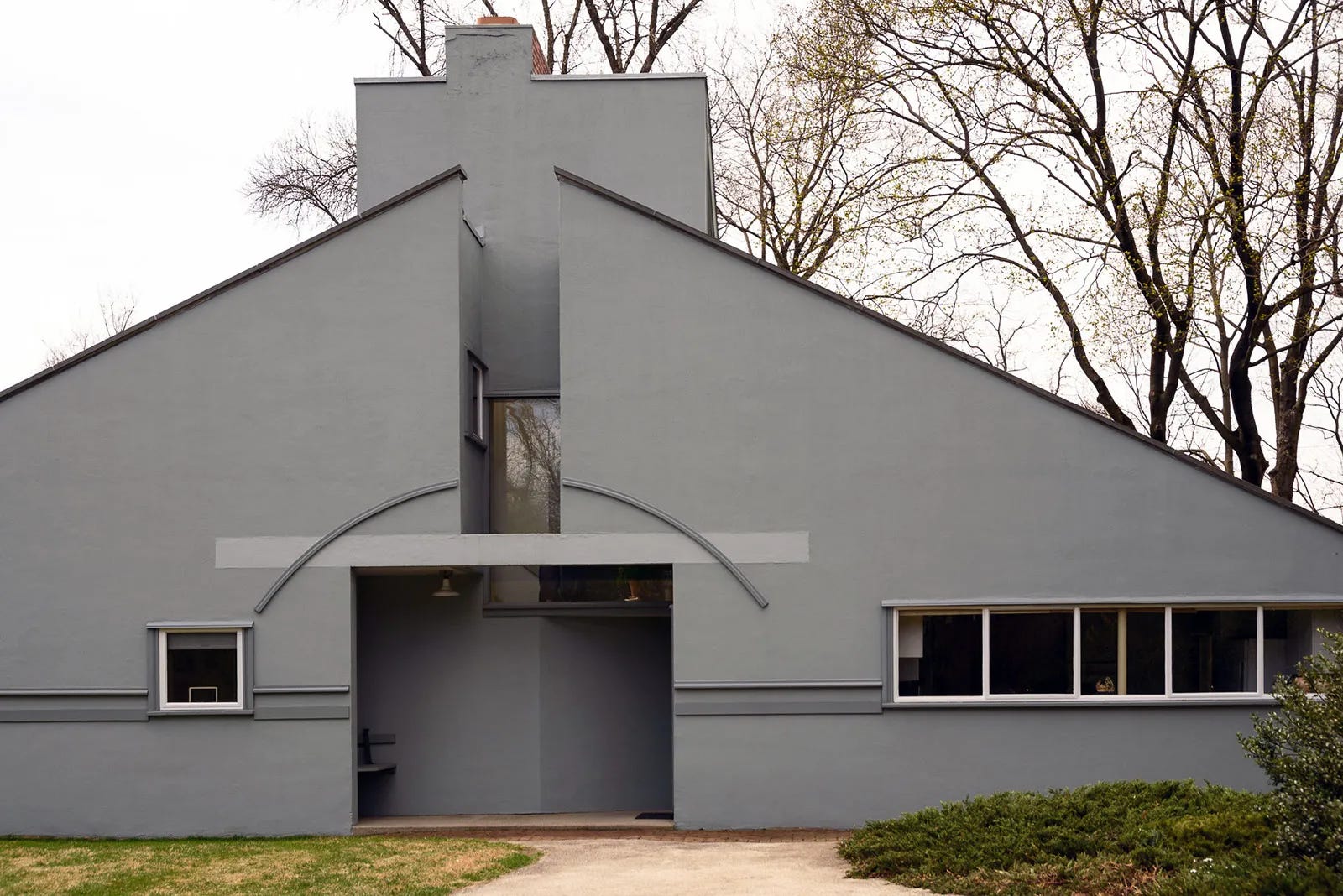
Postmodernism, in our framework, was the moment when the art world stopped trying to rebuild the simulation and started mining its ruins. The result was often brilliant - Borges, Calvino, Pynchon in literature; Gehry, Koolhaas, Hadid in architecture; Richter, Kiefer in painting. But it was brilliant in the way that a very good remix is brilliant: it depended on the listener already knowing the original. Without the original simulations to quote, postmodernism had nothing to say. And when the quotations were exhausted, what remained was Mark Fisher’s diagnosis: the slow cancellation of the future18 - culture rearranging its archive in increasingly frantic high resolution, unable to produce the genuinely new.
Here is what the five dissolutions produced: a situation in which artists confronted the loss of the shared problem daily, in their materials, while the wealthy felt it only when they walked into galleries and found things unreadable.
Hughes observed that the pattern is clear: for the first time ever, modernism was driven by artists and the intellectual circles surrounding them, not by patrons or the rich. The rich never really followed in music, for example - even today, they still fill opera houses for Puccini, not Boulez. In architecture, British schools switched to modernism when fully modernist private houses could still be counted on two hands. This looks like artists leading a revolution. I think it is better understood as artists being the first to diagnose a structural collapse.
A painter who could no longer assume a shared visual language, a composer who could no longer assume shared harmonic expectations, a novelist who could no longer assume narrative conventions - each encountered the dissolution in the act of making. Cubism painted the impossibility of a single stable viewpoint. Atonality composed the dissolution of shared harmonic expectations. Joyce pulverized narrative into a hundred competing modes in Ulysses, each adequate to a fragment and none to the whole. These were not provocations. They were reports from the front.
Pierre Bourdieu gave the structural result its sharpest name: the “autonomous field” - an inverted economic world in which commercial success became suspicious and peer recognition the only legitimate currency.19 Within this field, the artist aimed to be entirely the master of his product, rejecting not only the programs imposed by patrons but also the interpretations layered onto his work afterward. Art became self-referential: modernist painting about painting, modernist music about sound, modernist literature about language. The field imposed its own norms on both production and consumption.
The Bauhaus rushed to crystallize this logic in institutional form. Gropius’s 1919 manifesto declared the unity of all arts under architecture - a deliberate reversal from history, an attempt to reconstruct the medieval guild system by fiat. But the reversal proved the point: what the medieval guild had organically (shared techniques, shared purposes, shared evaluative language), the Bauhaus had to legislate. And what it legislated was not a shared problem oriented toward the transcendent but a shared method oriented toward industrial production. The Bauhaus trained brilliant designers. It did not, and could not, reconstruct the conditions under which Chartres was built - because those conditions required something the Bauhaus explicitly rejected: a shared sacred orientation that was not chosen but inherited.
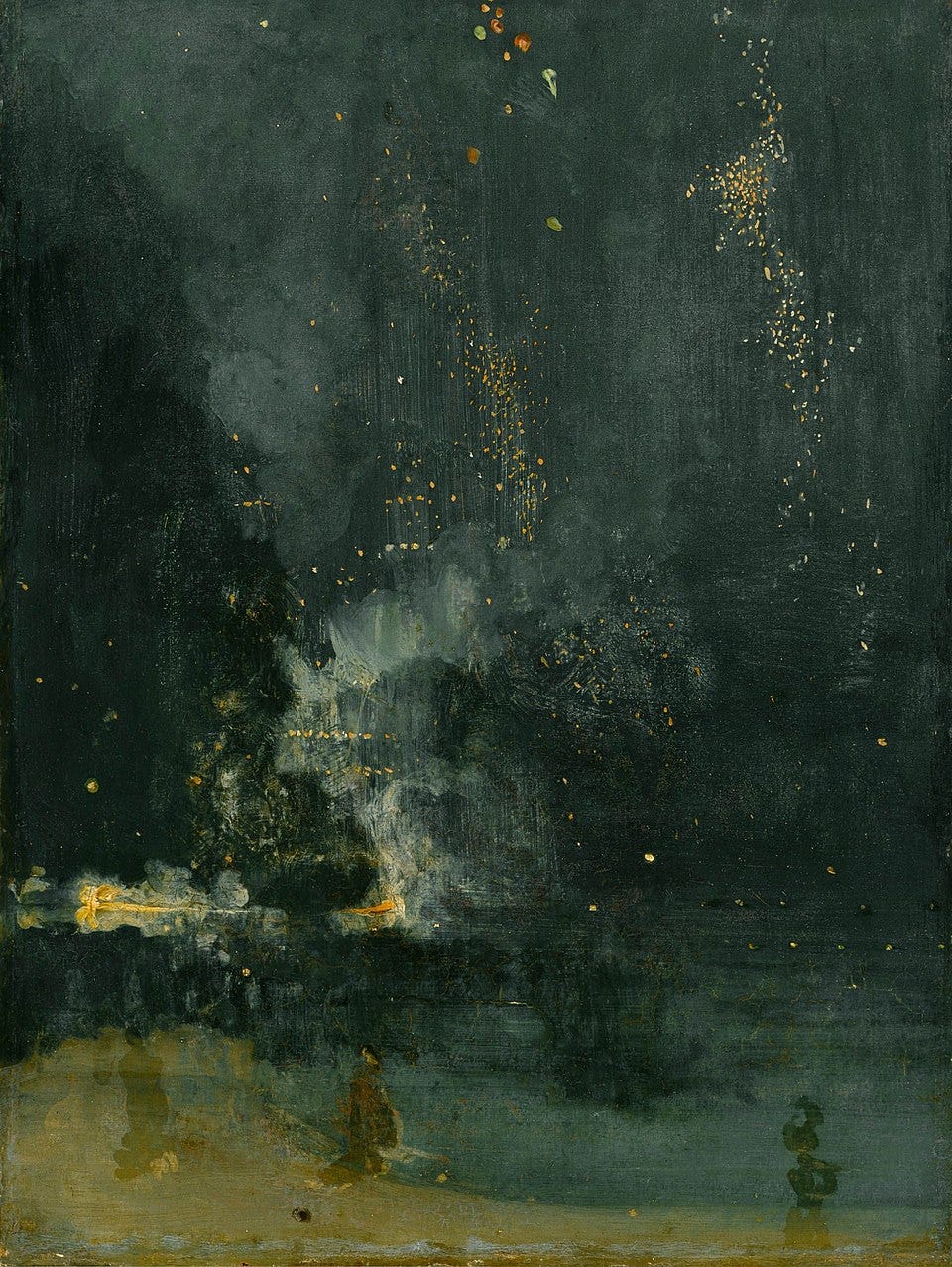
A few decades earlier, the Whistler-Ruskin trial of 1878 heralded this collapse publicly. Ruskin was the dominant art critic in England, a man whose word could make or destroy a painter’s career. When Whistler exhibited Nocturne in Black and Gold: The Falling Rocket - a near-abstract night scene of fireworks over the Thames - Ruskin accused him of “flinging a pot of paint in the public’s face.” Whistler sued for libel. Both sides brought professional painters as expert witnesses. Those painters contradicted one another not about facts but about criteria: about what standards a painting could even be judged by.20 Whistler won the philosophical argument and was awarded one farthing in damages. The courtroom had demonstrated, inadvertently, that the shared evaluative language had fractured. The people in that room could simply no longer agree on what painting was for.
Yet another example: the great ballet impresario Sergei Diaghilev tested the theory at its sharpest point. He was perhaps the last figure to operate in genuine patronage mode - in the rehearsal room, rather than in the audience, pairing artists who would never have chosen each other, pushing them toward collision. As Manidis puts it, The Rite of Spring was produced through capital and skill and provocation locked in the same room, oriented toward a problem (the representation of primal ritual through modern form) that neither Stravinsky nor Nijinsky could have formulated alone. The audience rioted. Diaghilev was delighted. Where generative friction persisted, so did greatness.
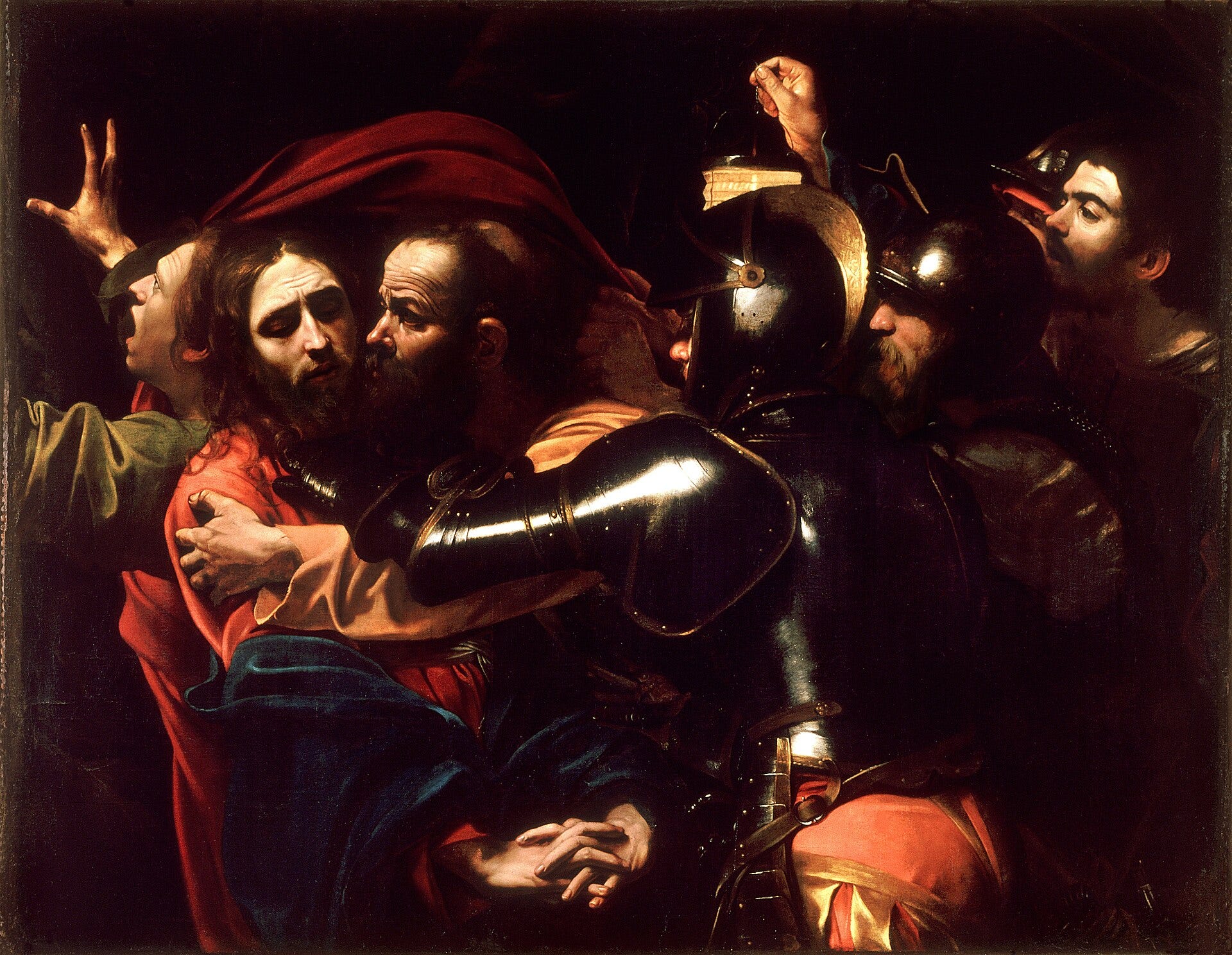
And this illuminates the counter-examples. Caravaggio insisted on his own subjects and invented chiaroscuro as a personal formal language - but his radical naturalism was a theological argument about the incarnation, about God entering real human flesh, painted for churches that gave his work its stakes. Late Beethoven composed the Grosse Fuge for posterity, formally radical and utterly non-commercial - but it turns out 94% of his works were dedicated to aristocratic patrons;21 a testament to having internalized the disciplining pressure of a problem larger than personal expression. Late Turner painted near-abstract seascapes that anticipate Rothko by a century - but he was painting nature, not painting about painting. Each had found a way to be autonomous without being unmoored. The autonomous field's problem is not freedom, but freedom without internalized constraints - art that references only itself because it has lost the habit and the ache of referencing anything beyond. It has become anti-bronze.
If the shared problem requires these conditions - a period eye, a division of labor, competitive pressure, and transcendent orientation - then it matters enormously how wealth and power are distributed. Different regimes produce different art, and I think the mechanism is not mysterious.
Let’s return to our Florentine merchant. His city was an oligarchy where multiple wealthy families competed within a republic that formally prohibited hereditary privilege. The mechanism: populist pressure forced oligarchs to spend publicly on visible works of civic grandeur. Competition between families meant that each sought the best artists money and the shared regime of glory could secure, driving standards relentlessly upward. The shared problem (legitimating mercantile wealth in a hostile republic, building a city worthy of comparison to ancient Rome, declaring devotion before God) was urgent and widely felt. The result was four generations of patronage competition that funded the Renaissance.
The Dutch Republic, on the other hand, distributed wealth across thousands of merchants, and no single patron dominated. This produced a different kind of greatness: the market itself became the coordinating institution, because the shared problem (the self-representation of a republic without traditional iconography) and the shared evaluative language (commercial visual precision, the tactile gaze) were so widely distributed that no intermediary was needed. The cloth merchant and the painter inhabited the same perceptual world. This is why Dutch painting achieved bronze - it was a simulation shared by an entire society.
Under absolutist monarchy, the picture changes. Consider again the Bourbon court at Versailles. The painters and architects achieved stunning levels of technical sophistication. But a single patron held all evaluative authority, and this eliminated the competitive pressure that had amplified Florentine innovation. The Rococo is brilliant within its frame - Boucher and Fragonard possessed extraordinary gifts. But the frame itself was set by one court, and what the court did not commission could simply not exist. Philip IV’s Spain tells the same story: Velázquez produced masterpieces, but the range of subjects, scales, and purposes available to him was defined by a single patron’s needs. Compare the dozens of independent commissions that kept Florentine workshops innovating across genres.
And when the French Revolution abolished aristocratic patronage and the democratic Salon became the central public arena, the opposite problem emerged: too many competing evaluators, no shared standards, the most innovative artists driven out by juries whose criteria shifted with political faction. Neither extreme works. Great art requires wealth concentrated enough to fund ambitious work but distributed across enough competing patrons to maintain aesthetic pressure. It requires institutions robust enough to enforce evaluative standards but porous enough that genuine innovation can enter.
Today, wealth concentration has returned to pre-World War I levels. Tech billionaires fund museums, endow foundations, commission buildings. But they relate to art the way a collector relates to furniture - selecting from finished options. They exercise taste, instead of climbing the scaffolding. And public funding tends toward the Salon’s incoherence: too many competing priorities, too little shared purpose, evaluation by committee rather than by someone with skin in the game. The wealth exists. The institutions exist. What is missing is the shared problem - and the shared simulation that a problem produces.
This led me thinking, perhaps the shared problem has not actually disappeared. Perhaps it has migrated.
Marshall McLuhan observed that all media are extensions of human faculties - the book extends the eye, clothing extends the skin, electric circuitry extends the nervous system - and that when a new medium arrives, it reshapes perception and social organization so completely that the previous medium becomes visible and readable for the first time.22 His grandson Andrew, extending the framework, proposed a four-part test - the tetrad - that applies to every human artifact. Take the automobile. It enhances speed and personal mobility. It obsolesces the horse and carriage. It retrieves something older: the private sense of autonomy that walking once provided but mass transit had eroded. And when pushed to its limit - when everyone drives - it reverses into gridlock, immobility, the very thing it was supposed to cure. Every medium follows this pattern: enhance, obsolesce, retrieve, reverse. The power of the tetrad is that it forces you to ask not just what a technology does, but what it undoes, what it brings back, and what it becomes when it succeeds too well.23
Apply this to the history I have been tracing. When painting served a coordination function - when it solved problems of dynastic legitimacy, civic identity, religious instruction - nobody called it “art.” It was a skilled trade embedded in institutions. When photography and mechanical reproduction obsolesced painting’s representational monopoly, only then painting became “art” - an autonomous medium defined by its formal properties rather than its social function. That is the tetrad in action: photography enhanced mechanical reproduction, obsolesced painting’s documentary function, retrieved the democracy of the image (anyone could now possess a likeness), and when pushed to its limit reversed into the paradox of infinite images meaning nothing. Meanwhile, the medium it had displaced - painting - was retrieved as an “art form,” newly visible precisely because it was no longer necessary. The same pattern repeated across every domain: architecture went from civic coordination technology to aesthetic object, music from liturgical and courtly function to concert-hall experience, literature from devotional and political instrument to the novel. The content of the new medium was always the old one: early cinema was filmed theater; early television was broadcast radio; early internet was digitized print.
Now consider what is happening today. Video games have, almost without anyone noticing, reinvented the simulation - rule-governed worlds with clear physics, shared between maker and player, generating unlimited situations within closed constraints. The game designer and the player share a problem that is structural, not decorative: how does the world work? What are the rules? What emerges when those rules interact? Can they be broken? The player is not a passive consumer; she is a participant within a shared rule-set, discovering situations that the designer built the conditions for but did not individually specify. This is structurally closer to the relationship between Renaissance patron and painter than anything the contemporary art world has produced: a shared problem, a shared evaluative language (“does the world feel consistent?”), a division of labor (the designer builds the simulation, the player inhabits it), and competitive pressure among studios that drives relentless innovation. This is also why science fiction resisted postmodernism since the 60s: good science fiction has to build worlds that work.
The parallel extends further. Consider the audience transformation well documented in Parisian concert halls: in the 1750s, audiences talked, ate, and flirted during performances; by the 1820s, silence was mandatory.24 The same transformation is happening in gaming, but in reverse - from passive spectatorship back toward participation. A Twitch streamer and her audience co-create the experience in real time. The audience is not consuming a finished product; it is inhabiting a shared simulation, and its responses shape what happens next. In nineteenth-century America, Shakespeare was performed alongside acrobats, and the Astor Place Riot of 1849 killed twenty-two people over rival Shakespearean actors.25 That was an audience with stakes in the art. Gaming audiences have recovered something of those stakes - not through violence, obviously, but through genuine participation in a shared simulation whose rules they have internalized.

And it is not only games. In March 2026, during the war in the Middle East, when Polymarket let thousands of people bet real money on whether Iranian missiles would strike Israeli territory, a journalist’s choice of words - “debris” rather than “direct hit” - cost bettors enormous sums overnight. Something extraordinary followed: the journalist started getting death threats! From essentially gamblers, over a bet, when he had no relation whatsoever neither to the bet, nor to Polymarket. The journalist had not lied; he had described an ambiguity. But within the market’s simulation, ambiguity is intolerable, because the resolution criteria must be binary and the stakes are denominated in dollars. The bettors were reading his dispatch with the same ferocious precision that a Florentine merchant brought to reading a fresco - except the consequences were financial rather than soteriological. Nobody sends death threats over a Venice Biennale installation. The prediction market recovers, almost by accident, exactly the condition the art world has lost: representation that matters materially, description with consequences, an audience with skin in the game. Nobody calls it art. But then, nobody called Brunelleschi’s dome art either. They called it engineering, civic pride, a problem solved. The word came later, after the coordination function was gone.
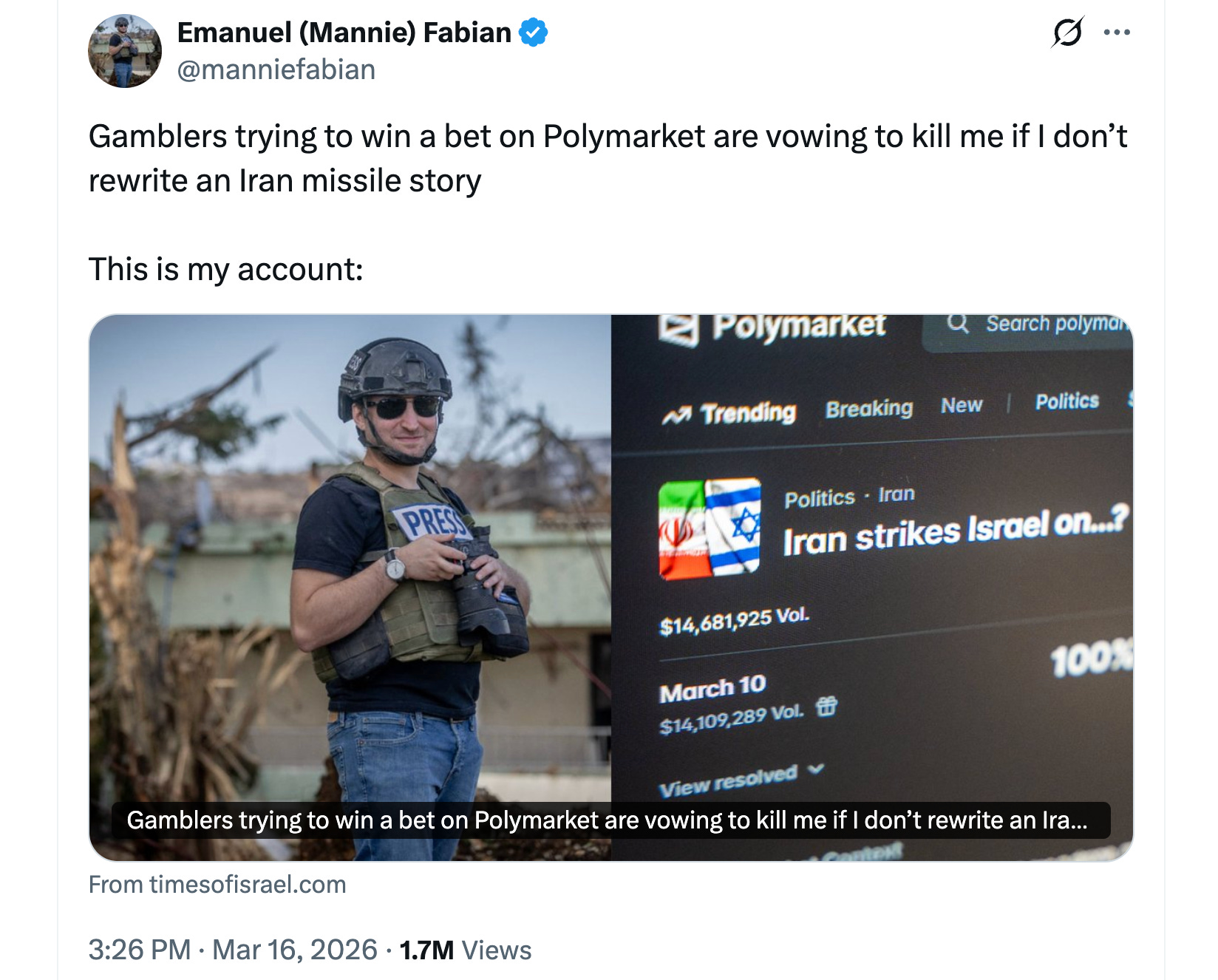
I do not mean that Polymarket as such can be art. I mean that its form - a device for attaching stakes to any event in the world, and forcing rival interpretations into a shared probability space - has the potential to become art in the old sense: not as autonomous decoration, but as consequential representation. Even its mathematics points in that direction. The same family of functions (the softmax) that, in prediction-market theory, can turn competing outcomes into prices also appears in AI models when competing scores are turned into probabilities. Different domains, same gesture: a crowd of possibilities compressed into a shape of belief. Is that not, in its own way, beautiful?
But video games or prediction markets are only the most visible example. Consider what AI is doing to the image. When anyone can generate a photorealistic painting by typing a sentence, the cost of visual production collapses the way the cost of ornament collapsed in the nineteenth century. The same status-competition logic that Alexander identified for architecture should apply: when AI-generated images are free, the signal value of images collapses, and new forms of signaling emerge. But McLuhan’s tetrad suggests something more interesting: AI-generated images will obsolesce the individual artist’s visual production - and in doing so, they will retrieve something older. What becomes valuable when everyone can make images? The shared simulation - the rule-set, the grammar, the bronze - that no AI can generate, because bronze requires a shared problem between maker and audience, and a machine has no stakes.
Climate, AI, the governance of technologies that will reshape what it means to be human - these are coordination problems of a scale that dwarfs anything the Medici faced. They desperately need the kind of shared meaning-making that art provided when it was still oriented toward something beyond itself. George Steiner argued that all serious art requires a “wager on transcendence” - a bet that meaning exists beyond the immediate and the contingent.26 The new shared problems are transcendent in exactly this sense: they exceed any individual, any generation, any nation. They require the kind of long-term, high-stakes collaboration that once produced cathedrals.
McLuhan’s framework suggests that the shared problem has not vanished. It has migrated to and is being captured by new media - media we may not yet recognize as the art forms they are becoming. The question, then, is not who will drive the next aesthetic change. The question is whether we can recognize the new shared problems, build the new simulations, and reconstruct the conditions - competitive but collaborative, constrained but ambitious, oriented toward something larger than any individual - under which generative friction has always produced the best of what humans can make. The history suggests that wherever such conditions have existed, productive making has followed. Let’s see.
Jonathan Israel, The Dutch Republic: Its Rise, Greatness, and Fall, 1477–1806
Svetlana Alpers, The Art of Describing: Dutch Art in the Seventeenth Century
Lauro Martines, Power and Imagination: City-States in Renaissance Italy
Richard A. Goldthwaite, The Building of Renaissance Florence
Ada Palmer, Inventing the Renaissance: The Myth of a Golden Age
Francis Haskell, Patrons and Painters
E.R. Dodds, The Greeks and the Irrational
Michael Baxandall, Painting and Experience in Fifteenth Century Italy
Michelle O’Malley, The Business of Art
Larry Shiner, The Invention of Art
Colin Campbell, The Romantic Ethic and the Spirit of Modern Consumerism
Harrison White and Cynthia White, Canvases and Careers
Robin Evans, The Projective Cast: Architecture and Its Three Geometries
Roger Scruton, The Aesthetics of Architecture
Robert Venturi, Learning from Las Vegas
Fredric Jameson, Postmodernism, or, the Cultural Logic of Late Capitalism
Tom Wolfe, The Painted Word
Mark Fisher, Ghosts of My Life
Pierre Bourdieu, The Rules of Art
Paul Thomas Murphy, Falling Rocket: James Whistler, John Ruskin, and the Battle for Modern Art
Tia DeNora, Beethoven and the Construction of Genius
Marshall McLuhan, Understanding Media: The Extensions of Man
Andrew McLuhan, “Laws of (New) Media,” a16z (2024).
James Johnson, Listening in Paris
Lawrence Levine, Highbrow/Lowbrow
George Steiner, Real Presences
The mounting unease about the dissolution of the common problem in architecture under industrial production and mass consumption is quite evident in the debate about style in 19th century German-speaking world.
Luke Jones and George Gingell go on a fairly lengthy tangent about the writings of Semper, Hübsch and Bötticher in their AB+C series on Otto Wagner, which gives a lot of context to the problem the Viennese secession was trying to address.
https://youtu.be/cKb_xKkem0E?is=AeUNlaNz3-5W0HYD