
I. What a Cairo waqf and an Osakan railway have in common
What do Osakan city planning, a Cairo waqf of the fourteenth century, the Medici banking-and-patronage machine of Quattrocento Florence, the Hanseatic kontors of Bergen and Bruges, the London ground-lease estates of the Dukes of Westminster and Bedford, and Hong Kong’s station-and-mall complexes have in common - and what separates them, sharply, from the Pacific Electric Railway of Los Angeles, Standard Oil, AT&T, and the standard American suburb?
The first list shares a single institutional pattern, repeated across nine centuries and four continents. An operator controls a piece of urban infrastructure - a railway, a madrasa, a long-distance trade route, a banking ledger - and the complementary businesses around it (the housing, the retail, the cultural institutions, the entertainment, the schools), and keeps them all on a single balance sheet. The second list shares the opposite pattern: an operator acquires same-service rivals (more rail miles, more refining capacity, more cellular spectrum, more single-family lots) until the dominant position becomes a single industry-wide firm, while the complementary businesses that would tie the infrastructure to the texture of a city are kept on someone else’s balance sheet, or no balance sheet at all. The shorthand for the first is vertical integration; for the second, horizontal consolidation. The institutions on the first list have lasted - materially, financially, culturally - across regime changes, currency changes, and in some cases, empires. The ones on the second list have fallen apart, been broken up by their own governments, or persisted only as financial entities while the cities they once shaped became fossils of themselves.
Consider two specific cases of this fork that played out simultaneously, on opposite sides of the Pacific Ocean, between roughly 1898 and 1907. Two railway entrepreneurs, working independently, pitched their investors on what was, in its essential bookkeeping, the same plan: lay a railway out into farmland nobody much wanted, buy the adjacent fields cheap before the line opened, and sell the lots once the rail had turned them into suburbs.1
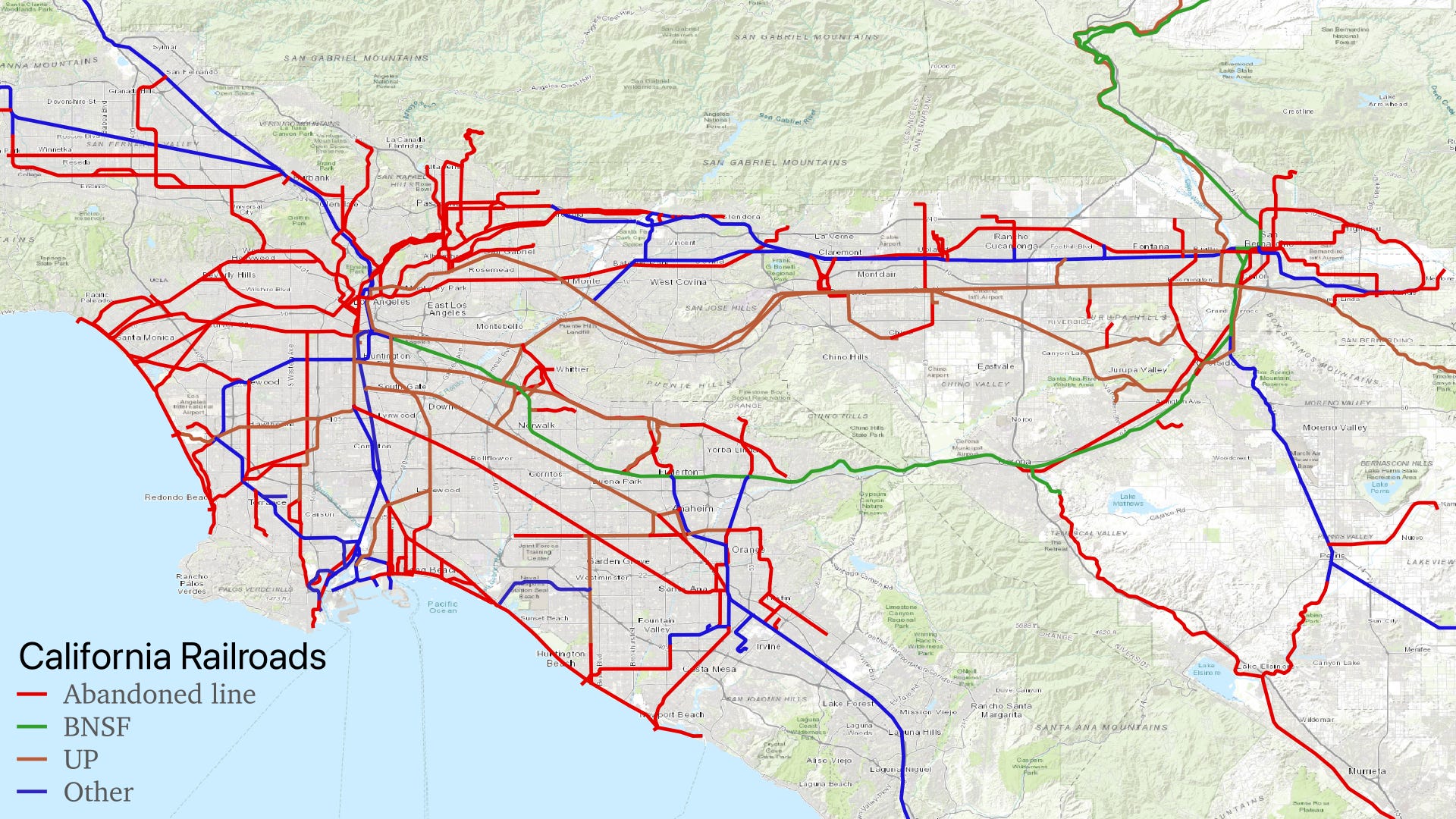
Henry E. Huntington came to Los Angeles in 1898 as the nephew and chosen heir of Collis P. Huntington, one of the four Big Four founders of the Southern Pacific Railroad. He arrived with roughly $22 million of inherited Southern Pacific stock proceeds, a national rail-finance pedigree, and a clear plan: roll up the existing Southern California streetcar operators into a single network - the Pacific Electric Railway, the famous “Red Cars” - and use it to make his own adjacent real-estate holdings valuable. Within a decade he had built one of the largest electric interurban systems in the world. By 1961 the last line of it had stopped running. The man had been dead since 1927; his fortune had survived him; the railway had not.
Kobayashi Ichizō, on the other side of the Pacific, was the inverse biographical case in almost every respect. He had been a salaryman branch manager at the Mitsui Bank - a parvenu in the Meiji industrial hierarchy by most accounts - when, in 1907, he was passed over for promotion and offered, almost as a consolation prize, a position at a struggling provincial railway concession that nobody senior wanted. He took it. By 1910 he had built it out as the Minoo Arima Electric Tramway, the company that would, in time, become Hankyu Railway. Rather than swallowing his three competitors - Hanshin, Keihan, and Nankai, all running parallel suburban lines out of Osaka in different directions - he ran alongside them. Rather than betting only on land sales, he opened a department store at his Osaka terminus in 1929, founded the Takarazuka Revue at the line’s far end in 1914, designed his suburbs around a monthly magazine he published for his commuters, and built, over the next thirty years, an integrated commercial-cultural ecosystem in which a ride on his train was also, in some sense, a subscription to the way of life the company sold. By the late 1950s, when the Pacific Electric was being scrapped on Terminal Island, the Hankyu trains were carrying roughly the same passenger volumes through the same Umeda terminal as in 1929; Kobayashi himself had died in January 1957, aged eighty-four, and the system he had built outlived him in the form he had built it.
Two strikingly similar starting plans; two unrecognisably different outcomes. What did the work over the thirty years between founding and divergence was the political economy of each country and the legal scaffolding it produced: which laws each man operated under, who had written them and against which coalitions of interest, and which routes of corporate expansion (rolling up rivals, buying complements, exiting the rail to keep the land) the rules of each country opened or closed. Once that political economy comes into focus, the comparison becomes the basic question every long-lived city eventually answers: who owns the infrastructure, what are they legally allowed to build around it, and who captures the surplus it generates? The answer that early-twentieth-century Osaka arrived at turns out to be closer in form to a Cairo waqf of the fourteenth century, or a London ground-lease estate of the eighteenth, than to anything happening in 1900s America. The Kobayashi form has older roots than the modern American antitrust regime, whereas the Huntington form is the historical anomaly - a sixty-year local synthesis specific to the Anglo-American legal universe between roughly 1880 and 1940, which many emerging cities of the twentieth century then aspired to and copied.
Naming the historical anomaly is not an invitation to romanticise the past: its practical use is that, once one sees what political economy did to produce the Huntington form, one can ask what it would take in the political economy of cities today to produce something closer to Osaka, Vienna, or Hong Kong.
II. The same business plan, twice
In December 1904, Huntington gave an interview to the Los Angeles Examiner:
“It would never do for an electric line to wait until the demand for it came. It must anticipate the growth of communities and be there when the builders arrive.”2
Less than three years later, on the other side of the Pacific, a former branch manager of the Mitsui Bank pitched investors on a rural tramway between Osaka and the hot-spring town of Takarazuka. His arithmetic was:
“There are many ideal residential areas along the railway line - if one were to buy the most suitable land along the railway line for one yen per tsubo, and one were to buy 500,000 tsubo, one would earn a profit of 2.50 yen per tsubo after opening for business, and one would earn 125,000 yen by selling 50,000 tsubo every six months.”3
Five hundred thousand tsubo is roughly 1.65 million square metres, or about 165 hectares - a land play at the scale of a mid-sized neighbourhood. It is also the same play, in identical logic, that Huntington was running an ocean away. The mechanism is worth slowing down to look at, because the rest of this essay will keep coming back to it.
For most of urban history, a railway did not make most of its money from selling tickets. The fares paid the operating costs and serviced part of the debt, while the real money came from the locational value that the line manufactured around itself. Empty land nobody much wanted became, the moment a commuter rail line ran through it, residential land that investors or families with money were willing to buy. An operator who had quietly acquired that land before opening the line could pocket the difference. The line itself was, from the operator's point of view, a capital good whose specific economic function was to manufacture locational value out of empty ground; the land company alongside it was the till that collected the manufactured value.
Huntington had set this up explicitly. He incorporated the Huntington Land and Improvement Company (HL&IC) in 1902 - separately from the Pacific Electric, with separate books and separate creditors - for the precise purpose of buying farmland in a half-circle around the planned rail extensions, holding it through the construction year, and selling subdivisions once the trains had begun running. By 1910 he owned roughly 35 percent of present-day Alhambra, 75 percent of San Marino, and 90 percent of Redondo Beach.4 Between 1904 and 1913, an internal Pacific Electric record put it, “approximately five hundred new subdivisions were opened every year [in Los Angeles], and almost all were within a block or two of a streetcar line.”5 The streetcars were the manufacturing machine and the land company was the till that collected the manufactured value.
Kobayashi was running the smaller, denser version of exactly the same machine. His Minoo Arima Electric Tramway had acquired roughly 200,000 tsubo - about 66 hectares - by October 1908, and more than 300,000 tsubo by autumn 1909, most of it bought for just over a yen per tsubo before the line opened. The corridor was shorter than Pacific Electric’s longest spurs by an order of magnitude, but the bookkeeping was identical: capture the land at pre-rail prices, hold it through the construction year, sell or rent at post-rail prices once the suburb existed.
This is what Schotanus means when he writes that the two founders’ starting business models were “strikingly similar,” and one should be careful not to bury the point under the differences that came later. The two men were not running different strategies of urban infrastructure provision in 1907. Rather, they were running the same strategy in two different legal environments. The interesting question is not what either of them decided to do at the founding but what each man’s political-economic environment legally allowed him, and over time required him, to do over the next thirty years.
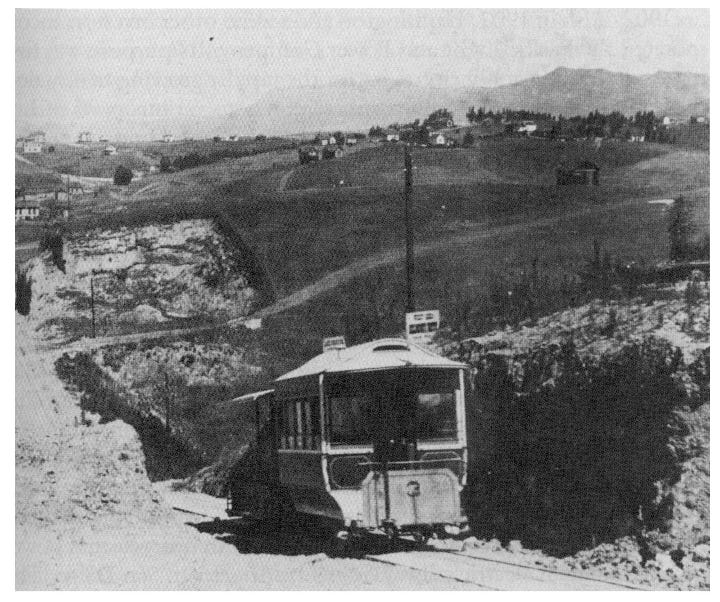
Transit-oriented development was, in effect, invented twice in the early 20th century, independently, on two continents. Both men were monopolists of land along corridors they had personally laid down. Starting from essentially the same design, they ended up in forms that look nothing alike - and the interesting question is what happened in between.
III. What Huntington could legally do that Kobayashi could not
Huntington ran two distinct rail businesses and a land company. The Pacific Electric was the interurban - the long-distance “Red Cars” reaching from central Los Angeles out to the orange groves, beach towns, and inland valleys at over a thousand route-miles. The Los Angeles Railway, the “Yellow Cars,” was the intra-urban streetcar network inside Los Angeles proper, the ordinary work of downtown mobility. HL&IC was the land arm.
In 1917 Huntington sold his electric-utility subsidiary, Pacific Light & Power, to Southern California Edison. In 1920 he executed a stock swap with the Southern Pacific: SP took outright ownership of the interurban Pacific Electric; Huntington kept the intra-urban Yellow Cars and HL&IC. By the time he died in 1927, his wealth had been consolidated into real estate, the intra-urban streetcars, and liquidated proceeds. The interurban - the most visible piece of his system - had been out of his hands for seven years.
This places the famous 1938 GM-Firestone-Standard Oil-Mack streetcar conspiracy a full generation too late to matter. By the time National City Lines began acquiring bus operators, the Pacific Electric had been someone else’s troubled, rate-regulated asset for fifteen years, and the intra-urban Yellow Cars were the system Angelenos actually rode to work. Both were dying for prosaic reasons: Progressive-era fare caps below cost inflation; private deed covenants like Oak Knoll’s, fixing minimum lot sizes at one to ten acres and minimum construction costs of $6,000–$15,000, locking in densities at which commuter-rail economics could not work; and the postwar federal highway subsidy.6 The streetcar conspiracy is a folk explanation that arrived two decades after the structural decision had already been made.
The 1920 swap matters more than the 1938 conspiracy because of what it reveals about American corporate form. HL&IC and the Pacific Electric were two legally separable entities, with separate books from 1902 onward. Huntington could sell one and keep the other because American law treated them as distinct assets that happened to share a founder. Kobayashi could not execute the equivalent transaction. Hankyu’s rail, stores, theatre, housing and land company were cross-held at the apex and had been designed from the start as a single enmeshed system.7 Pulling out the rail would not have killed the commuter flow; it would have killed the cash flow that paid the rail company’s bonds, because Kobayashi had been underwriting the track with department-store, theatre and housing profits since the original 1907 licence application. Huntington’s empire was modular: he could detach the rail from the land company and still have the land company. Kobayashi’s was integral: the rail and the land and the stores and the theatre were one accounting machine, designed that way from the founding for reasons we will come to below.
That difference was structural from the founding. American law treated HL&IC and the Pacific Electric as distinct firms with distinct creditors, and Huntington - who had horizontal merger available to him and fares only lightly regulated in his first decade - had no business reason to enmesh them. Kobayashi was operating in the inverse environment from his first licence application: fares state-capped, rivals legally unbuyable, complementary businesses available by permit. The only viable balance-sheet design was the one that booked the rail’s debt against the complements’ profits. Both men were responding rationally to two different sets of rules about what a railway company was allowed to do.
IV. What you bought when you bought a ticket to Takarazuka
Both men also built cultural monuments at roughly the same scale. The corporate address mattered.
Beginning in 1919 on his most valuable real estate, Huntington assembled what would become The Huntington Library, Art Museum, and Botanical Gardens in San Marino. By his death in 1927 the collection was substantial and the charter committed the institution to free public access - the full apparatus of elite cultural legitimation, filed outside the operating company as a personal endowment.
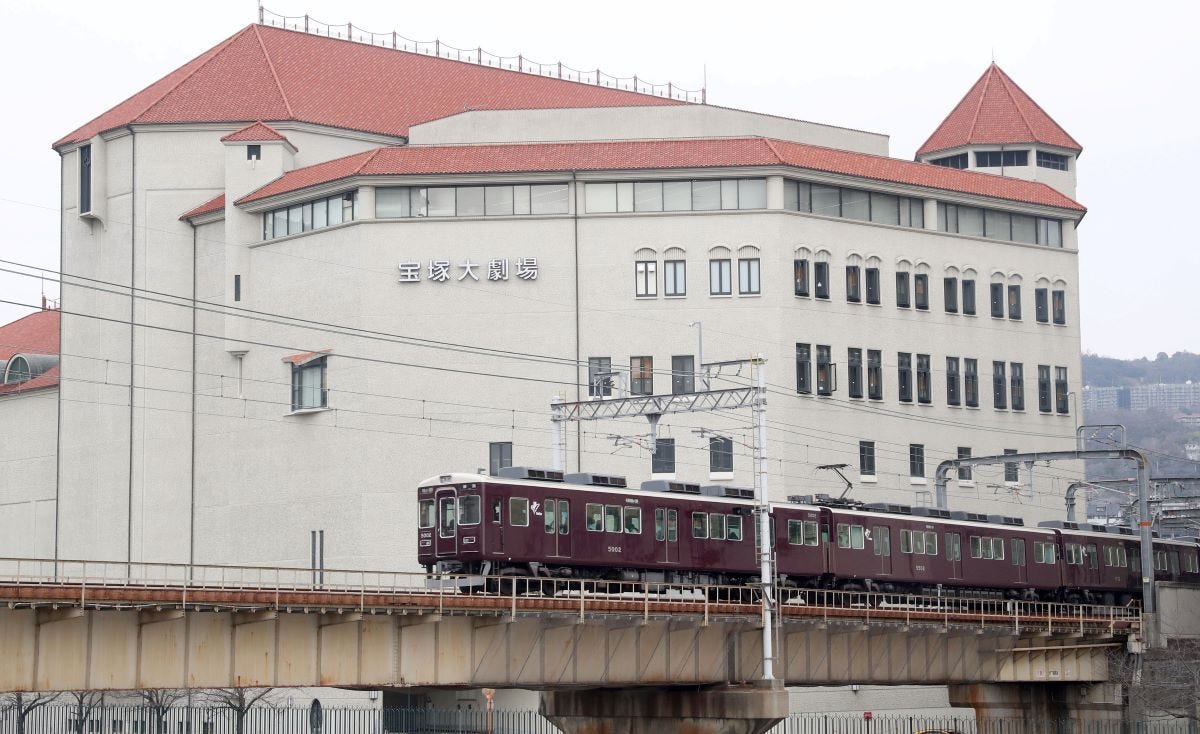
Kobayashi made the opposite filing. The Takarazuka Revue (1914), the suburban-taste magazine Sanyō-suitai (from 1913), and the Hankyu Umeda department store (1929, the first department store owned by a railway company anywhere) were all operating assets of Hankyu itself.8
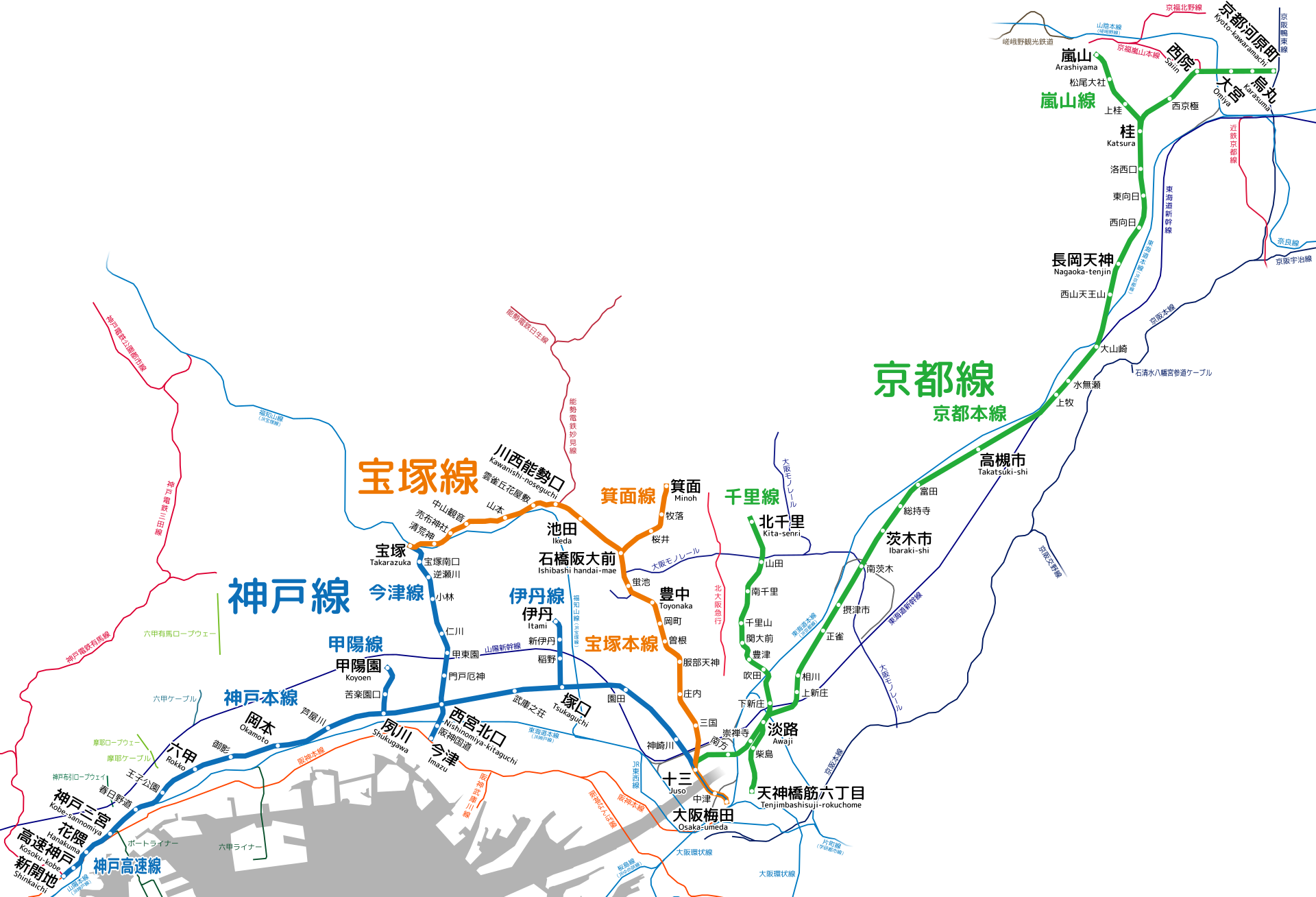
A cultural institution inside the firm is a recurring revenue line that deepens commuter loyalty, generates department-store foot traffic, and legitimates the licence under which the firm operates. A cultural institution outside the firm is a status conversion that benefits the founder’s heirs and posterity but leaves the operating company to drift. Hankyu still runs the Revue; every girl in western Japan who has ever dreamed of Takarazuka is, in some sense, the customer of a railroad. The Pacific Electric is a museum exhibit. The Huntington Library is in excellent health, but has nothing to do with anyone’s commute.
V. A coordinate system for urban infrastructure
Two axes catch most of what is happening across the above comparison. One axis is integration strategy: a firm or polity can grow by acquiring rivals that produce the same service (more rail miles, more refining capacity, more cellular spectrum) or by acquiring complements that share its land, customers, and off-peak capacity (a department store at the terminus, a theatre two stops down the line, residential development on the land the line will pass through). These two regimes can vary along the other axis - ownership regime: the operator is either a private firm or a public/municipal entity.
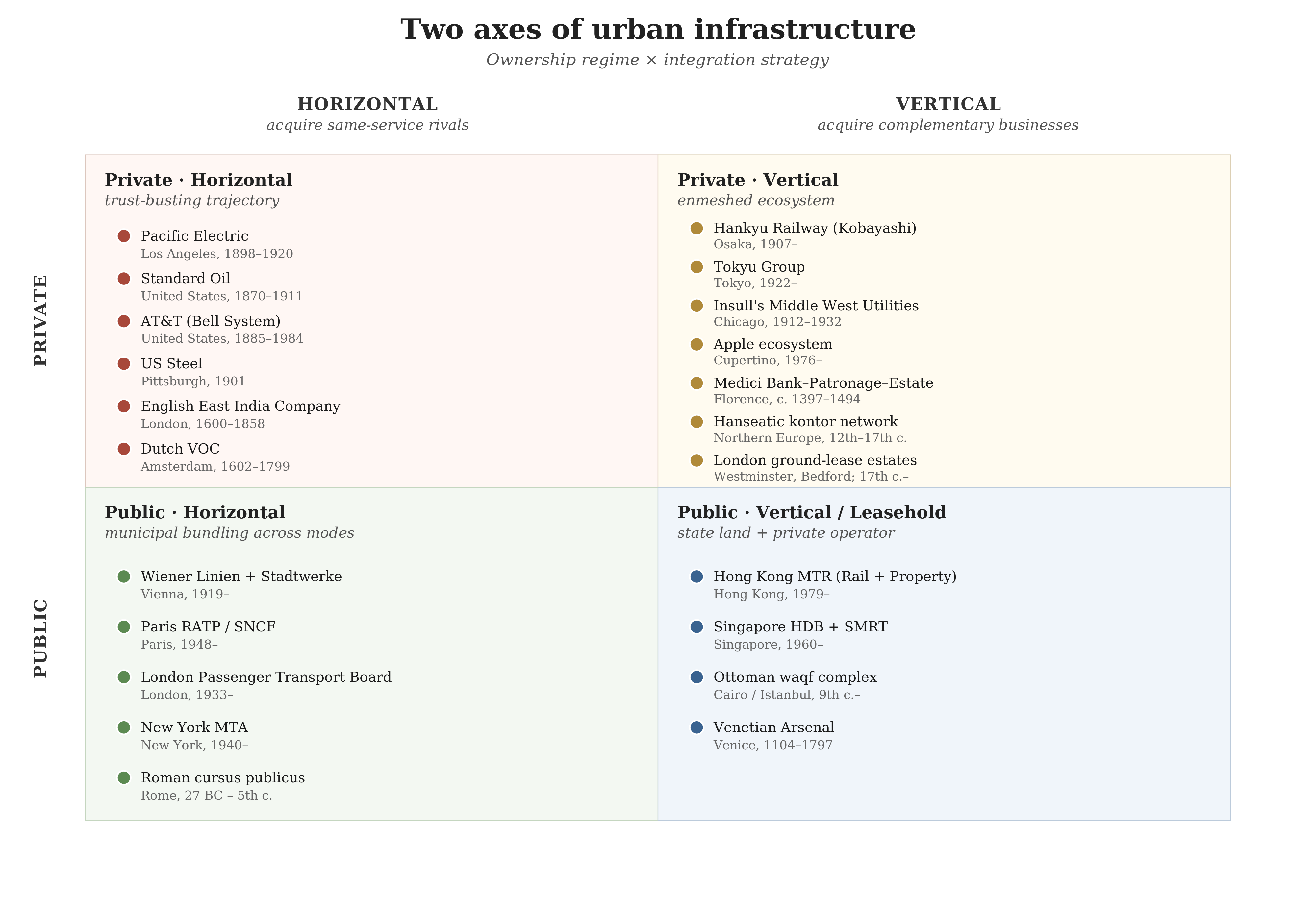
The private-horizontal quadrant collects Huntington’s Pacific Electric (assembled by buying the Los Angeles Pacific, the Pasadena & Pacific, and three smaller carriers), Standard Oil before 1911, AT&T before 1984, US Steel after 1901, and the chartered long-distance trading monopolies of an earlier era - the English East India Company (1600–1858) and the Dutch VOC (1602–1799). The growth strategy is to absorb same-service rivals; the regulatory state polices rents through rate caps but does not own.
The private-vertical quadrant collects Hankyu, Tokyu, Seibu and the rest of the Japanese private-rail group - operators that extended into complements rather than consolidating same-service rivals. Insull's Middle West Utilities (Chicago, 1912–1932) belongs here too: although Insull also consolidated rivals horizontally within the electricity layer, the architecture of his empire was structurally vertical - generation, transmission, urban streetcars, and adjacent real estate as one stack. The Apple ecosystem is a contemporary cousin. So is Medici Florence, where a banking enterprise was internally enmeshed with patronage networks, country estates and political offices, and so are the older cases this argument returns to in section VIII.
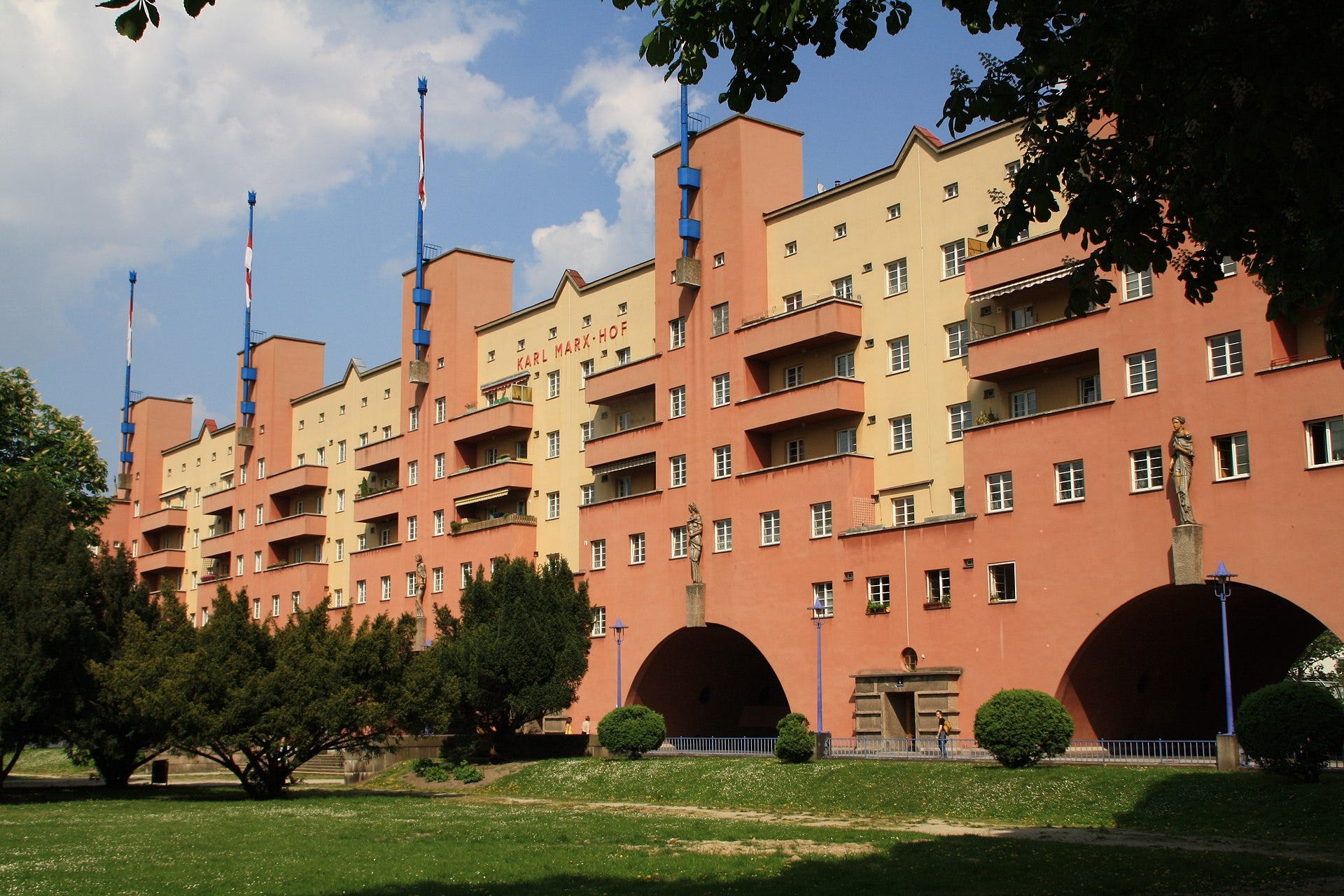
The public-horizontal quadrant collects the European municipal portfolio. Vienna is the cleanest case: the city owns Wiener Linien (transit), the Wiener Stadtwerke utility holding (electricity, gas, water, heating) and Wiener Wohnen (around 220,000 municipal apartments). Paris (RATP, SNCF, Eau de Paris, Paris Habitat), the unified London Passenger Transport Board after 1933, and the New York MTA after the 1940 unification follow the same pattern. The Roman cursus publicus - the imperial postal-and-relay system instituted under Augustus and run as a single state-administered network across the Mediterranean - sits in the same quadrant in a pre-modern frame. Each operator bundles same-class assets within its remit; cross-business-line bundling - transit plus utilities plus housing - happens one level up, at the polity itself, through separate public corporations coordinated by the municipal budget rather than corporate cross-shareholdings. The distinction between this quadrant and the private-vertical one (Hankyu, Tokyu) is not whether cross-business-line integration happens but where it sits: inside a single firm's balance sheet in private-vertical, or across several public firms sharing a single political owner in public-horizontal.
The public-vertical / leasehold quadrant has the longest historical roster. In its modern form it collects Hong Kong’s MTR with its Rail+Property model and Singapore’s HDB-plus-SMRT pairing: the state retains ultimate ownership of the land, a single regulated operator gets both transit rights and adjacent property-development rights, and uses property revenue to fund the rail. The same logic, in a pre-modern frame, places the Ottoman waqf complex (perpetual charitable endowment, single trust manages mosque-school-bath-bakery as one compound) and the Hanseatic kontor network (city-granted privileges over a single trading-house compound combining residence, warehouse, court, and chapel) in the same quadrant.
What follows is a story about which doors each jurisdiction had open in roughly 1900-1935 - the window in which the institutional shape of the next century was set - and about what that history implies for the cities being shaped now.
VI. The political economy that built each track
A sharp-eyed reader might notice a paradox. Meiji Japan was authoritarian, oligarchic, and bureaucrat-driven. The United States in 1900 was constitutional, democratic, and antitrust-conscious. If asked which of the two would refuse to allow rail rivals to merge, one would not, unaided, guess Japan.
Meiji licensing as zaibatsu balancing
The Meiji oligarchy did not license multiple private railway operators because it admired competition. It did so because the regime was held together by balance among rival industrial houses (zaibatsus) - Mitsui, Mitsubishi, Sumitomo, Yasuda - and granting all rail concessions to a single house would have made that house politically irreplaceable, breaking the equilibrium the genrō depended on.9 The 1900 Private Railway Law set up a route-specific licensing regime: the state, not the market, decided which corridor was served by whom, and franchises were non-transferable rights granted to particular families on particular routes rather than assets that could be sold between private parties.10 Hanshin took the southwestern Kobe corridor in 1905; Kobayashi’s company the northwestern Takarazuka–Kyoto corridor in 1907–1910; Keihan the eastern Kyoto–Yodo route; Nankai the southern. The 1906–07 nationalisation of the long-distance trunk lines driven by military reasoning was protective of this arrangement rather than anti-private. The trunk system was strategically vulnerable, the bottleneck for any future military mobilisation, and the Meiji state needed unified logistics control over it. Absorbing the trunks into the state cleared the suburban capillaries for a managed plurality of private operators tied to rival zaibatsu fortunes - the state took the militarily critical layer for itself, while leaving the civilian-commuter layer to a balanced field of competitors. In its essence, the pattern was: Japan licensed corridors, not companies; held fares low while permitting case-by-case diversification into complements; and used nationalisation to protect plurality at the suburban layer rather than extinguish it. The United States did the inverse on every line.
The 1910 Light Railway Law then eased entry into secondary lines - the only major statute of the era that cuts against the assumption that licensing regimes are always entry-restrictive.11 The Meiji state had a specific problem: the secondary railway network - capillaries between mid-sized towns and the suburban corridors of growing cities - needed to extend faster than the public budget could fund. The statute solved the problem by paying private operators in regulatory currency: streamlined application procedures, lower technical specifications (lighter rail, narrower right-of-way, lower bridge tolerances), and faster prefectural approval to any builder willing to extend the network into corridors the state could not finance. The state underwrote private entrepreneurship in suburban rail at a layer it had decided was non-strategic, and it was into this opening that Kobayashi pushed.
Fare regulation was tight - fares required state permission to adjust and were pinned below cost inflation, much as in the American Progressive utilities - but this was paired with a discretionary permission regime for non-transport businesses under Article 9 of the Local Railway Law, not an outright prohibition12. State officials, viewing diversified private rail as serving the national-development plan, granted permits when asked. Horizontal merger was unavailable; fare-based extraction was capped; one door was left open.
That Kobayashi was good at running through the open door is biographical. That the door existed at all is political-economic, written by Meiji bureaucrats for reasons of regime balance and capital scarcity.
The Sherman Act, the courts, and the natural-monopoly exemption
The American legal landscape was built by the inverse coalition solving the inverse problem. The Sherman Act of 1890 was a populist response to the Granger Movement’s complaints about railroad rate discrimination and small refiners’ anger at Standard Oil; its political target was unfair monopoly - collusion, rebates, predation - not monopoly itself.13
However, the interesting move happened in the courts, not the statute. Munn v. Illinois (1877) had established that legislatures could regulate “businesses affected with a public interest,” and Wabash (1886) and the Interstate Commerce Act (1887) delegated rate-setting to commissions. The 1911 Standard Oil decision then introduced the rule of reason, treating the vertical stack of pipelines, tank cars, terminals and distribution as the object of antitrust suspicion rather than mere size.14 Out of these threads American courts wove a doctrine without ever quite codifying it: when a sector was regulated as a “natural monopoly,” rate regulation substituted for antitrust. Huntington could buy his rivals because California’s railroad commission could cap his fares once he owned them. AT&T’s Theodore Vail walked into this opening on purpose: the 1913 Kingsbury Commitment offered horizontal monopoly in exchange for federal oversight (under the Interstate Commerce Commission, the federal regulator that had been set up in 1887 to oversee railroad rates), divestiture of competing long-distance operators, and universal-service obligations. Regulators preferred one accountable company to competitive chaos.15
Note what was not happening on the Japanese side at the same time. Japanese rail rates were set by ministerial discretion rather than litigated through judge-made law, and the Meiji state had already decided at the political level that horizontal merger was off the table. The American doctrine had to be invented, case by case, because the underlying political economy left horizontal consolidation legal as a default and someone had to find a workaround for what to do with the resulting monopolies. Japanese officials never faced that problem because they had foreclosed the merger option upstream of any court.
The asymmetry is the through-line of American competition policy. Horizontal consolidation was tolerated when paired with rate regulation; vertical integration was attacked across the economy. (The mirror asymmetry on the Japanese side is worth naming explicitly: horizontal was foreclosed by licensing and vertical was tolerated by the same licensing regime, because the bureaucracy regarded vertical complements as legitimate ways for fare-capped operators to remain solvent and serve the national-development plan.)
The reason the courts split the two this way is worth pausing on, because it is the structural decision behind everything that follows. A horizontal monopolist sets a single price the regulator can observe and cap; a vertically integrated firm sets prices at multiple stages - pipeline tariffs, refining margins, distribution rebates - and can foreclose rivals at any of them while showing a “reasonable” price at the layer the regulator happens to be watching. Standard Oil (1911) targeted exactly this: the trust’s offence was less its size than the combination of refineries, pipelines, tank cars and railroad rebates, each leg of the stack used to extinguish independents at the others. Vertical integration was illegible to the rate-regulation tools the courts had built; horizontal monopoly was legible. Faced with that difference, judges and commissioners chose the legible target. The unintended consequence was a doctrine that approved consolidation of identical assets while attacking the integration that would have produced layered, durable urban form.
The sharpest evidence that the Hankyu form was legally foreclosed in America is the Insull case. Samuel Insull, a former private secretary to Thomas Edison, built across the 1910s and 1920s the holding company Middle West Utilities, headquartered in Chicago; at its 1928 peak it controlled forty-six utility subsidiaries across the Midwest, generating roughly an eighth of all US electric power. The architecture was the Kobayashi pattern transplanted to American soil: Middle West owned the generators, the transmission lines, the urban streetcar systems that ran on that power, and increasingly the real estate adjacent to its lines, including the Civic Opera House on Wacker Drive - the cultural-monument layer Insull commissioned for the Chicago Civic Opera Company he had organised, opened in 1929 in a forty-five-storey tower whose office rents were intended to subsidise the opera below, in an almost exact structural rhyme with Kobayashi’s Takarazuka. Streetcars served as off-peak load balancers for the power plants; the power plants subsidised the streetcars; the real-estate operations captured the locational value the streetcars created. Insull was, in 1928 Chicago, doing what Kobayashi was doing in 1928 Osaka.
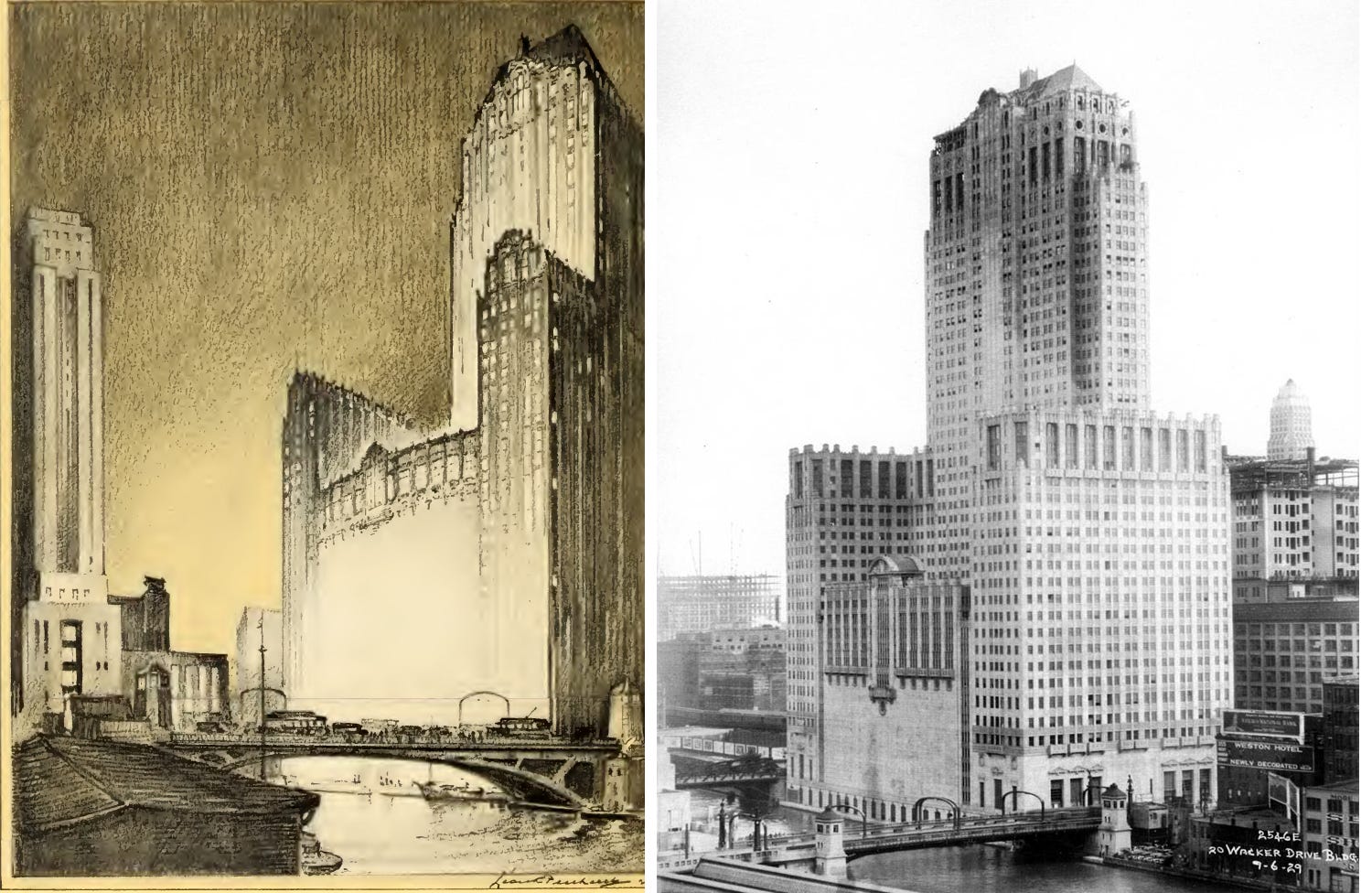
The system collapsed in 1929-32 more from the financial fragility of the holding-company pyramid Insull had used to assemble it than from operational failure: cross-default clauses propagated stress through the stack when equity markets froze, and small investors across the Midwest who held Insull preferred shares were wiped out. The Public Utility Holding Company Act of 1935 (PUHCA), passed in direct political response, hardened the doctrinal asymmetry into statute: it required geographic and functional consolidation along single-service lines, broke up multi-tier holding pyramids, and outlawed cross-subsidy between regulated and unregulated affiliates.16 Insull’s particular pyramidal financing was the trigger; what PUHCA prohibited was the integrated form itself, regardless of how it was financed. The structure Hankyu continued to operate in Osaka was made, by federal law, illegal in the United States. America did not merely fail to invent the Hankyu model - it tried it, watched it collapse, and then made the model itself illegal for the next seventy years.
A second mechanism worked one level deeper, in railroad finance: the J. P. Morgan reorganisations of the 1890s and 1900s imposed voting trusts and bond-holder covenants that explicitly forbade dividend diversion to non-rail subsidiaries and prohibited mergers with unrelated businesses, designed to make American railroads legible to European bond investors as single-revenue-stream natural monopolies.17 Pacific Electric was never Morgan-reorganised - which is part of why Huntington had freer rein than his eastern peers - but the dominant rail-finance form on Wall Street wrote the opposite of Kobayashi’s cross-holding logic into its loan covenants as a matter of doctrine.
A third mechanism was zoning. Before about 1910, suburbs were protected from industrial intrusion by distance from rail. The 1910s broke that geography with the low-cost freight truck and the jitney bus, which could serve any address on any road.18 Homeowners in streetcar suburbs - a newly powerful bloc - organised through municipal government to protect their largest asset, and the 1926 Euclid v. Ambler decision blessed single-family zoning by analogy to nuisance law. Minimum-lot rules became the core exclusionary instrument because they apply per dwelling unit, not per parcel, and the complementary tools (height ceilings, setbacks, FAR caps, deed covenants) interlock to make multi-family infeasible even where a single rule could be navigated.19 Together these priced out the multi-family densities commuter rail needed.
European municipal lineage
The European model is the case readers most often misread, because European institutions look American on the surface - democratic, urbanised, economically integrated - yet produce dense, transit-rich, and vibrant cities in a way American institutions do not. The political economy underneath is the explanation worth disentangling.
US municipalities are creatures of state legislatures: their charters, taxing authority and franchise powers derive from state law and can be revoked by state law. They have always governed, yet they have rarely owned. Boston runs a school department and a zoning board, but it does not own the MBTA, Eversource, or the city’s housing stock. Hamburg, by contrast, owns its harbour, port railway, electricity works, water utility, and a substantial share of its housing through a single municipal corporation, with the city itself as majority or sole shareholder. The difference is not in degree of municipal authority but in what the city legally is. The federal housing settlement of 1934 then locked the asymmetry in by subsidising private homeownership through FHA insurance and the mortgage-interest deduction rather than building public housing at scale, producing a homevoter coalition whose interests aligned with private utilities against municipal ownership.
European cities sat on a different stack of institutions. Continental urbanism inherited a continuous tradition of municipal self-governance running through the medieval Italian comuni, the Hanseatic League, the German Reichsstädte, and the salt and grain monopolies that pre-modern city governments operated as commercial undertakings on their own account.20
Nineteenth-century liberal reformers and twentieth-century social democrats did not invent European municipalism; they modernised an existing form in which the city already directly owned utilities, transit, housing and land. When socialist majorities took Vienna in 1919 they extended a Habsburg-era apparatus rather than build one; when Frankfurt and Munich consolidated their Stadtwerke, they systematised a municipal-utility tradition reaching back to the gas and water works of the 1860s. American cities had municipal governments with delegated administrative powers; European cities had municipal enterprises with continuous direct holdings. That distinction is crucial for understanding why the European answer to the 1920s rail-finance crisis was public ownership rather than vertical private integration.
VII. The 1944 natural experiment
A useful test of whether Japanese operators preferred the form, once free to choose, is the moment the licensing regime was suspended. In 1944 the wartime state forced a merger of five private rail operators in the Tokyo region into a single entity known colloquially as the Great Tokyu, executed from above for logistical-military reasons. After the war, under the anti-zaibatsu dissolution programme led by SCAP - the Supreme Commander for the Allied Powers, the American occupation administration headed by General MacArthur - the Great Tokyu was broken back up: Tokyu, Odakyū, Keiō, Keihin Kyūkō and Sagami were restored as independent operators.21
They never re-merged. Released into a postwar environment that permitted independent corporate existence, with recent operational experience of working in coordination, they chose apart. By the 1990s the Tokyu group alone comprised roughly four hundred affiliated companies across rail, real estate, hotels, airlines, television and resort operations, the parent railway accounting for about 2.2 percent of group operating revenue.22 Tokyu’s 1963–1984 Tama Den-en-toshi - a planned new town of roughly 5,000 hectares with an eventual population near half a million - is the most dramatic single instance of private-rail-driven urbanism in the postwar world. The operators preferred protected territory with strong vertical complements over merged territory with regulated fares alone, and they expressed that preference when the state briefly stopped imposing it. Anyone who suspects the model was sterile should note that its operators fought each other ferociously - just not over track. Hankyu built high culture; Seibu built mass entertainment; Tokyu built planned communities; Odakyū and Seibu carried on a multi-decade resort war on Mount Hakone vicious enough to become the subject of a novel.23
VIII. What horizontal integration has actually produced
Across two millennia, the historical record on horizontal infrastructure consolidation repeats a consistent shape.
The Roman cursus publicus - the imperial postal and freight system instituted under Augustus - integrated relay stations, way-stations, animals and couriers under a single imperial authority across the Mediterranean; it survived as long as the state that ran it. The chartered East India Companies, English and Dutch, were predominantly horizontal monopolies on long-distance Asian trade - they did integrate downstream into shipping, factories and fortified outposts, but the Crown grant that defined their existence was the exclusive right to trade in a region - that produced enormous early profits, then decades of corruption and military overreach, and ended in nationalisation or dissolution. The Hanseatic League is the diagnostic counter-example: it held its position in the Baltic and North Sea for four centuries by refusing to consolidate its member kontors into a single firm, operating instead as a federation of vertically integrated trading houses, and outlived every horizontal monopoly of its era.24 Medieval guild monopolies in production show the same shape: horizontal control of a single trade tends to produce price-fixing, entry barriers, and political backlash within a few generations.
Standard Oil exemplifies the modern variant. By 1879 Rockefeller controlled about ninety percent of US refining; the 1911 Supreme Court breakup split the trust into thirty-four successor companies. Within twenty years, the largest pieces had reconsolidated through ordinary market competition into a small number of vertically integrated majors - but each one was now a single-service oil major (extraction + refining + distribution as a continuous production chain, which courts treated as one industry), not the cross-industry holding company PUHCA was written against. By the 1990s Exxon and Mobil had remerged. AT&T is the complementary case - horizontal monopoly with regulatory partnership, from the 1913 Kingsbury Commitment to the 1984 divestiture, producing reach and stability and a forty-year innovation winter (the rotary phone was standard until the 1970s). US Steel ran the slow-decline variant: half of US output after Morgan’s 1901 merger, fifty years of scale-economy rents without serious innovation, eventual sale to Nippon Steel in 2024. Post-1980 American railroad consolidation under the Staggers Act produced four major freight carriers, Precision Scheduled Railroading, deferred maintenance, the 2023 East Palestine derailment, and rising shipper complaints.
Horizontal infrastructure consolidation in private hands tends toward one of three outcomes: regulatory backlash that breaks the firm, regulated stagnation, or oligopolistic divestiture without service improvement. None produces vibrant, layered urban form; none builds a Takarazuka.
The contemporary case sharpens what PUHCA had been preventing. Its 2005 repeal, finalised in the 2010 Dodd-Frank amendments, removed the scaffolding that had kept regulated and unregulated infrastructure (utilities and urban rail among them) from being commingled within one holding company. The repeal coincides with - and on the available evidence enabled - the rise of the modern hyperscaler: Amazon Web Services, Microsoft Azure, Google Cloud and Apple now operate cloud services alongside fibre networks, proprietary chips, custom power-purchase agreements, and physical data centres in regulated jurisdictions. The model is structurally close to what Insull was building in 1928 Chicago; the holding-company form once banned in utilities has returned in tech.25
The long-lived integrated systems are the vertical ones, and they sit on inalienable or near-inalienable ground. Take the Islamic waqf, the perpetual charitable trust. A founder - a merchant, sultan, or pious foundation - would dedicate urban land and buildings to a charitable purpose, in perpetuity, under sharia law; the dedicated property became inalienable, unable thereafter to be sold, mortgaged, or seized for debt. To produce the income that funded the charity (a religious school, a soup kitchen, a hospital), the founder layered revenue-generating businesses on the same dedicated ground: a mosque shared a wall with a madrasa, the madrasa shared a courtyard with a fountain endowed for travellers, the fountain shared a street with a bakery whose rent funded the school, the bakery shared a back wall with a bathhouse whose receipts funded the mosque. By the fifteenth century, more than a third of developed urban land in Cairo, Istanbul, and Damascus was held under waqf; the entire Sultan al-Ghuri Complex in Cairo was a vertically integrated commercial-religious-residential ecosystem on legally inalienable ground.26 When the ground cannot be sold, every conceivable complement gets built on it. This is Hankyu, 1913, with bakeries and Quranic schools in place of department stores and revues.
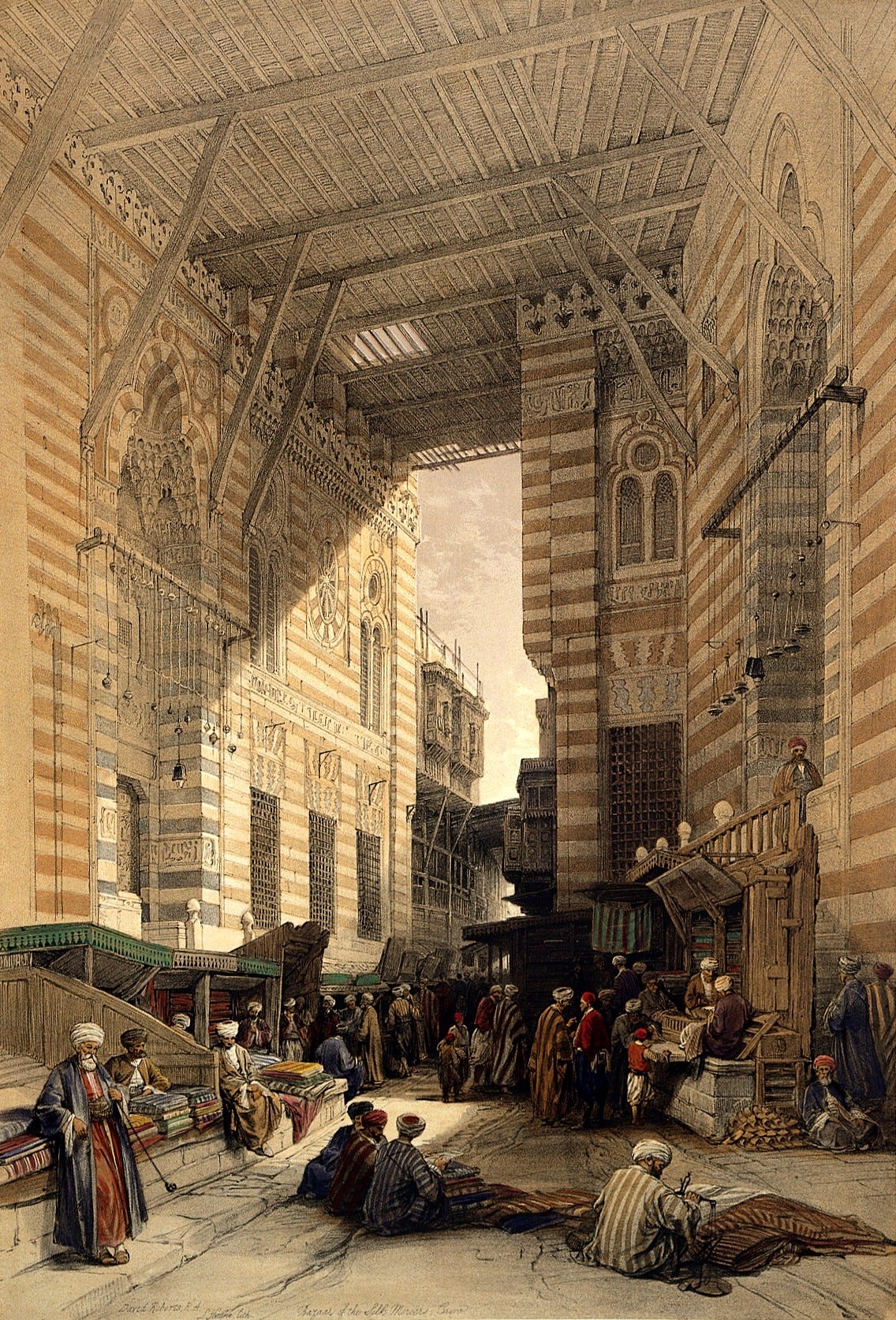
The Hanseatic kontors, granted privileges by host cities, bundled residence, warehouse, court and trading post on the same logic. The Venetian Arsenal vertically integrated shipbuilding, ordnance and naval logistics for half a millennium. The London estates - Grosvenor, Bedford, Cadogan, Portman - held land in freehold and granted ninety-nine-year ground leases under covenants that controlled use mix and architectural character of entire neighbourhoods, pre-modern vertical integration in everything but name.27 Hankyu reached this configuration around 1913; Cairo had been running a version of it for seven hundred years.
IX. What this implies for cities now
American cities trying to de-sprawl are pushing on the wrong lever. Bike lanes, light-rail extensions, and parcel-level upzoning overlays are not wrong, but they are insufficient against a legal environment that still forbids what made Osaka work and has not yet built what makes Paris and Vienna work. American transit agencies cannot, in most cases, operate a department store, a theatre or a cinema at a station; they cannot capture the full land-value uplift their stations produce, because adjacent private landowners are the beneficiaries.
The stakes go beyond the United States. Across the second half of the twentieth century, Fordist auto plants, World Bank highway loans, USAID street-grid codes, postwar military reconstruction, American consultancy firms and Hollywood’s road-trip narrative installed the Los Angeles synthesis as the default in many emerging cities - in the Gulf states, in much of Latin America; even the Chinese have a strong car-loving culture despite ultra-dense urbanism. Dubai today has 540 private cars per 1,000 residents, more than New York (305), London (213) or Shanghai (144); central Tokyo has 23 parking spaces per hectare against Los Angeles’ 263. The cities copying the form were copying an anomaly, but the political economy that produced it is actually reversible.
Of the four quadrants in the taxonomy, the public-horizontal door - Vienna, Paris, post-1933 London - is with important differences, nonetheless closest to American legal traditions, because American cities already tax property, already own right-of-way, and in some places already operate municipal utilities. The missing piece is value capture coordinated through tax instruments rather than a private railway company’s balance sheet - a corridor-scale special tax district modelled on the Crossrail Business Rate Supplement (the levy on commercial property within a kilometre of a new Crossrail station that funded part of the line) rather than a Hankyu.
The honest difficulty is the homevoter problem: a homeowner-dominated municipal government will not vote against its own asset-value protection for the sake of a transit system its homeowners do not want. Two routes around it are concrete. The first is value-capture districts on greenfield and brownfield land - port redevelopment zones, rail yards, obsolete industrial parcels - where no incumbent homeowner coalition exists. The Crossrail Business Rate Supplement and the Community Infrastructure Levy are corridor-scale versions of this approach. The second is regional or state-level pre-emption of the municipal veto: California’s SB 9, permitting two-unit lot splits as of right, is a small step; the Massachusetts MBTA Communities Act of 2021 is a larger one, requiring municipalities served by MBTA transit to zone for multi-family housing as of right within half a mile of stations.28 Both work by routing around the homeowner veto rather than trying to win a vote against it.
X. The doors that remain open
The Osaka operators did not out-compete Los Angeles. They inherited a different set of open doors, and walked through the ones available to them. So did Paris, Vienna, and Hong Kong. The form Kobayashi ended up inside has older roots than joint-stock capitalism - in the waqf, the Hanseatic kontor, the London ground-lease estate. The Huntington form is a sixty-year local synthesis of Anglo-American chartered corporations, post-1911 antitrust doctrine, rate-regulated utilities, federal highway subsidy, and exclusionary zoning.
The Hankyu form, exactly as Kobayashi built it, will not be replicated. Its specific preconditions - Meiji licensing, zaibatsu balancing, a developmental state actively allocating private rail concessions - belong to a particular moment and a particular political economy. To say “we should be more like Osaka” without naming the institutional architecture beneath Osaka is to mistake the result for the recipe.
The underlying logic of the form, however, is portable. Cities that last across regime changes, currency changes, and even empires share a small set of features: they keep the infrastructure, the land, and the complementary businesses tied to the same balance sheet (private firm, municipal enterprise, or state-leasehold operator); they let surplus from the most profitable layer fund the least profitable; and they keep the question of who captures the locational value the infrastructure creates legally answerable rather than dispersed across thousands of private landlords. Each feature corresponds to a recognisable legal instrument - a holding company, a municipal corporation, a special-purpose tax district, a transferable development right - and each is available, with deliberate political work, to a city today.
American transit agencies in the 2020s and 2030s do not need to become Hankyu. They could, however, look harder at the Crossrail Business Rate Supplement, at Hong Kong’s Rail+Property leases, at Vienna’s Stadtwerke portfolio, at Tokyo’s land-readjustment statutes, and ask which combination of those instruments suits a particular American legal tradition.29 The answer in many cases will be a pragmatic public-sector vehicle that captures land value through tax law rather than corporate ownership, paired with regional or state-level pre-emption of the homevoter veto, paired with a fare regime generous enough to keep the operator solvent - what the founding moment had, even if the form is different: deliberate, legally articulated political economy.
The Americans who built Los Angeles were not worse people than the Japanese who built Osaka or the Austrians who built Red Vienna. They were working under a different set of open doors. The unlocking has always been legal change rather than a change of temperament. The doors are still there. They can be opened.
Berend Schotanus, “Los Angeles versus Osaka,” Schotanus on Substack (schotanus.substack.com). Schotanus reads the divergent outcomes as a consequence of different ways of organising competition. The argument here goes further, treating the political-economic and legal architecture of each country as the principal explanatory variable and extending the comparison into the longer institutional history of integrated urban infrastructure.
Huntington, interviewed in the Los Angeles Examiner, 12 December 1904; quoted in William B. Friedricks, “A Metropolitan Entrepreneur Par Excellence: Henry E. Huntington and the Growth of Southern California, 1898–1927,” Business History Review 63:2 (1989).
Kobayashi Ichizō, Itsuō Jijoden (autobiography, 1953), quoted and translated in Takeo Kikkawa, History of Innovative Entrepreneurs in Japan (Springer, 2019). One tsubo ≈ 3.3 m²; 500,000 tsubo ≈ 1.65 million m² ≈ 165 hectares.
Friedricks (1989). Huntington also held roughly 25 percent of South Pasadena and San Gabriel and a majority of Oak Knoll.
Kikkawa (2019)
Robert Bruegmann, Sprawl: A Compact History (University of Chicago Press, 2005), on the implausibility of the Bradford Snell conspiracy thesis. On Oak Knoll deed restrictions, Friedricks (1989). The 1939 Colorado River Aqueduct, distinct from the 1913 Owens Valley aqueduct, opened the Metropolitan Water District’s postwar exurbs beyond commuter-rail range. The intra-urban Yellow Cars limped on into the 1950s under fare caps that forbade cross-subsidy from Huntington’s other businesses.
On the integrated land-plus-rail design of Kobayashi’s original 1907–1910 licence application, see Chenyi Liu, “Historical institutionalism for critical transport studies: The politics of private railways in Tokyo,” Urban Studies 61:13 (2024), and Kikkawa (2019). The cross-subsidy logic is concrete: Kobayashi could not raise fares (state-controlled), could not buy rivals (non-transferable licences), and so booked the department store, theatre and housing on the same balance sheet as the track from day one, underwriting the rail’s debt service with their profits. Separating them later would not have killed the commuter flow; it would have killed the cash flow that paid the bonds. Pacific Electric, by contrast, kept HL&IC’s books separate from its rail accounts from 1902 onward -≠ exactly the structural feature that made the 1920 split feasible.
Shuntaro Nozawa and Jo Lintonbon, “Suburban Taste: Hankyu Corporation and its Housing Development in Japan, 1910–1939,” Home Cultures 13:2 (2016), on the Takarazuka Revue, the Sanyō-suitai magazine (1913–1917), and Kobayashi’s framing of suburban taste as a civilising project of the firm.
For the Meiji oligarchic-balance reading, see William Magnuson, For Profit: A History of Corporations (Basic Books, 2022), on Japanese corporate groups as state-licensed rather than competitive; and Liu (2024) on the political economy of route-specific licensing. The genrō - Itō, Yamagata, Ōkuma, Matsukata - distributed concessions across rival zaibatsu (Mitsui, Mitsubishi, Sumitomo, Yasuda) so that no single house could become irreplaceable. This is structurally distinct from the corrupt single-grant outcome an American reader might intuitively expect from an authoritarian state, and it is what produced rail plurality. Capital scarcity reinforced the same outcome: no single zaibatsu was wealthy enough to finance a national network, and distributing risk and capital across rival families tied each family’s fortunes to regime stability.
Liu (2024), on the 1900 Private Railway Law and its non-transferable, route-specific franchises. Hanshin licensed 1905; Kobayashi's MAER/Hankyu 1907–1910; Keihan and Nankai in the same window. The first main lines ran to different destinations - Kobe (port), Kyoto (cultural), Nara (temples), Wakayama (minerals) - each best matched to the existing businesses of a particular zaibatsu family, but the regime did not enforce one-operator-per-corridor. By the 1920s, the same operators had been granted second licences for additional, parallel lines (Hankyu's Kobe Main Line, 1920, ran straight up against Hanshin's coastal route), and the post-1906 state-owned trunk system ran parallel to most of them. Today three commuter lines run parallel between Osaka and Kobe, sometimes within 500 metres of each other. What the licensing regime actually prevented was not corridor overlap but the merger of overlapping operators: each licence was non-transferable, so even three lines competing on a single vector could not be aggregated into one firm.
Liu (2024), on the 1910 Light Railway Law (keiben tetsudō-hō). The law eased entry by relaxing technical specifications (lighter rail, narrower right-of-way, lower bridge tolerances), shortening the application-and-approval timeline, and lowering the minimum capital threshold. It was a deliberate incentive: secondary lines were the capillaries the national-development plan needed, and the state could not afford to build them from public funds.
Liu (2024). Article 9 of the Local Railway Law established a permission regime rather than an outright prohibition on non-transport businesses; the 1929 revision institutionalised a practice that MAER/Hankyu and a small number of other operators had already executed under discretionary approval. The state’s willingness to grant the permits derived directly from the same catch-up developmental logic that produced the route-specific licensing regime: diversified private rail filled gaps the state could not fund itself.
John Sherman, Congressional Record, 1890. On the Granger Movement, the Standard Oil resentment, and the populist-coalition origins of the Sherman Act, see Magnuson (2022).
Munn v. Illinois, 94 U.S. 113 (1877); Wabash, St. Louis & Pacific Railway Co. v. Illinois, 118 U.S. 557 (1886); Standard Oil Co. v. United States, 221 U.S. 1 (1911). On the doctrinal arc treating vertical integration as the suspect instrument of monopoly power, see Magnuson (2022).
On the 1913 Kingsbury Commitment as Vail’s preferred bargain - regulated horizontal monopoly in exchange for service obligations - see Magnuson (2022). The administrative logic of the natural-monopoly exemption was capacity-based: regulators could oversee one accountable operator more easily than competitive chaos, and they extended that preference into the doctrine.
The Public Utility Holding Company Act of 1935, 49 Stat. 803, was passed in direct response to the 1929–1932 collapse of Insull’s Middle West Utilities. PUHCA required geographic and functional consolidation along single-service lines and outlawed pyramidal cross-subsidy across generation, distribution and unrelated businesses. On the political coalition behind PUHCA and Insull as both architect and fall-figure, see Forrest McDonald, Insull (University of Chicago Press, 1962). The clearest reason cross-subsidy was forbidden is administrative rather than economic: regulators could monitor one regulated business at a time but could not see across a holding-company stack into unregulated affiliates, and Insull’s pyramid had laundered monopoly rents from regulated subsidiaries into speculative investments before collapsing and wiping out small investors across the Midwest. PUHCA chose administrative manageability over integrated efficiency.
Ron Chernow, The House of Morgan (Atlantic Monthly Press, 1990). European bondholders demanded single-revenue-stream, non-diversified rail companies because cross-default risk and earnings opacity were the principal reasons American railroads had been hard to finance after the panics of the 1870s and 1890s. The covenants were designed to make the bonds legible.
William A. Fischel, Zoning Rules! The Economics of Land Use Regulation (Lincoln Institute of Land Policy, 2015), on the 1910s disruption of distance-based suburban protection by trucks and jitney buses.
Village of Euclid v. Ambler Realty Co., 272 U.S. 365 (1926). Racial zoning proper was struck down in Buchanan v. Warley, 245 U.S. 60 (1917); lot-size and use-based zoning operated exclusionarily by other means. The mechanism is per-dwelling-unit, not per-parcel: a one-acre minimum applied per unit makes a twenty-unit apartment building infeasible on any reasonably-sized parcel because the rule scales lot demand with the number of units. Complementary controls - height ceilings (typically 2.5 or 3 stories), front and side setbacks (e.g., 30 ft front, 20 ft sides), FAR caps (e.g., 0.5, capping a 1-acre lot at ~21,780 sq ft of building when an apartment building needs ~40,000 sq ft to be economic), and explicit single-family deed covenants - interlock to make multi-family infeasible even where a single rule could be navigated. Fischel’s homevoter hypothesis frames the post-1916 zoning settlement as bottom-up property-value protection by mortgage-holding suburban homeowners, not top-down planning.
A note on the European-versus-American municipal distinction. US cities have municipal governments (delegated administrative powers under state charters, revocable by state legislatures) but historically lacked the direct-ownership-of-utilities-transit-housing tradition that Vienna, Paris and the German Stadtwerke cities had as a continuous inheritance from medieval and early-modern urban self-governance. The Italian comuni‘s salt and grain monopolies, the Hanseatic League’s collective trading houses, and the German Reichsstädte‘s utility undertakings provided a continuous legal-administrative lineage on which nineteenth-century liberal reformers and twentieth-century socialists built municipal enterprises directly. American cities, plus federal-housing-policy bias toward private homeownership (FHA insurance, mortgage-interest deduction) and the homevoter coalition that policy produced, did not develop the equivalent direct-ownership form. The constitutional difference is foundational: European municipal autonomy was a continuous tradition with property; US municipal autonomy is delegated administrative authority. On Red Vienna’s Gemeindebau and the Habsburg-era municipal apparatus it modernised, see Margarete Haderer, Rebuilding Cities and Citizens (Amsterdam University Press, 2023), and Richard Cockett, Vienna: How the City of Ideas Created the Modern World (Yale University Press, 2023). On the London Passenger Transport Board (1933), see T. C. Barker and Michael Robbins, A History of London Transport, vol. 2 (Allen & Unwin, 1974). On Haussmann’s Paris finance (state debt + below-improvement-price expropriation + uplift capture), see Stéphane Kirkland, Paris Reborn (St. Martin’s, 2013).
Takahiko Saito, “Japanese Private Railway Companies and Their Business Diversification,” Japan Railway & Transport Review (January 1997).
Saito (1997). Tokyu group in the mid-1990s: approximately 400 affiliated companies, group sales around ¥4.78 trillion, railway operations ~2.2 percent of group operating revenue. Tama Den-en-toshi: 20.1 km line and approximately 5,000 hectares, 1963–1984.
Bunroku Shishi (1962), Hakoneyama.
On the Hanseatic League’s federation-rather-than-merger structure, see Philippe Dollinger, The German Hansa (Macmillan, 1970). On the East India Companies’ trajectory from monopoly profits through corruption to nationalisation/dissolution, see Magnuson (2022). The Roman cursus publicus survived as a centralised relay system until the western empire’s administrative collapse; like the East India Companies and unlike the Hanseatic federation, its survival was bounded by the survival of its sponsoring state.
On the 2005 PUHCA repeal, the 2010 Dodd-Frank amendments, and the structural similarity between modern hyperscaler stacks and Insull’s holding-company form, see the contemporary literature on cloud-infrastructure consolidation. AWS, Azure and Google Cloud now control roughly 65 percent of global cloud-computing infrastructure and have expanded vertically into proprietary chips (Graviton, TPU), fibre networks, and direct power-purchase agreements with utilities. The cross-subsidy flows from unregulated cloud profits into regulated infrastructure assets are precisely what PUHCA had been designed to prevent.
Timur Kuran, The Long Divergence: How Islamic Law Held Back the Middle East (Princeton University Press, 2011), on the waqf as perpetual inalienable trust. Kuran’s own emphasis is on the waqf‘s rigidity as a retarding force for commercial development; the reading offered here - that inalienability forced vertical bundling - is complementary rather than competing.
Donald J. Olsen, The Growth of Victorian London (Batsford, 1976); Patrícia Canelas, “Place-making and the London estates: land ownership and the built environment,” Journal of Urban Design 23:1 (2018). On the Venetian Arsenal, see Frederic C. Lane, Venice and History (Johns Hopkins University Press, 1966). On Florentine banking and patronage, Tim Parks, Medici Money (Profile, 2005), and Richard A. Goldthwaite, The Building of Renaissance Florence (Johns Hopkins, 1982).
California SB 9 (2021); Massachusetts MBTA Communities Act, M.G.L. c. 40A § 3A (2021), with state guidance issued by the Department of Housing and Community Development. On Crossrail’s Business Rate Supplement and the Community Infrastructure Levy as contemporary value-capture instruments, see Transport for London Crossrail funding documents and HM Treasury policy documents on CIL.
For a contemporary parallel argument on the legal architecture of Japanese rail success - focusing on land-use liberalisation, the privatisation of parking, generous fare maximums, and the 1988 JR Group privatisation as a return to the nineteenth-century vertically integrated model - see Matthew Bornholt and Benedict Springbett, “The secrets of the Shinkansen,” Works in Progress 23 (April 2026). On Japan’s tochi kukaku seiri (land readjustment) — the statutory instrument allowing two-thirds of landowners and residents in an area to compulsorily replan, take, and demolish for amenity and infrastructure provision, used to assemble the corridors for almost every legacy private railway in Japan, including Tokyu’s 3,100-hectare Tama Den-en-toshi project — see André Sorensen, The Making of Urban Japan: Cities and Planning from Edo to the Twenty-First Century (Routledge, 2002).