
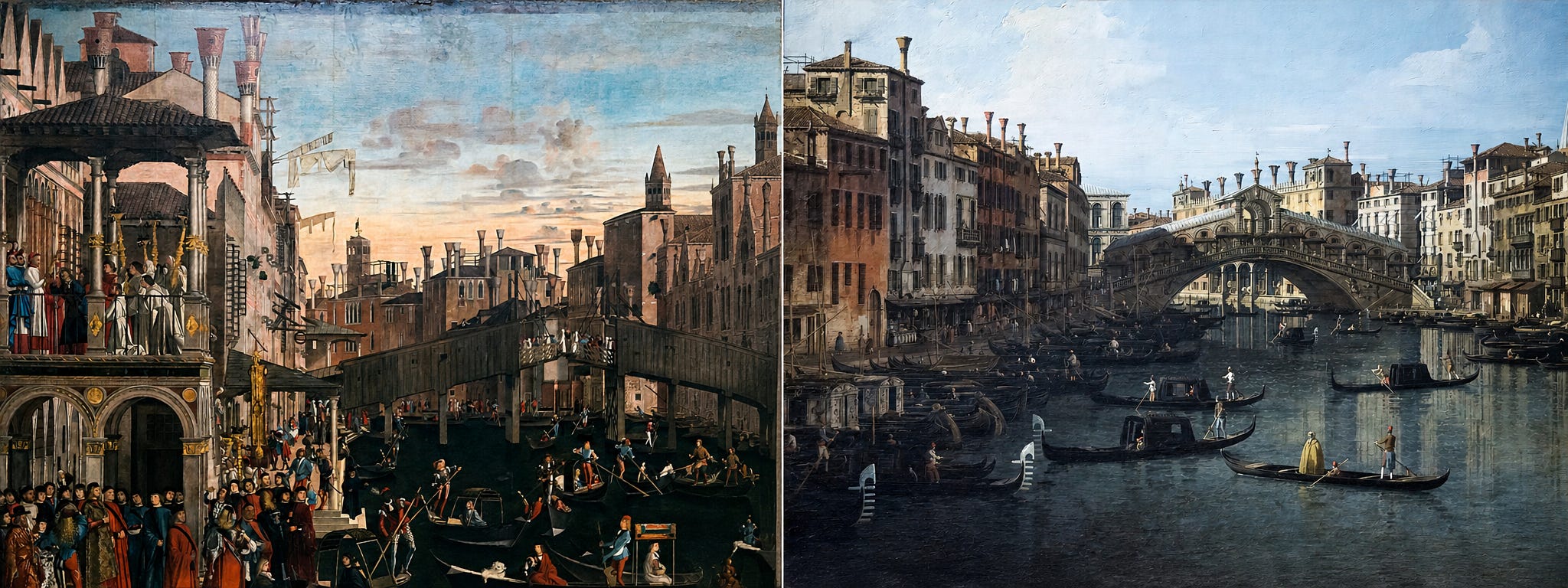
“In the year 1529 there were butchers’ stalls between the two columns of the Piazza, with a number of small wooden booths used for the vilest purposes, and a shame as well as deformity to the place, offending the dignity of the Palace and the Piazza, while they could not but disgust all strangers who made their entry into Venice, by the side of San Giorgio.”
- Giorgio Vasari, on Sansovino’s clearance of Piazza San Marco
In 1529, the Venetian Senate appointed Jacopo Sansovino proto magister of the Basilica of San Marco1. His first job was to clear out the central square.
Out went the butchers’ stalls, the bakers, the money-changers’ shacks propped against the bell tower, the five “taverns of dubious reputation,” the meat market, the medieval pilgrim hostel, the slaughter of pigs and bulls during carnival. In their place rose the Vitruvian theatre we now know from postcards: the Marciana Library, the Mint, the Loggetta, the Procuratie. The Piazza San Marco that fills your camera roll was engineered into existence over a working-class market that had been there for three hundred years.
The artist-historian Giorgio Vasari, writing twenty years afterward, gave the operative reason for this in plain language. The cleared booths, he said, “could not but disgust all strangers who made their entry into Venice.”2
The justification was image management for foreigners. A Republic at the height of its power demolished its own everyday life because the foreign gaze did not approve of it. That was the moment Venice the city ended and Venice the brand began.
Walter Benjamin had the mechanism right and the direction wrong
In 1936, Walter Benjamin published his essay on “The Work of Art in the Age of Its Technological Reproducibility.” The argument, in a nutshell: photography, lithography, and film were dissolving the aura of artworks - the unique here-and-now of a thing, “the unique apparition of a distance, however near it may be.” The Mona Lisa in the Louvre had aura, while a million postcards of the Mona Lisa did not. As reproductions multiplied, aura “withered.” Cult value gave way to exhibition value, and the masses were liberated from the priestly object.
Benjamin had the mechanism right and the direction wrong. Reproducibility does not destroy aura; rather, it manufactures the conditions in which aura becomes the only thing left to sell. When the field is saturated with copies - postcards of Venice, Instagram of Venice, hotels named after Venice - the marginal premium migrates away from function or quality toward whatever “authenticity” can still be charged for. The reproductions create the demand; whoever owns the protected substrate harvests the premium.
Benjamin himself, three-quarters into his own essay, hinted at the inversion. The film, he wrote, “responds to the shrivelling of the aura with an artificial build-up of the ‘personality’ outside the studio… the cult of the movie star… preserves not the unique aura of the person but the ‘spell of the personality,’ the phony spell of a commodity.” He was watching aura-manufacture happen and reading it as decadence rather than as the new mode of value-production.
Other readers in his own moment saw the same evidence the other way. John Berger: “if the image is no longer unique and exclusive, the art object, the thing, must be made mysteriously so.”3 Dean MacCannell, working on tourism, put it even more bluntly: “the reproductions are the aura.”4 Both read the apparatus as producing aura, not destroying it.
This is the operating logic of every “authentic neighborhood,” every heritage hotel, every luxury condo with a story, and real estate has been running it since the times of Sansovino’s Venice.
The Venetian Real Estate Machine
What Sansovino did to Piazza San Marco was the architectural face of a larger operation. By 1530, Venice was running every component of what now looks like a contemporary platform-rental economy - at municipal scale, on parchment.
The substrate was already there. The Venetian housing market was overwhelmingly rental: by the seventeenth century only about 1,400 of more than 25,000 homes were owner-occupied, and the dominant pattern was already entrenched a century earlier.5 The forces driving subdivision were structural. Venice doubled in population to roughly 170,000 between 1500 and 1565, then was hit hard by the plague of 1575–77, while the patriciate’s traditional revenues from spice and silk eroded as Atlantic routes redirected the trade through Lisbon. Aristocratic families leaned increasingly on property; their palazzi got subdivided into rentable rooms - camere locande - held together as portfolios. A separate population of widows and immigrant women, excluded from inheritance and most trades, took the smaller end of the market: hosting visitors was one of the few licit incomes available to single women in the city.6
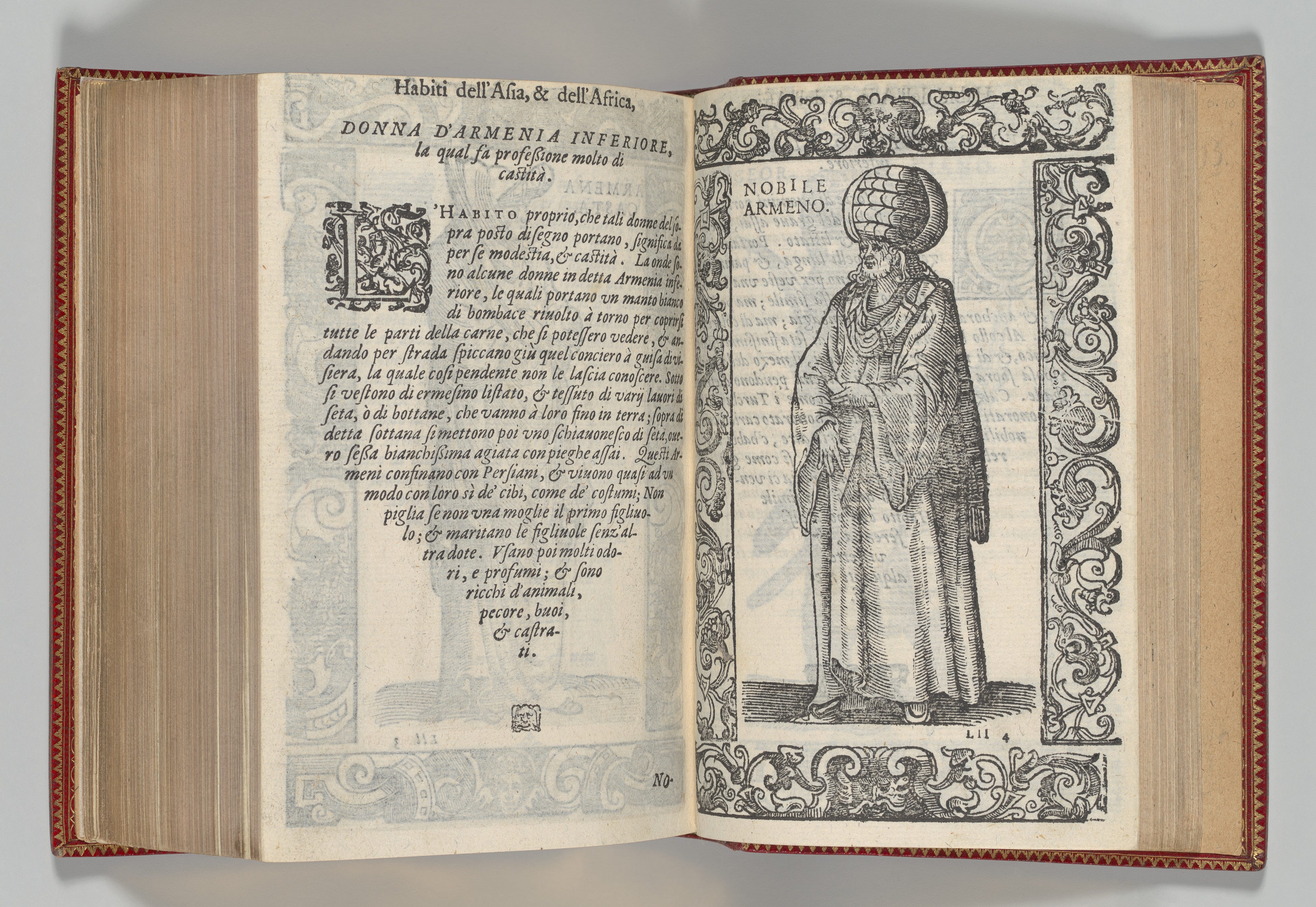
On top of that substrate, the Republic ran a fully instrumented hospitality data state. From 1510, foreigners had to spend at least three days in a central licensed inn before moving into private accommodation; by 1630, every visitor carried a paper bollettino from the Health Office stating his name, country of birth, physical description, and address.7 A 1545 Council of Ten decree threatened a hundred-lire fine for innkeepers failing to register guests. By 1556 the wine consumption tax on hospitality was instituted;8 by 1624 hospitality was the occupation of nearly a quarter of all heads of household in Venice.
The licensed sector was small: about twenty inns clustered around Rialto and San Marco, plus thirteen dedicated houses for visitors from specific Venetian-state communities. A surviving 1530–1532 register from the magistracy that oversaw lodging-houses records 272 licensed permissions covering about two hundred distinct houses, sixty percent of them held by women.9 Behind the licensed sector sat a much larger underground - small private rooms operating without permit, tax, or guest registration, and therefore captured by no register. A mid-century Council of Ten memorandum claimed unlicensed lodging-houses had grown from a handful to “five or six thousand,” a number historians treat as moral panic while accepting the structural fact: an ostentatiously regulated front-stage of named inns, plus a tolerated, untracked underground that handled the actual volume.
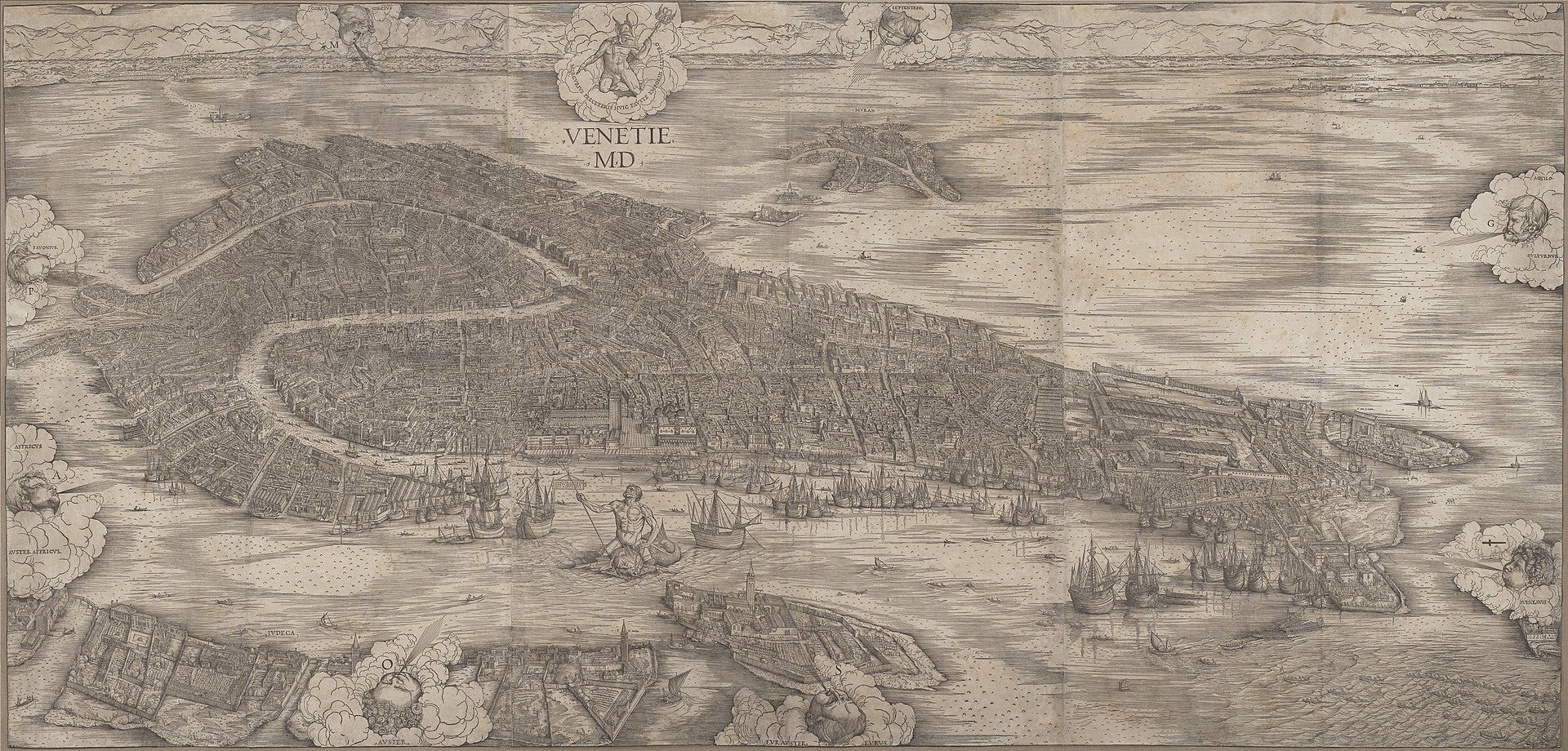
The patriciate owned both halves. Major Rialto inns belonged to the Sanudo, Grimani, and Malipiero families;10 the patricians who legislated lodging-house regulation were the patricians collecting the rents. The brand had been built in print before the city had to host the volume. Jacopo de’ Barbari’s six-sheet bird’s-eye-view woodcut of Venice, published by Anton Kolb in 1500, was the first mass-printed image of an entire European city - sold to viewers who would never visit it. Sansovino’s 1561 city guide, a dialogue in which a Venetian leads a foreign visitor through the city, called Venice “the theatre of the world, and the eye of Italy.”11
The strip and the re-stage
The 16-17th centuries delivered the strip.
Through the 18th century the lodging sector continued to grow - by mid-century, every fifth house in Venice had a bed to let - but the late-Republic city was described in the contemporary record as a place “with her commerce usurped by carnival and her once noble palaces turned into whorehouses.”12 The Republic fell in 1797 to Napoleon, and the aristocratic palace stock entered the market as fire-sale rather than heritage premium: paintings and furniture were auctioned off, English and French collectors snapped them up, and many families disposed of their palaces and left.
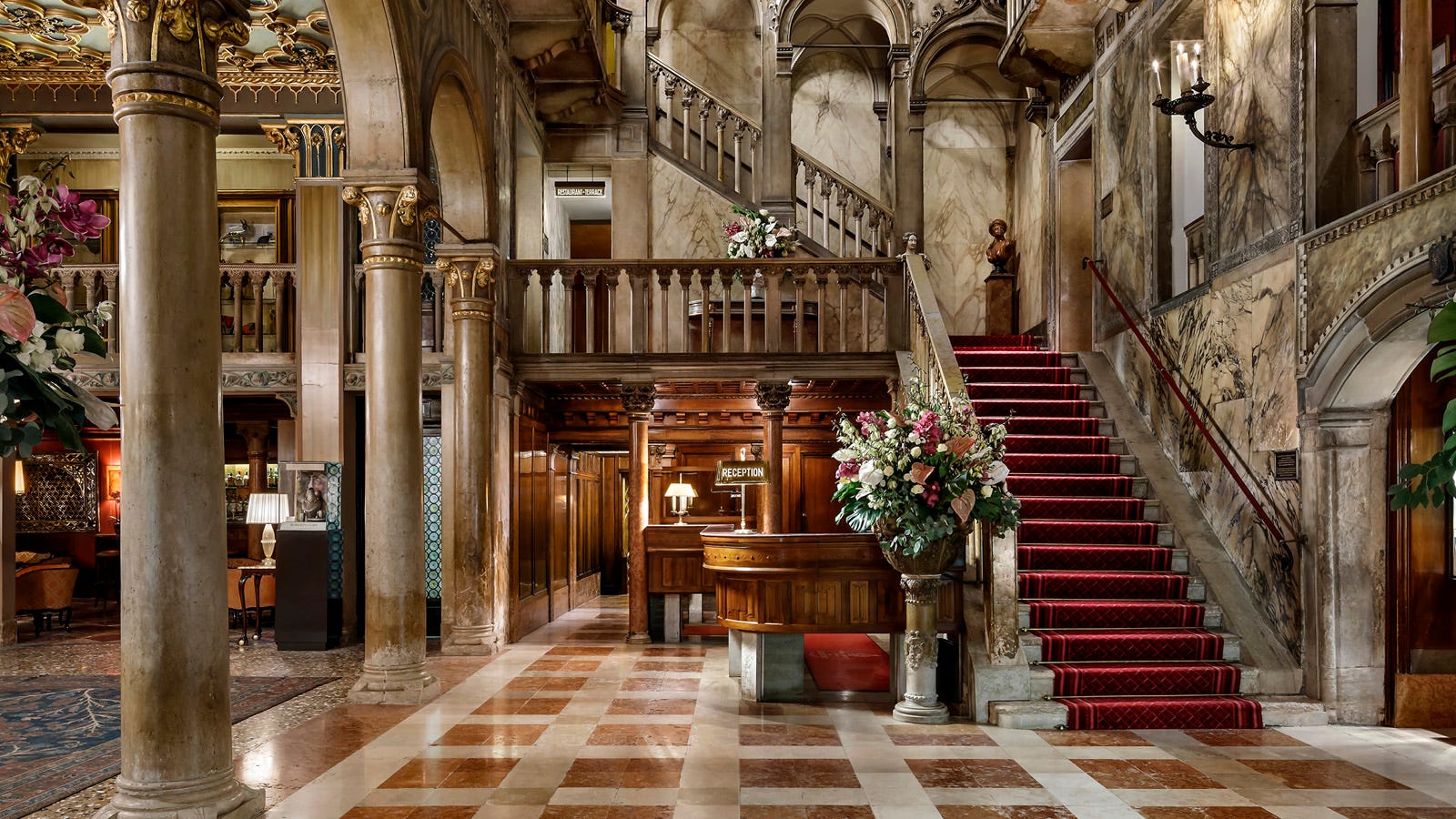
The restaging - the part where landlords reintroduce “authentic Venetian character” on top of the standardised substrate, arrives in the nineteenth century, after the 1846 rail line to Vicenza turns Venice into a destination accessible to bourgeois English and German visitors. The Hotel Danieli on the Riva degli Schiavoni - the Ruskin honeymoon hotel, chosen for its window onto the Campanile - is open and named by 1846. Henry James is lodging in the upper-floor apartments of Palazzo Barbaro by the 1880s: the converted Venetian palace as literary-prestige address. By 1900 the CIGA chain opens the Hotel des Bains on the Lido; by 1906 the Excelsior. Venetian-character premium lodging, recognisable by the same logic that runs every heritage hotel and every Soho House today, is industrialised on the Lido at the turn of the twentieth century.13
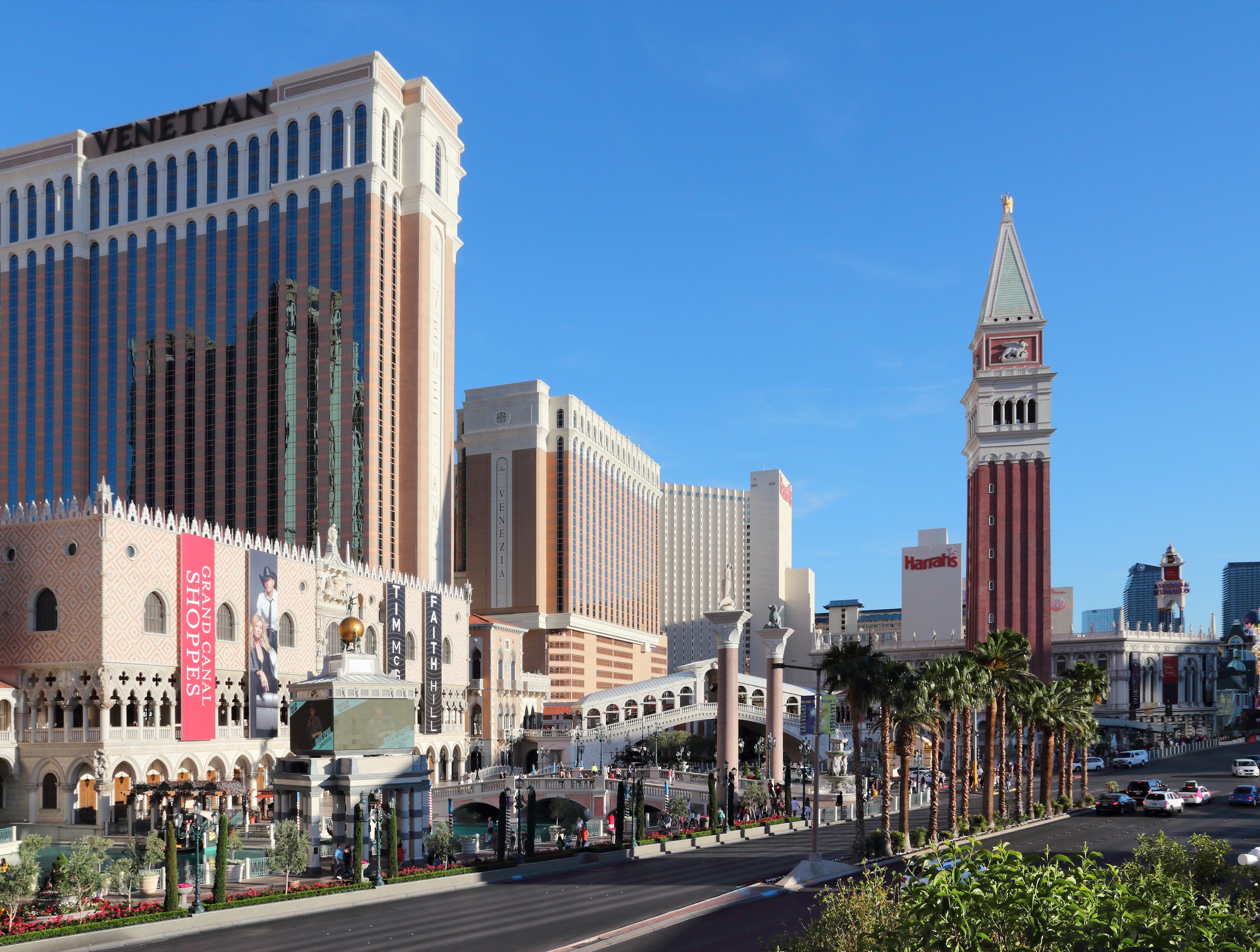
What sealed the move was the Campanile. On 14 July 1902 the bell tower of Piazza San Marco - the one Effie Ruskin had watched from her room at the Danieli - collapsed. By that evening, the City Council had voted to rebuild it com’era, dov’era: as it was, where it was. The doctrine reflects a real preservation impulse - when something irreplaceable falls, restoring it identically is a way of refusing the erasure - and at the same time it becomes the legal and aesthetic vocabulary that licenses replica as authenticity.14 Cacciari invoked it again after the 1996 La Fenice fire; the Las Vegas Venetian (1999) used the same logic explicitly, advertising its facsimile Campanile and Rialto Bridge as “re-creating the romance, Old-World charm and festival-like atmosphere of Old Venice.” The line between sincere restoration and aura-by-replica is not always one a city can hold.
The modern heritage hotel inherits both halves at once.
The four moves
The operation has four phases that recur across cases regardless of who drives them.
Standardisation lets a market form: the unit becomes comparable. Demographic pressure, declining elite income, and capital looking for legible yield-bearing substrates push toward subdivision. Palazzi become rentable rooms. Tenement blocks become identical flats. Factory floors become loft units. App listings become cards on a single interface.
Stripping clears whatever everyday character is in the way of comparability. Sansovino’s Piazza is the canonical case. Haussmann’s Paris demolished 27,500 medieval dwellings and built or rebuilt 102,000. SoHo’s manufacturing emptied out - about half of storefronts in 1980, manufacturing “just about disappeared” by 2005. Williamsburg saw 170 waterfront blocks rezoned in 2005; East New York witnessed a 63% land-price spike on the announcement of a single upzoning.15
Re-staging installs the legitimating signature. Sansovino’s Marciana Library on the cleared Piazza; Vienna’s bourgeois Ringstrasse apartment blocks mimicking Baroque palaces they had no claim to; SoHo’s 1973 landmark designation, which froze loft form into law and accelerated “a rise to monopoly rents not only in SoHo but in all the loft districts of Lower Manhattan;”16 Hudson Yards’ Vessel, sold to the New York Times as “a museum of architecture.” A starchitect’s name on a fungible glass tower becomes an authorial stamp - the legal and reputational mark that turns reproducibility into nominal singularity.
The premium is rent on the difference between the named and the generic. In Ancient Roman Ostia, cenaculum was a tier label flagged on the better-class apartments in Pompeian rental ads; the same five-room plan commanded a premium when sold under that label rather than as the generic deversorium.17 In fourteenth-century Norwich, an apothecary’s shop on St Peter Mancroft was let at 18 shillings in 1298 and 30 shillings in 1332 - 67 percent on the same unit against no evidence of coin debasement (inflation), captured by lease churn after the Cathedral Priory acquired the parish.18 In contemporary Sydney, an estate agent calculated a Glebe Victorian terrace’s intrinsic value at about $320,000 and added that “that property can sell for $500,000 because it’s been restored correctly” - a 56% premium attributable purely to a calibrated period-aesthetic.19
What underwrites the premium is legal scarcity manufactured on top of a reproducible substrate. Heritage law - UNESCO listings, NYC landmark designations, French monuments historiques, the appellation contrôlée system - was designed for genuine preservation, and most of it performs that function. The same instruments also create the legal scarcity that lets monopoly rents be charged on the protected stock. Protection and rent are interlocking layers of the same regime, not opposed objectives.20 David Harvey’s line: “authenticity, originality, uniqueness, and special unreplicable qualities” is the exact vocabulary capital needs to guarantee monopoly rents on commodities that would otherwise be interchangeable. Reproducibility creates the market for that rent, while authenticity is the only thing whose supply can be artificially restricted.
Hudson Yards and the City Authentic
Hudson Yards is the largest private real-estate development in U.S. history: Stephen Ross’s Related Companies built 15 billion dollars of office, residential, and hotel buildings on a deck above the Penn Station rail yards. The City of New York contributed roughly 7 billion in public capital - a 7-train extension, platform engineering, and the EB-5 “distressed neighborhood” designation that allowed the developers to access foreign-investor visa capital.21
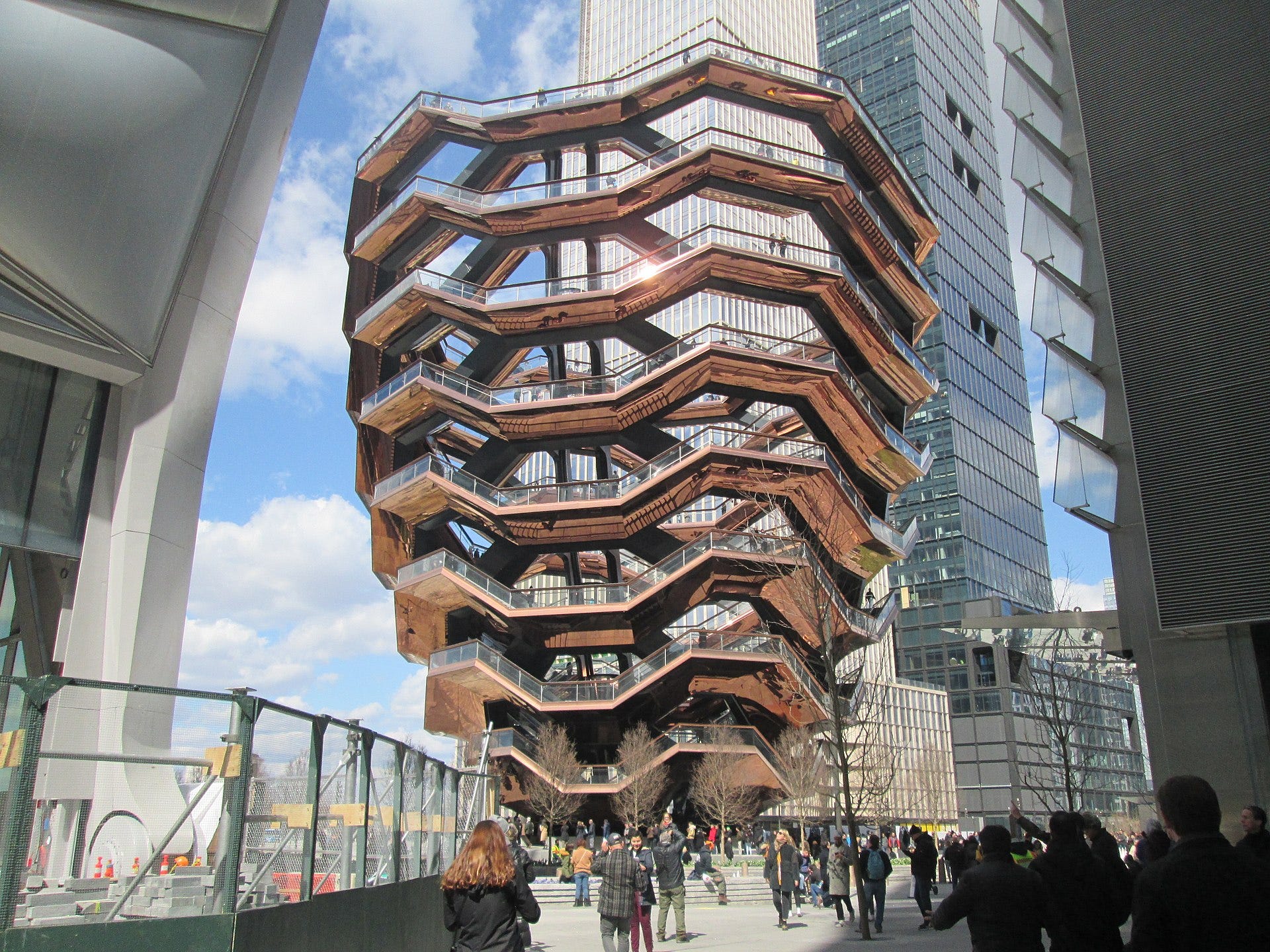
Asked by New York Times architecture critic Michael Kimmelman what he was selling, Ross’s answer was: “we are creating a new way of life… we are creating a museum of architecture and a whole new way of life.” He commissioned signature towers from Heatherwick, Foster, and Calatrava. A starchitect’s name on a fungible glass tower works the way the Roman cenaculum tier label worked in Pompeii: it stamps a reproducible building shell as nominally singular and licenses a price per square foot the engineering alone could not.
In London, the model is more curatorial than tower-driven. The London estates - Capital and Counties, Shaftesbury, Cadogan, Grosvenor - adopted what they openly call “tenant engineering.” Capco’s Covent Garden cluster more than doubled in size between 2006 and 2016, with capital value rising roughly fivefold over the same decade. The cluster managers refer to existing tenants who do not fit the brand mix as “neutral users” or “detractor users”, with the latter being pruned. The estates, in one analyst’s line, “have adopted the corporate culture of shopping mall landlords, sculpting the tenant mix to maximise the area’s value.”22
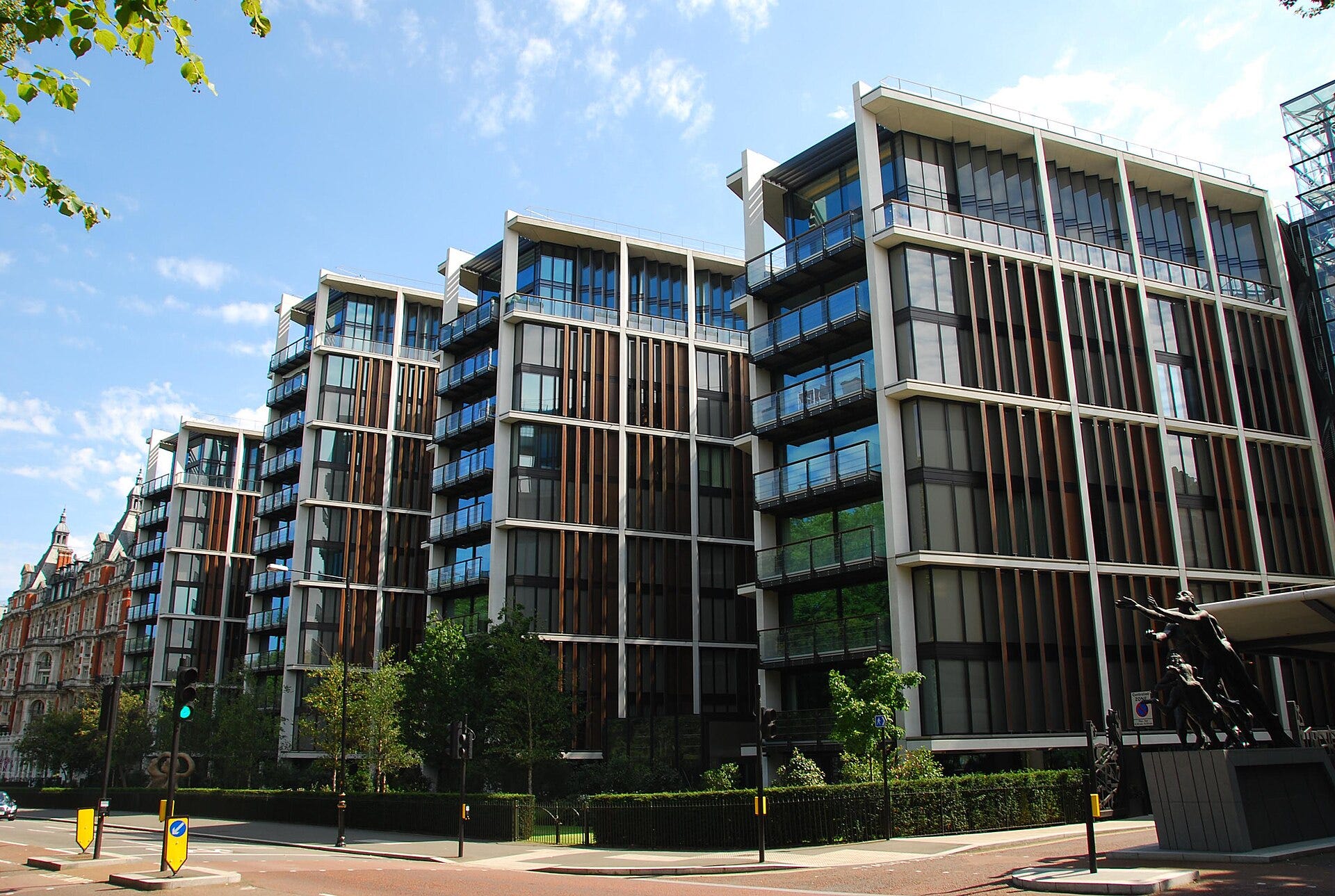
Rowland Atkinson, in Alpha City, visits the Bulgari Hotel in Knightsbridge and notices the photographs on the lobby wall - old black-and-white images of artisan leather-workers and strollers in charmingly decaying Italian urban centres. “Such luxury is often built upon the destruction of the authentic places and ways of life around it.”23
David Banks gives the operation its modern name in The City Authentic (2023): after the City Beautiful and the City Efficient comes the City Authentic - an urban movement that, under the cover of preservation, “mines the delicate patina of history for profit.”
The host was lost
Five hundred years of strip-and-restage has not produced uniform political consequences. The variable that has changed most decisively in the last few decades is who, exactly, is on site.
Paolina Briani was a Venetian widow. In the 1580s she rented rooms to Greek and Ottoman Muslim merchants in a courtyard ten minutes east of Piazza San Marco. The Inquisition opened a file on her over religious mingling, sexual rumours, and the impossibility of running a multiconfessional household in a Catholic city. A witness’s verbatim testimony: “Grechi fanno alla greca, e turchi alla turchescha”24 - “the Greeks live like Greeks, and the Turks like Turks.”
Paolina Briani rented out aura. She was also, in the literal sense, the host: she lived in the rooms, cooked for her tenants, fought with them, mediated between Catholic Venice and her non-Catholic guests, and was hauled before tribunals when the boundary grew dangerous. The Renaissance lodging-keeper was a precarious worker - the widow, the deserted wife, the immigrant. 60% of Venetian licensees in the 1530-1532 register were women. It has been observed that the Renaissance lodging system worked better than modern Airbnb precisely because its hosts were resident and embedded - the aura rented out was inseparable from a concrete cohabitation, and the friction of negotiating a multiconfessional household was the very thing that made the rent earn its name.
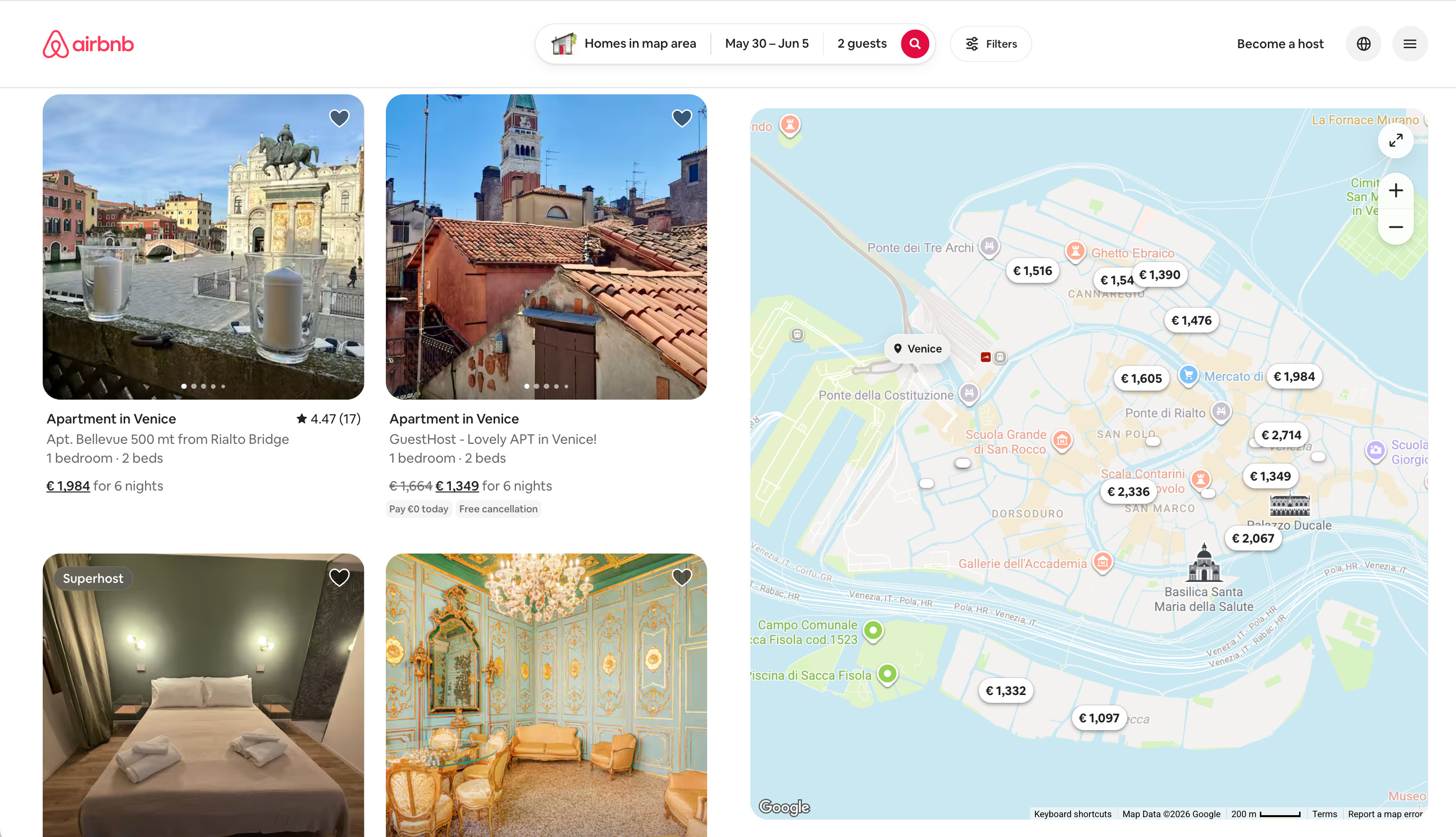
What has shifted in the last three or four decades is the disappearance of the host. The Renaissance host was Paolina Briani; the Hudson Yards “host” is a Related Companies leasing agent and a Two Trees-paid influencer;25 the Airbnb “host” is, increasingly, a portfolio investor with a software-managed key code.
The aura once produced through actual cohabitation has been industrialised through database tokens - Superhost badges, automated notes “from your host,” themed table runners from Alibaba. The mechanism is structurally identical to Sansovino’s, with the host having been replaced with a dashboard, and cohabitation - with a checkout flow. The friction that used to make the rent earn its name has been engineered out.
Diagnosis
Sansovino’s Piazza San Marco is undoubtedly one of the most beautiful pieces of urbanism ever built. Hotel Danieli has been a working hotel since 1846. The London estates manage well-curated retail districts that millions of visitors enjoy. Aura-capture is what cities do with surplus rent once their substrates become reproducible.
This shifts how the modern housing debate reads. Building more units does lower the rent on the mass-market shelter product; on that the supply-side argument is correct. The aura premium charged on top - on a relatively fixed set of premium projects - sits independently of supply and rises as the substrate beneath it saturates. Building 100,000 standard apartments in Brooklyn lowers the price of standard Brooklyn apartments and raises the rent on the small fixed set of projects sold as “authentic Brooklyn.”
Five hundred years on, what was a single act of state stagecraft in 1529 has been refactored as a continuous industrial process. Reproducibility multiplies the standardised substrate, while heritage law produces the legal scarcity. The starchitect, the influencer, and the Superhost badge produce the signature. The rent on the difference has been called, at various points, monumental architecture, the boulevard address, industrial chic, the heritage hotel, “live like a local,” and “a new way of life.”
The aura is what reproducibility makes available, at scale, to be charged for. That is Aura as Rent. It has been running since 1529, and it is in production today on every well-curated street in every major Western city.
San Marco refers here to the Basilica and the surrounding ceremonial complex - the Piazza San Marco, the Doge’s Palace, the Marciana Library, the Mint, the Loggetta, and the Procuratie. As proto magister, Sansovino was effectively chief architect of state imagery, reporting to the Procurators of San Marco and ultimately to Doge Andrea Gritti.
Quoted in Iain Fenlon, Piazza San Marco (Harvard University Press, 2012), the standard art-historical study of the square.
John Berger, Ways of Seeing (Penguin, 1972)
Dean MacCannell, The Tourist: A New Theory of the Leisure Class (Schocken, 1976)
Monica Chojnacka, “Women, Men, and Residential Patterns in Early Modern Venice,” Journal of Family History 25:1 (2000); the seventeenth-century parish-census figures (1,432 owner-occupied homes out of 25,240) are the most complete data available, and the dominant pattern was already entrenched a century earlier.
On the political economy of standardisation see Salzberg (2018) and Chojnacka (2000). Beltrami’s population estimates (cited by Salzberg) document growth from c. 100,000 to c. 170,000 across the first two thirds of the sixteenth century, followed by the 1575–77 plague. The patriciate’s post-Cambrai (1509–16) shift toward rentier income, and the redirection of the spice trade through Lisbon, are discussed in Roger Crowley, City of Fortune (Random House, 2011).
On the lodging-keeper licensing regime see Rosa Salzberg, “Spaces of Unrest? Policing Hospitality Sites in Early Modern Venice” (the 1510 minimum-stay decree is ASV, Giustizia Nuova, b. 1, fols 70r–v). On the visitor bollettino - a paper Health Office permit - see Alexandra Bamji, “The Control of Space: Dealing with Diversity in Early Modern Venice,” Italian Studies 62:2 (2007), citing ASV, Sanità, B. 155, 2 August 1630.
A dazio was a Venetian consumption tax. The Republic farmed the wine dazio - sold the right to collect it - to private contractors; the 124,400-ducat figure is the contracted value for 1556. By the eighteenth century the wine tax alone made up roughly 6–7% of state revenue.
Rosa Salzberg, “Mobility, cohabitation and cultural exchange in the lodging houses of early modern Venice,” Urban History 46:3 (2018), citing ASV, Giustizia Nuova, b. 5, reg. 12. The mid-century memorandum is treated by historians as moral panic; the structural fact of a tightly regulated front-stage and a tolerated, untracked underground is what survives the qualification.
Doge Marino Grimani (r. 1595–1605) owned the Sturione inn at Rialto, “over which he could keep an eye from his palazzo across the Grand Canal”; the family of diarist Marin Sanudo owned the Campana at Rialto; the Malipiero owned several Rialto inns with related stakes in the regulated bordello sector. Source: Rosa Salzberg, “Spaces of Unrest? Policing Hospitality Sites in Early Modern Venice.”
De’ Barbari’s 1500 woodcut and Sansovino’s 1561 Delle cose notabili che sono in Venetia - including the “theatre of the world / eye of Italy” line - are catalogued in Bronwen Wilson, The World in Venice: Print, the City, and Early Modern Identity (University of Toronto Press, 2005). Wilson describes the de’ Barbari woodcut as a “monument of printmaking” with “archetypal status among printed views of Venice, and even city views in general.”
The “every fifth house had a bed to let” figure appears in Peter Ackroyd, Venice: Pure City (Vintage, 2009), reporting an observation made by the eighteenth-century Huguenot tourist François Misson. The “commerce usurped by carnival… palaces turned into whorehouses” passage and the post-1797 dispersion of palace contents are from Iain Fenlon, Piazza San Marco (Profile Books, 2010).
For the nineteenth-century emergence of named heritage lodging see Fenlon (2012) and Emin Altun, The Dichotomy of Overtourism: How Did Venice Become Venice (MA thesis, Università Ca’ Foscari, 2022). The CIGA chain (Compagnia Italiana Grandi Alberghi) opened the Hotel des Bains on the Lido in 1900 and the Excelsior in 1906; Filippo Tommaso Marinetti’s 1914 Futurist manifesto attacked tourists for letting themselves “rot in their dirty water, to endlessly enrich the Company of the Grand Hotels.”
The doctrine com’era, dov’era - “as it was, where it was” - was invoked by the Venice City Council on the evening of the Campanile collapse, 14 July 1902, and again by Mayor Massimo Cacciari after the 1996 La Fenice fire. Its philosophical claim - that an exact replica preserves authenticity by virtue of preserving “what it was” - both reflects a sincere preservation impulse and supplies the aesthetic vocabulary that licenses replica as authenticity. The Las Vegas Venetian (1999) drew on the same logic explicitly.
Sharon Zukin, “Loft living as ‘historic compromise’ in the urban core: the New York experience,” International Journal of Urban and Regional Research (1982); see also Zukin, “Consuming Authenticity,” Cultural Studies 22:5 (2008). Williamsburg rezoning and East New York data: Samuel Stein, Capital City (Verso, 2019); Peter Moskowitz, How to Kill a City (Nation Books, 2017). Haussmann figures: Yonah Freemark, A. Bliss, and Lawrence Vale, “Housing Haussmann’s Paris” (2022).
On Vienna’s Ringstrasse apartment blocks “ironically mimick[ing] the Adelspalais (the nobles’ palaces) of the Baroque era,” see “Vienna’s Ringstrasse: A Spatial Manifestation of Sociopolitical Values.” On SoHo’s 1971 zoning resolution and 1973 quasi-zoning landmark district and the resulting acceleration of “a rise to monopoly rents not only in SoHo but in all the loft districts of Lower Manhattan,” see Sharon Zukin, “Loft living as ‘historic compromise’ in the urban core: the New York experience,” International Journal of Urban and Regional Research (1982).
A cenaculum was a multi-room upper-floor apartment in a Roman insula. Bruce Frier, “The Rental Market in Early Imperial Rome,” Journal of Roman Studies 67 (1977), documents at least thirty-five identical floor plan types across Ostia and the verbatim survival of the term in surviving Pompeian wall advertisements for lease. The lower tier was the deversorium, a generic per-day lodging house. The Julio-Claudian familia Caesaris held documented insularii (slave rent collectors) and an exactor ad insulas.
Elizabeth Rutledge, “Landlords and tenants: housing and the rented property market in early fourteenth-century Norwich,” Urban History 22:1 (1995). The “rents” (redditus) were tracked individually as portfolio assets; John de Wurthstede of Norwich Cathedral Priory built twenty-three between 1330 and 1339.
Gary Bridge, “Estate Agents as Interpreters of Economic and Cultural Capital: The Gentrification Premium in the Sydney Housing Market” (2001). The agent’s on-record calculation: land $100,000 + build cost $200,000 + yield premium $20,000 = $320,000 intrinsic value; the property sold for $500,000 - a 56% premium attributable to “restored correctly.” Bridge documents the inverse: a property whose owner had spent ~$300,000 on a non-Anglo-Saxon (“Italian-aesthetic”) renovation sold below market because buyers treated the renovation as negative value.
UNESCO listings, NYC landmark designations, and analogous instruments were designed for genuine preservation, and most of them perform that function. The descriptive point is that the same instruments produce the legal scarcity that allows monopoly rents to be charged on the protected stock. The protection and the rent are interlocking layers of the same regime, not opposed objectives. On the juridical invention of authorial originality see Mark Rose, Authors and Owners: The Invention of Copyright (Harvard University Press, 1995); on monopoly rent on uniqueness, David Harvey, “The Art of Rent: Globalization, Monopoly and the Commodification of Culture” (2002).
Samuel Stein, Capital City: Gentrification and the Real Estate State (Verso, 2019); supporting data also from G. Scoditti, Hudson Yards: Hybrid Capital’s New Home (CUNY MA thesis). The roughly $7 billion New York City public spend includes the 7-train extension ($500m), platform construction, the EB-5 “distressed neighborhood” designation that allowed Hudson Yards to access foreign-investor visa capital, the 421-a tax abatements, and payments-in-lieu-of-taxes (PILOTs).
Carmen Canelas, “Place-making and the London estates: land ownership and the built environment.” The Capco / Covent Garden cluster expanded from 35 buildings in 2006 to 73 in 2016 with capital value rising from £489 million to £2.275 billion. Cadogan’s Chelsea–Knightsbridge cluster rose from £2.695 billion to £5.986 billion. Capco’s “tenant engineering,” “neutral users,” and “detractor users” terminology is from its 2016 Annual Report. Hammond (2013): the modern landed estates “have adopted the corporate culture of shopping mall landlords.”
Rowland Atkinson, Alpha City: How London Was Captured by the Super-Rich (Verso, 2020). The average age of London skyscrapers above 100m is 14 years, and 44 such towers were built 2008-2018 (against 33 in the previous half-century).
ASV, Sant’Uffizio, b. 47, fasc. 2, fol. 15v; quoted in Salzberg (2018), Paolina Briani’s case (1581–1588) was investigated by the Venetian Inquisition over religious mingling, sexual rumours, and the running of a multiconfessional household.
David A. Banks, The City Authentic: How the Attention Economy Builds Urban America (University of California Press, 2023). Banks documents Two Trees Management (the David Walentas firm, developer of DUMBO and the Domino Sugar refinery on the Williamsburg waterfront) hiring the influencer Tavi Gevinson to live in one of its buildings and advertise her own apartment to her 500,000 followers. A parallel D.C. case in the same book: Ditto Residential paying the photographer-influencer James Jackson to spend a weekend in a $500,000 condo for content creation, with 94 percent of his followers in the D.C. metro area.